Explore Egypt’s Abu Simbel with a baby! Our family’s early morning long tour experience, tips for parents, and what makes Ramses II’s temple unforgettable.
Table of Contents
- Main Journey
- Events
- Tips for Traveling with a Baby
- Local Travel Tips
- Travel Reflections
Main Journey
We came down to the lobby on time, and our driver was already there waiting for us. The hotel gave us a few long bread rolls and some jam as “breakfast.” So that’s what they meant when they said breakfast was included…
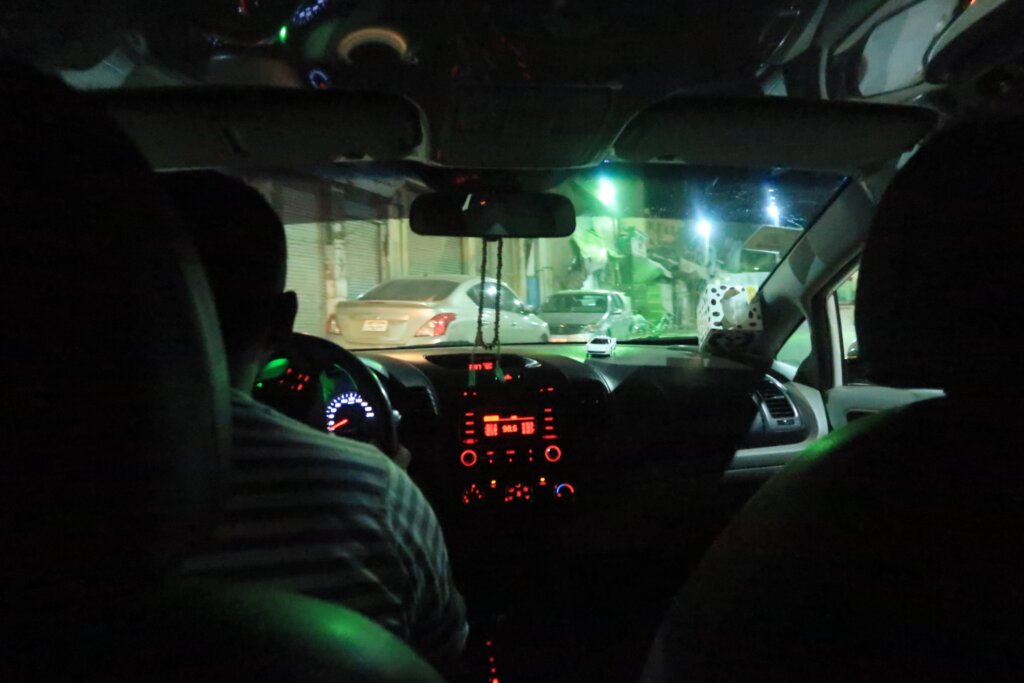
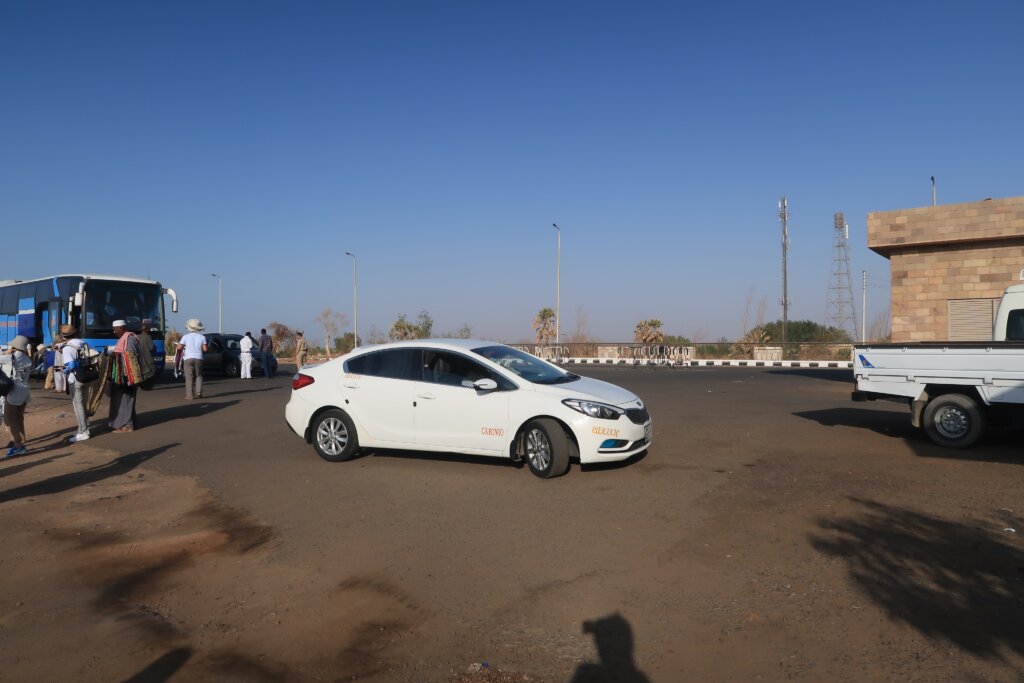
Our ride was surprisingly nice—a clean Kia K3, a good sign for what was ahead.
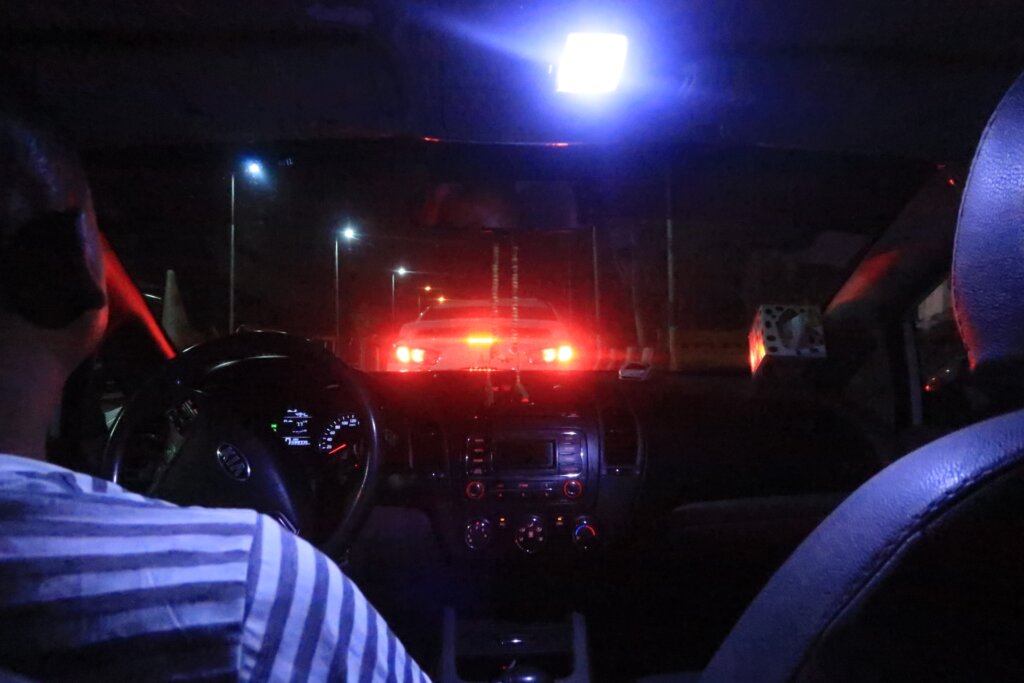
Though it was still dark, we passed several other vehicles heading the same way. Everyone was on their early morning pilgrimage to Abu Simbel.
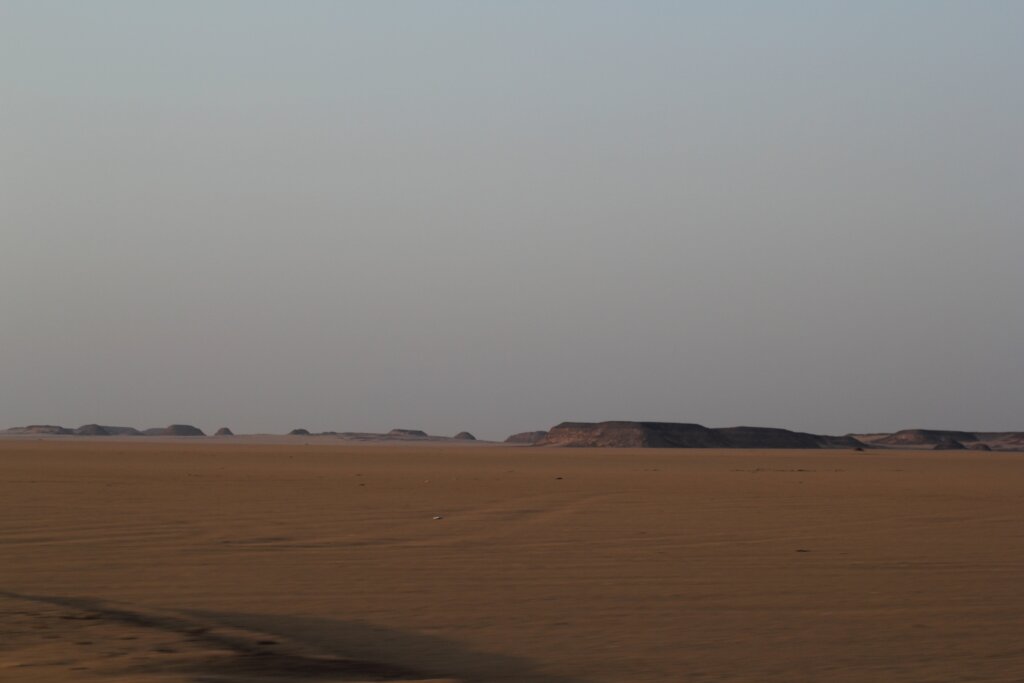
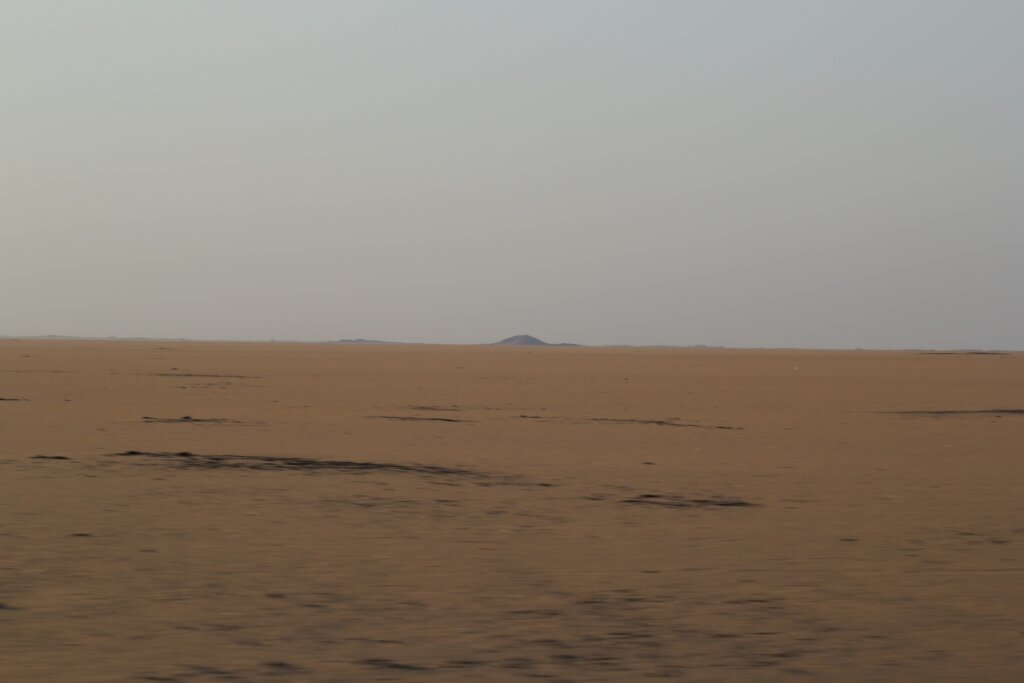
As we left Aswan, we were stopped for a checkpoint—standard procedure. The journey to Abu Simbel took over three hours, and we passed through stretches of open desert under a sky that slowly shifted from black to soft orange.
Inside the car, the air conditioning was strong and the seats comfortable. Honestly, we all fell into the deepest sleep. It almost felt like teleporting.
Events
When we finally arrived, the first thing we saw was a surreal path of long streetlights lined up in the middle of nowhere. Welcome to Abu Simbel.
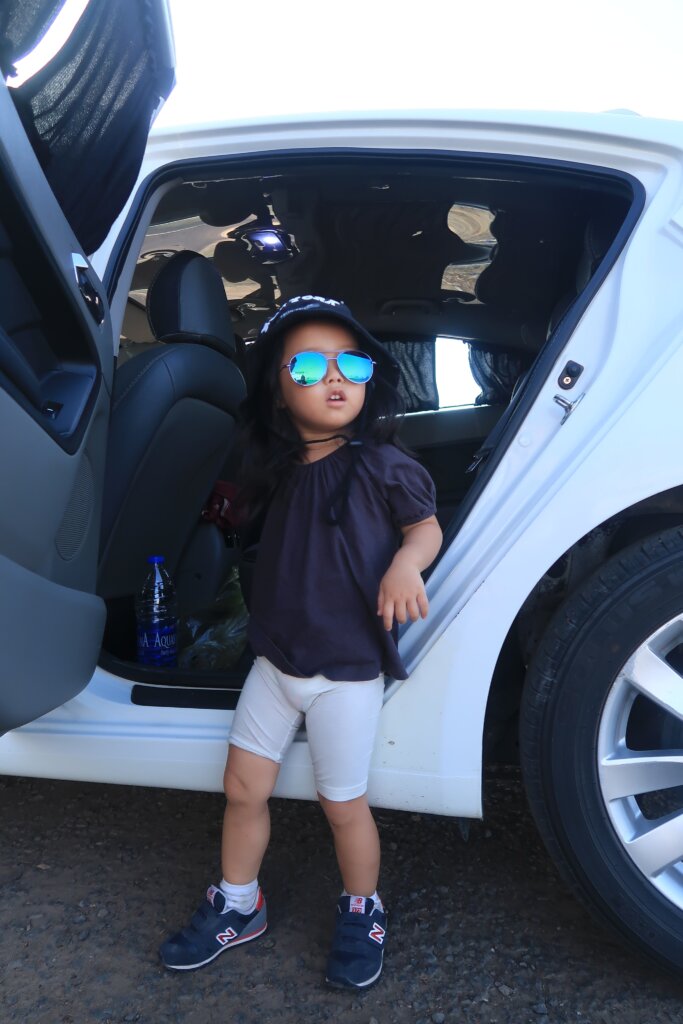
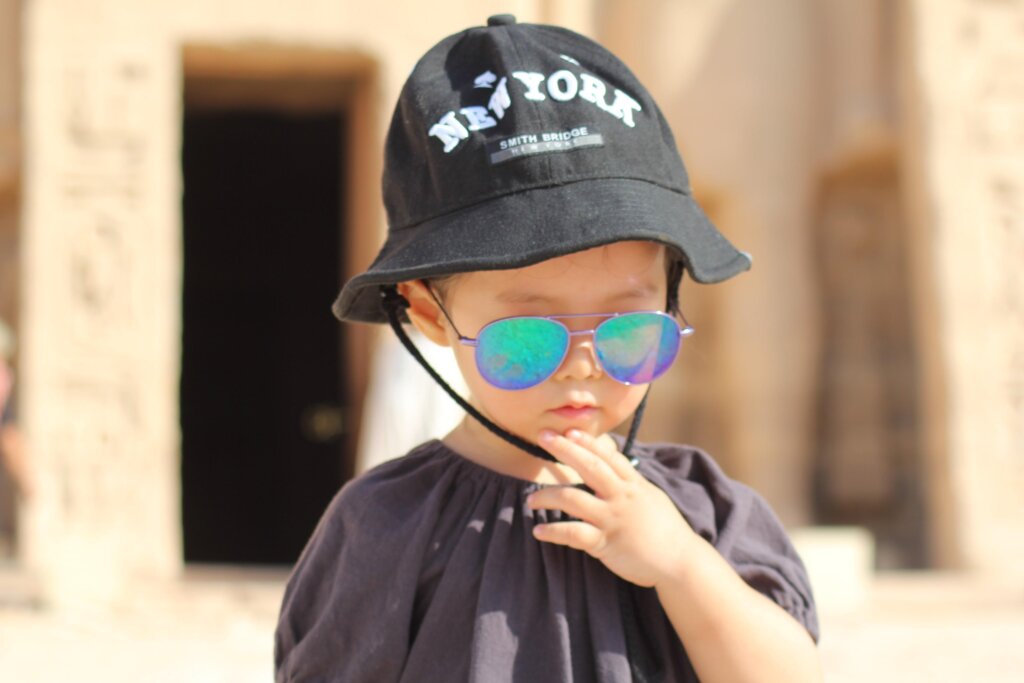
Sweetie climbed out of the car in dramatic fashion—clearly ready for the camera. We lathered her in sunscreen and got moving.
Our driver told us to meet him again in an hour and a half. While he found shade to wait in, we began our walk.
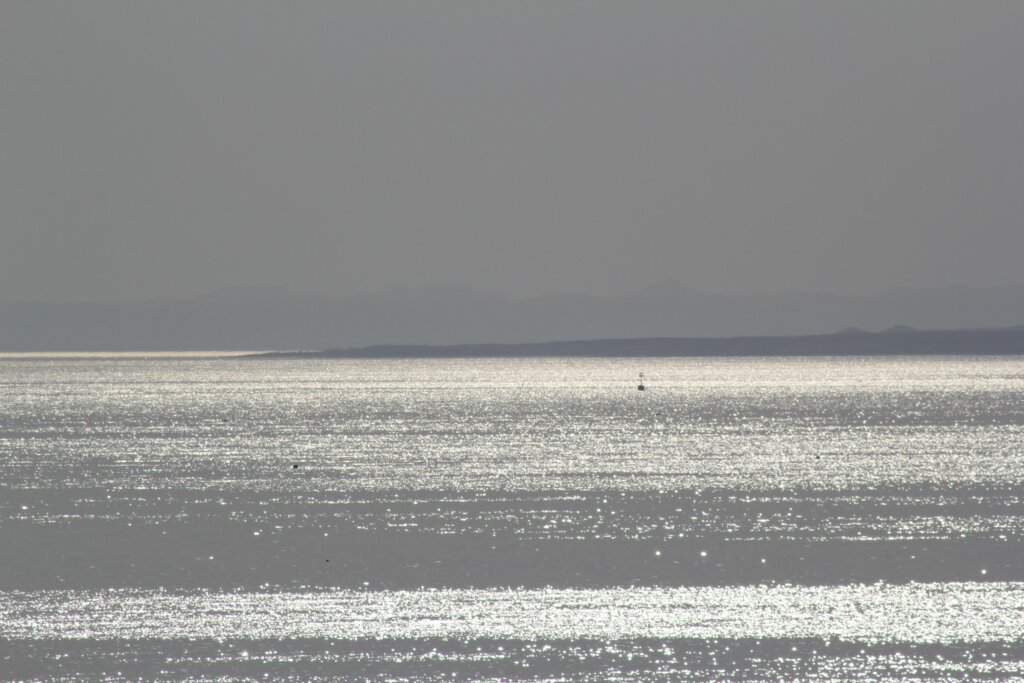
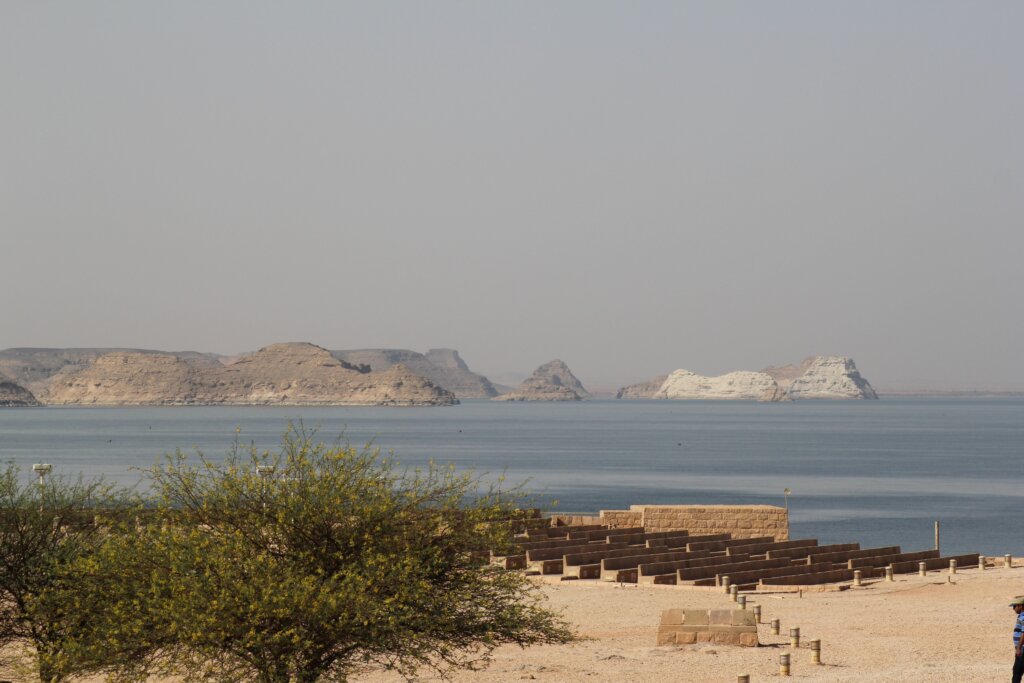
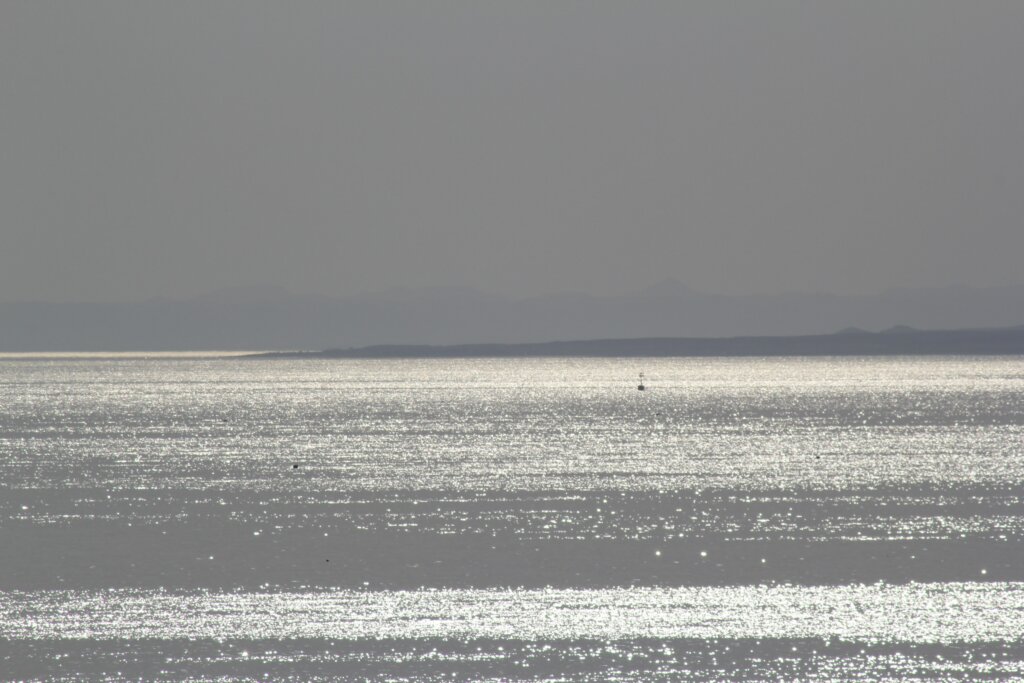
On the way to the entrance, we passed Lake Nasser—yes, that lake we glimpsed from the airplane a few days ago.
Inside the visitor center, we saw pictures and exhibits about how Abu Simbel had been relocated piece by piece to avoid being submerged after the Aswan High Dam was built. The entire temple was dismantled and rebuilt 70 meters higher than its original location. A mind-blowing feat made possible by UNESCO and international cooperation.
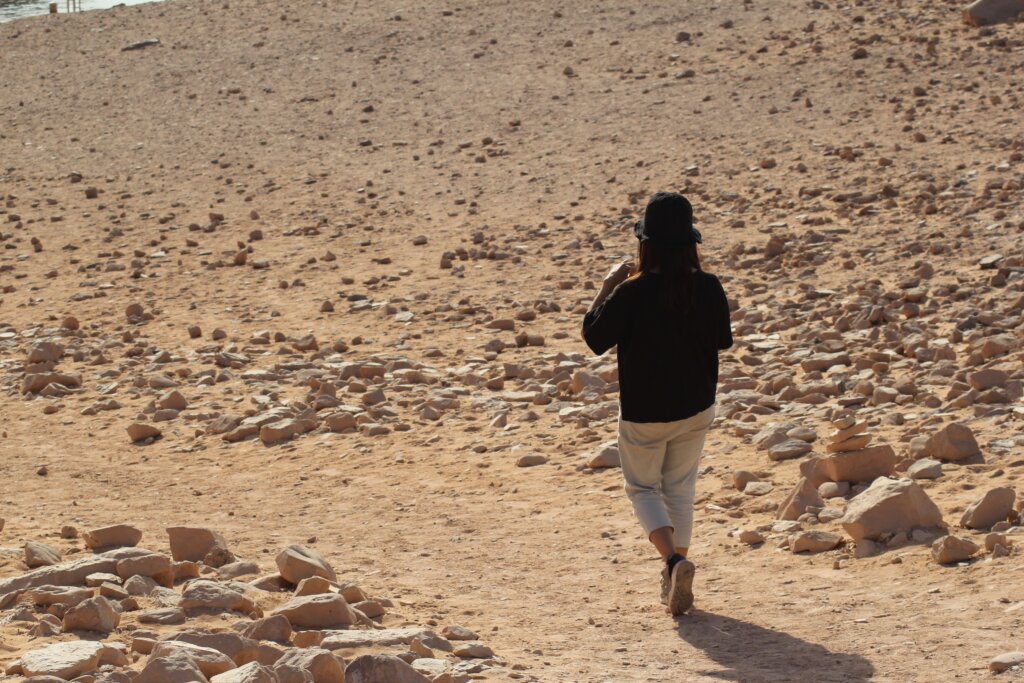
We skipped the original temple grounds trail—it was just too hot. Even before 8 a.m., the sun was brutal.
Still, we pressed forward, full of anticipation. And finally…
There it was.
The Temple of Ramses II
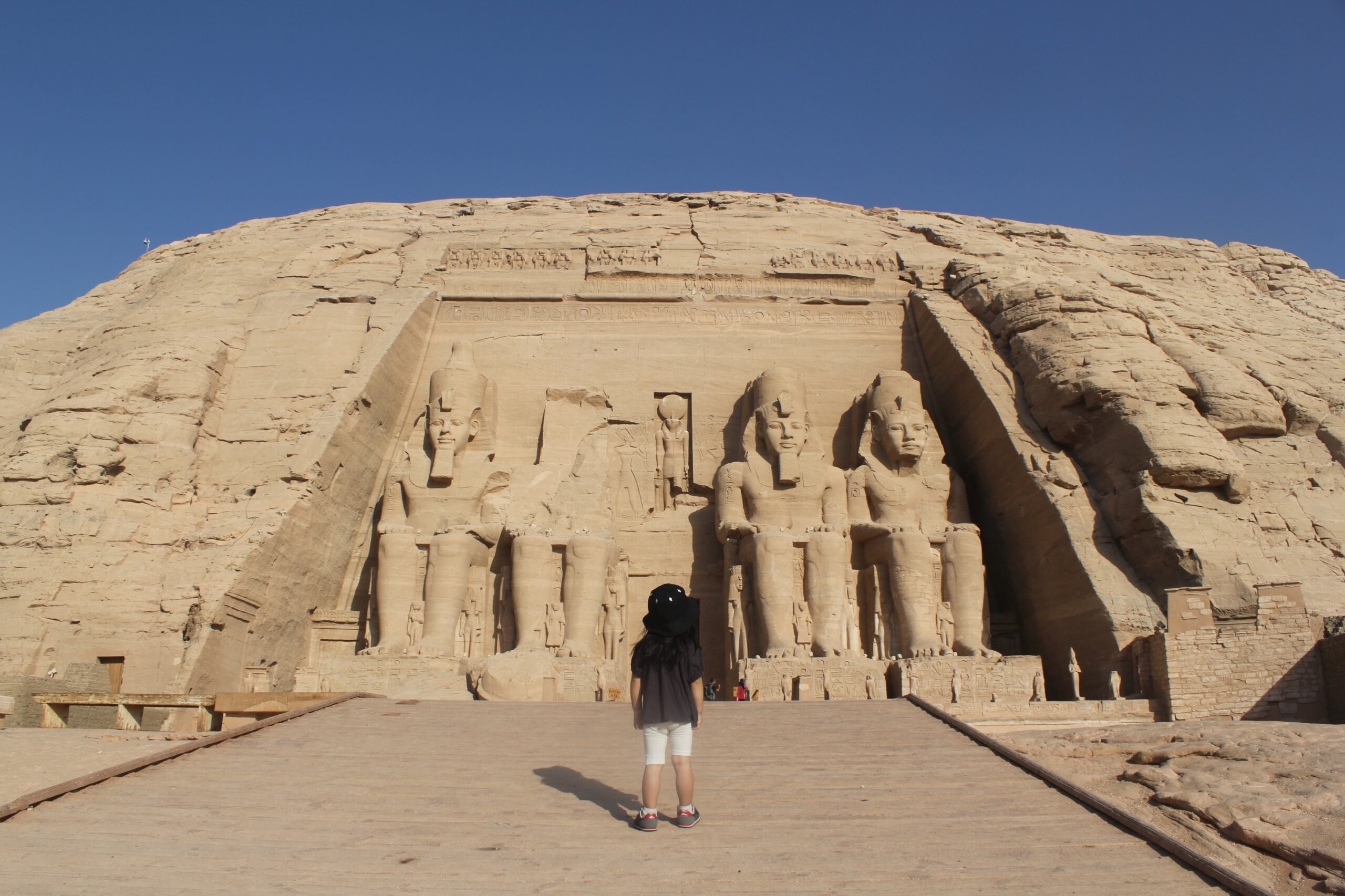
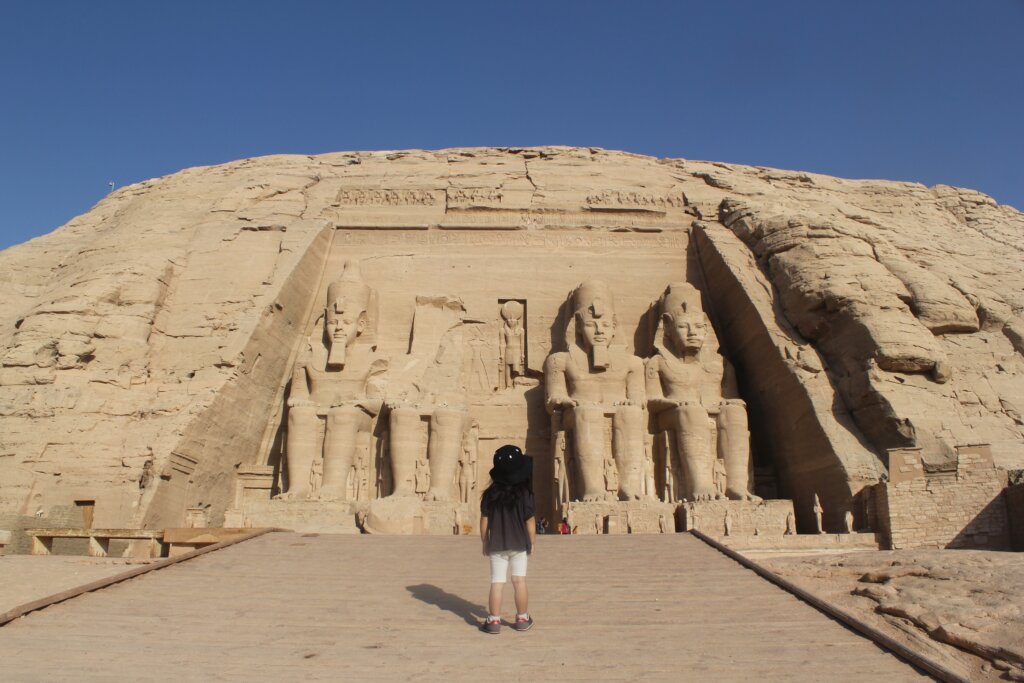
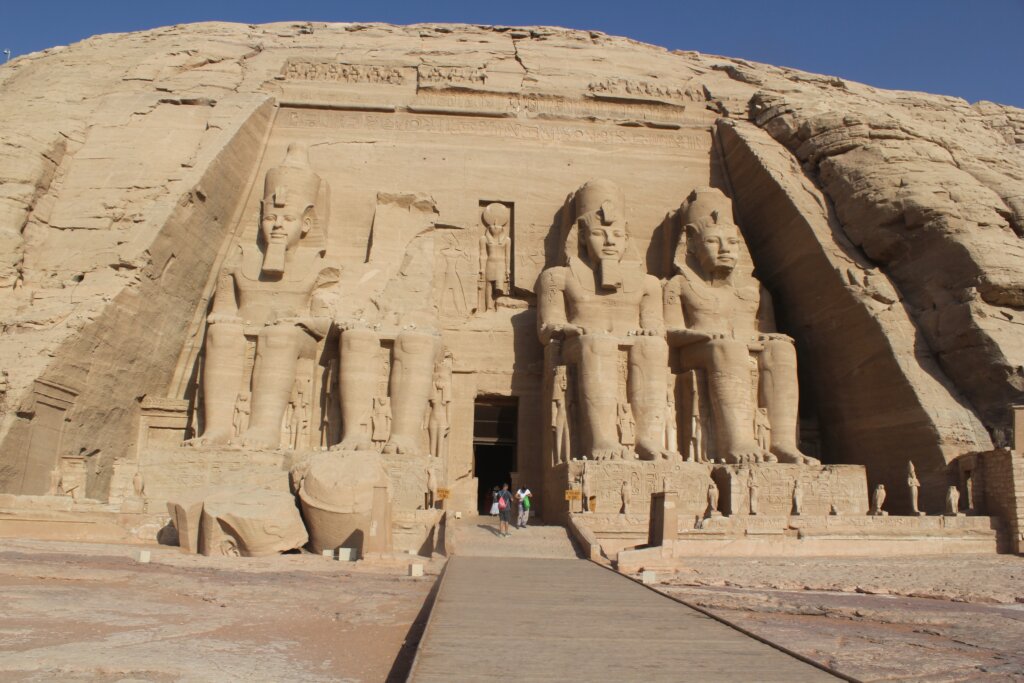
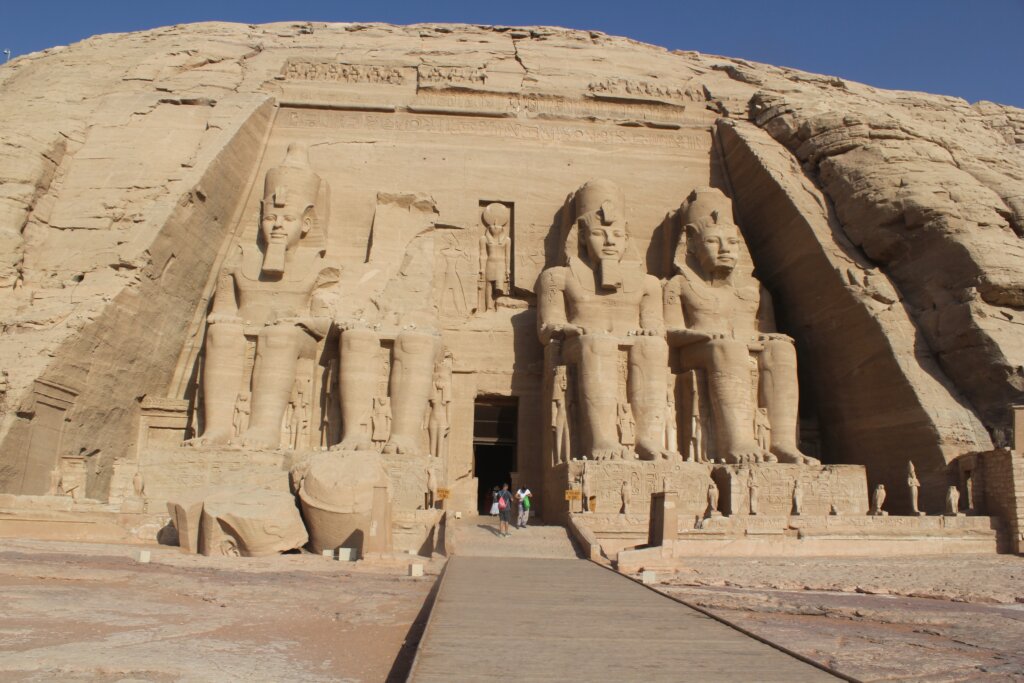
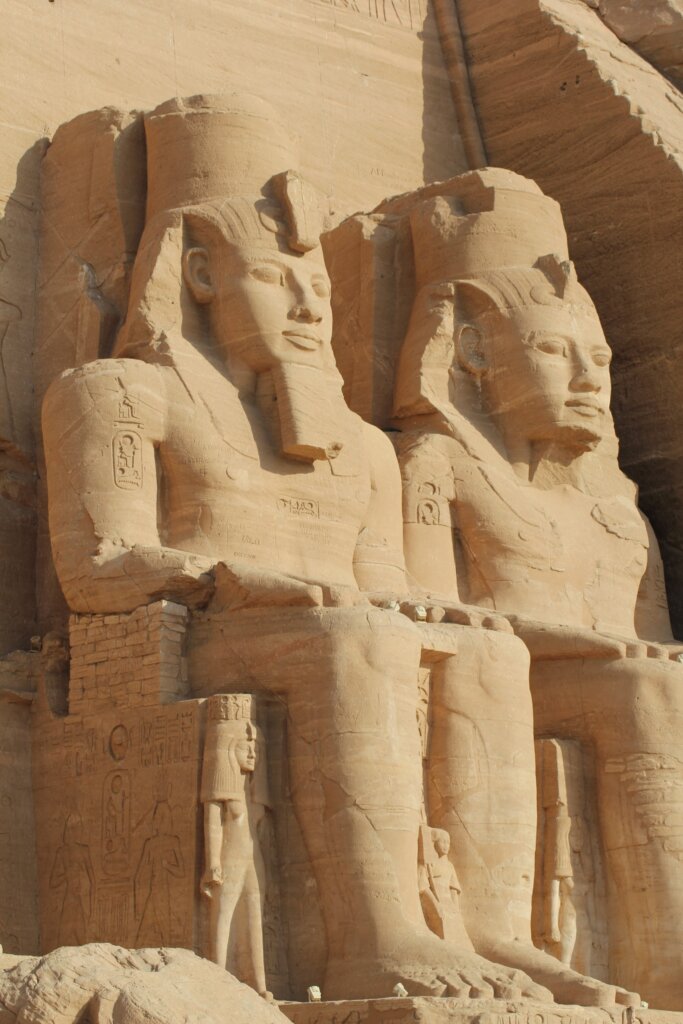
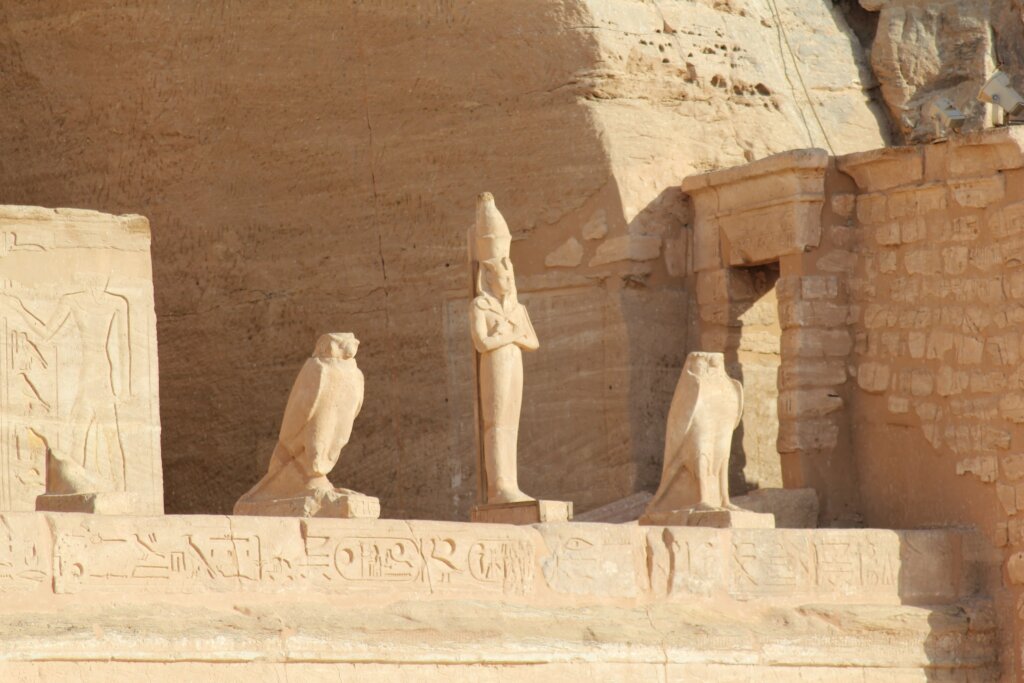
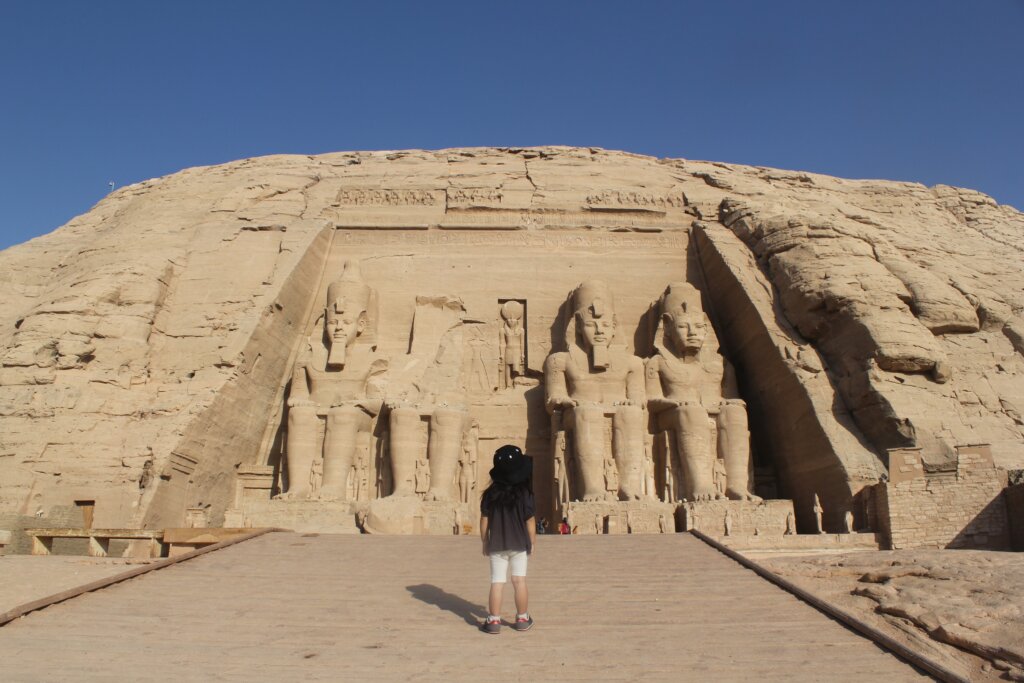
At the end of the dirt path stood the colossal façade of Abu Simbel. I had seen it in books since I was a kid, but nothing could prepare me for seeing it in person.
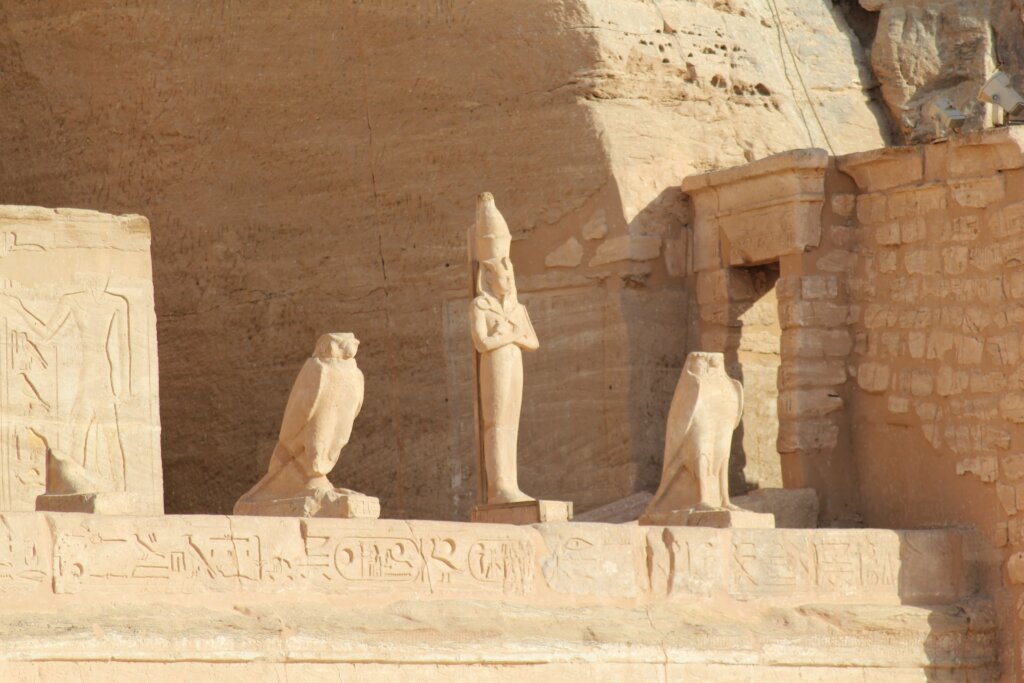
This was Ramses II’s temple, one of the most powerful and legendary pharaohs of Egypt’s 19th Dynasty. Unlike most temples built for the gods, this one was built by Ramses II for himself—turning his image into divinity.
He ruled Egypt for 66 years and lived to about 90—an eternity in ancient times. He outlived his children, his advisors, even the generation that crowned him. To his people, he really must have seemed like a god.
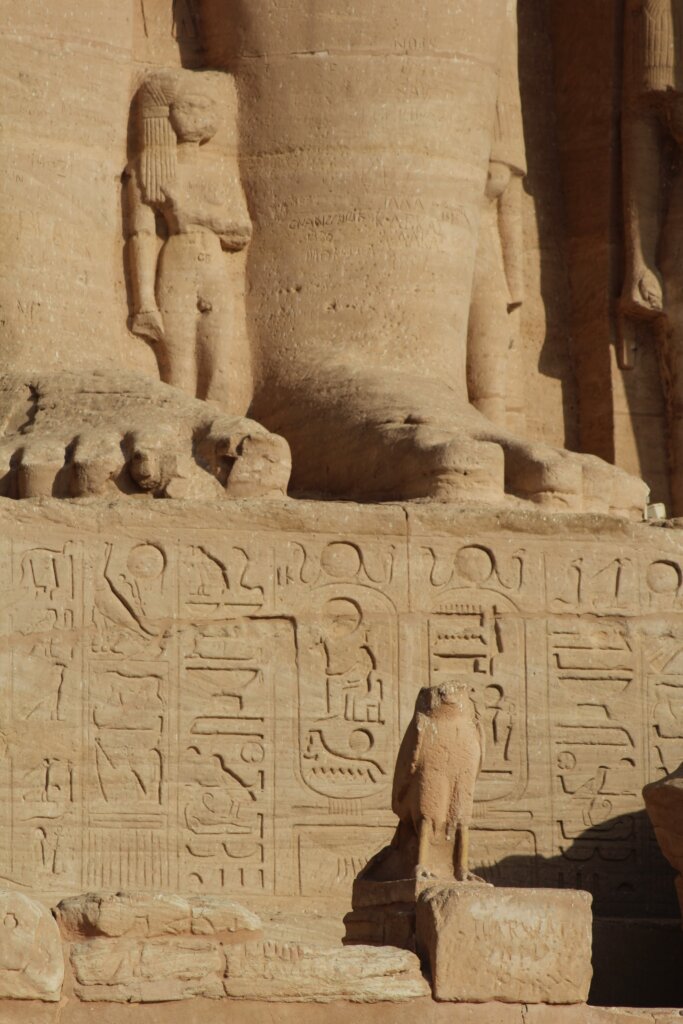
The seated statues in front? All of Ramses II. His queen, Nefertari, appears carved beside his legs—much smaller, of course. That wasn’t disrespect; it was custom. Pharaohs were considered divine. Everyone else, even queens, were mortal.
One of the statues had a missing head—never restored, as it was considered the will of the gods.
Julie and I were both completely overwhelmed. We had made it. The real Abu Simbel. Sweetie looked around wide-eyed. I whispered, “Remember this, okay? This is a place you’ll want to tell stories about.”
Inside the Temple
We moved closer, completely dwarfed by the scale. Construction began in 1244 BC and took 20 years. The temple remained buried under sand for nearly 3,000 years before a Swiss explorer rediscovered it in 1813.
Even though we had seen documentaries and exhibitions back home in Korea, nothing matched the feeling of standing right in front of it.
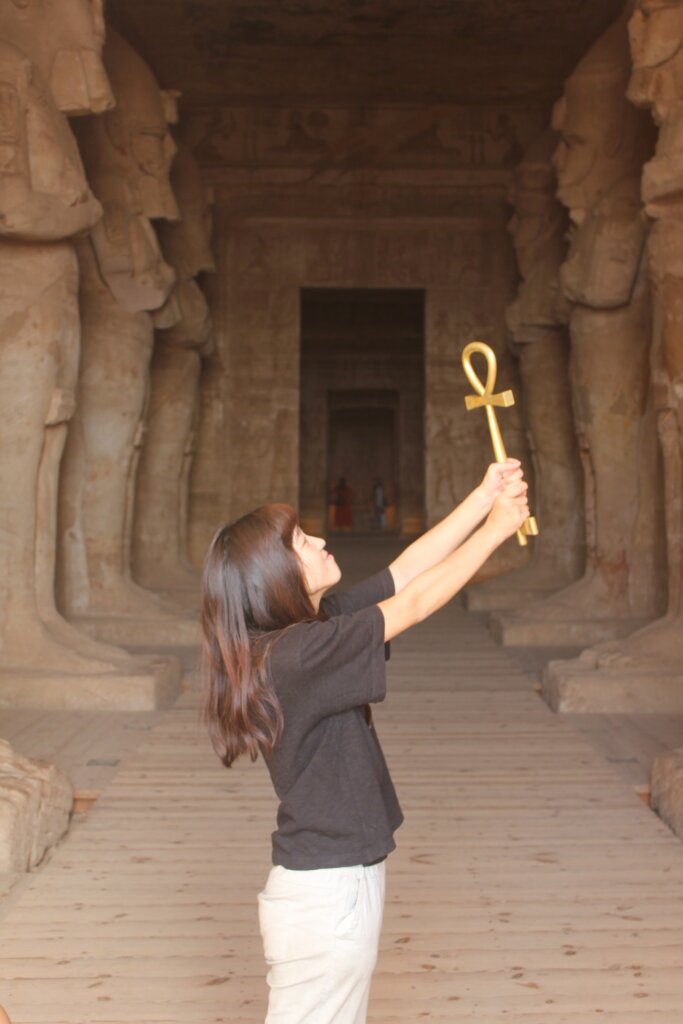
Photography inside the temple was forbidden, and there were guards around to enforce it. But… well, let’s say a small tip changed the rules. Not only were we allowed to take photos, but the guard even handed us a symbolic key—the Ankh, the ancient Egyptian key of life.
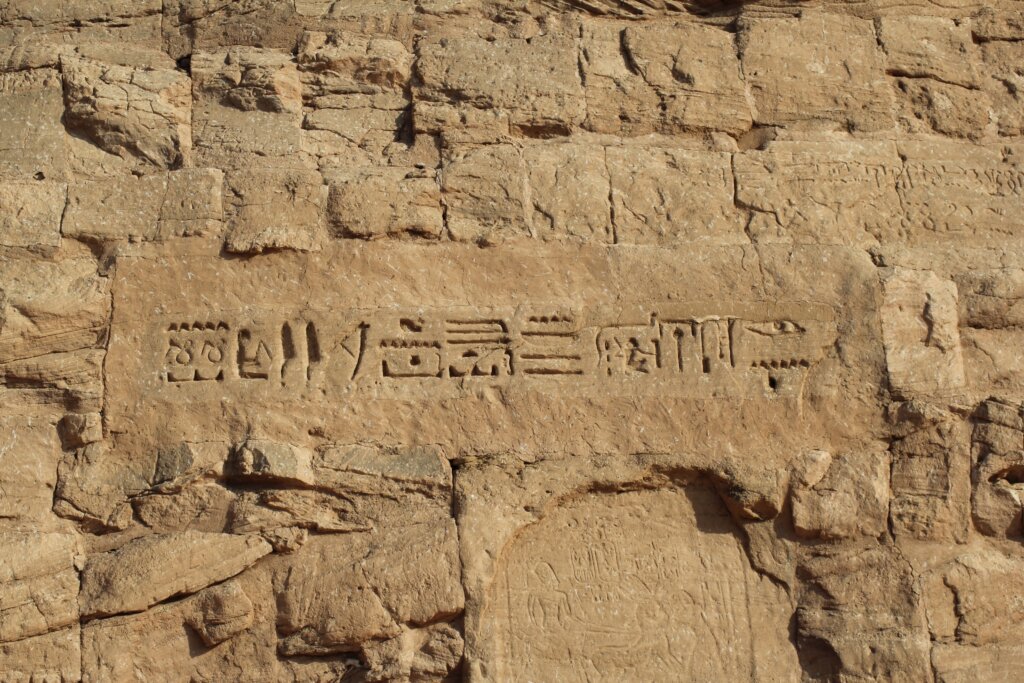
One detail that amazed me was how this temple was carved into a sandstone cliff, rather than built using transported stone blocks. It was literally a mountain, hollowed out and sculpted from within.
The Temple of Nefertari
Next to Ramses II’s temple is a second temple, one he built for his beloved wife, Nefertari. This was rare—she’s the only queen in Egyptian history to have a temple where her statues are the same height as the king’s. That alone tells you something.
We rushed inside to escape the sun. The interior was lined with pillars etched with her face. You could feel Ramses II’s love for her in every corner.
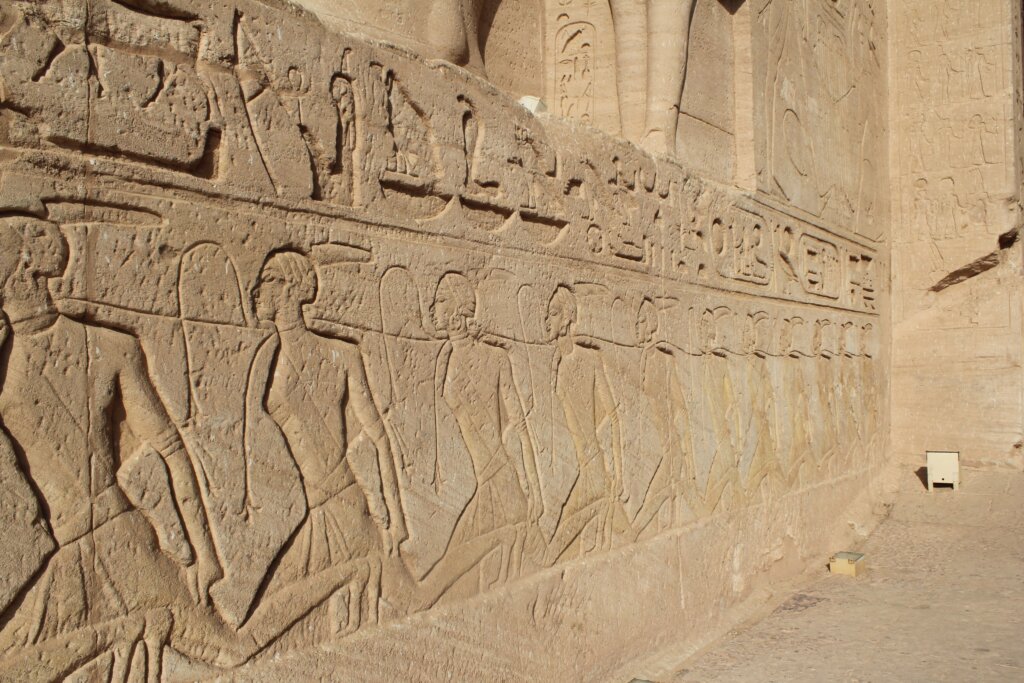
We spent over an hour studying every symbol and relief. Every story etched into the walls brought us deeper into the world of ancient Egypt.
Wrapping Up the Visit
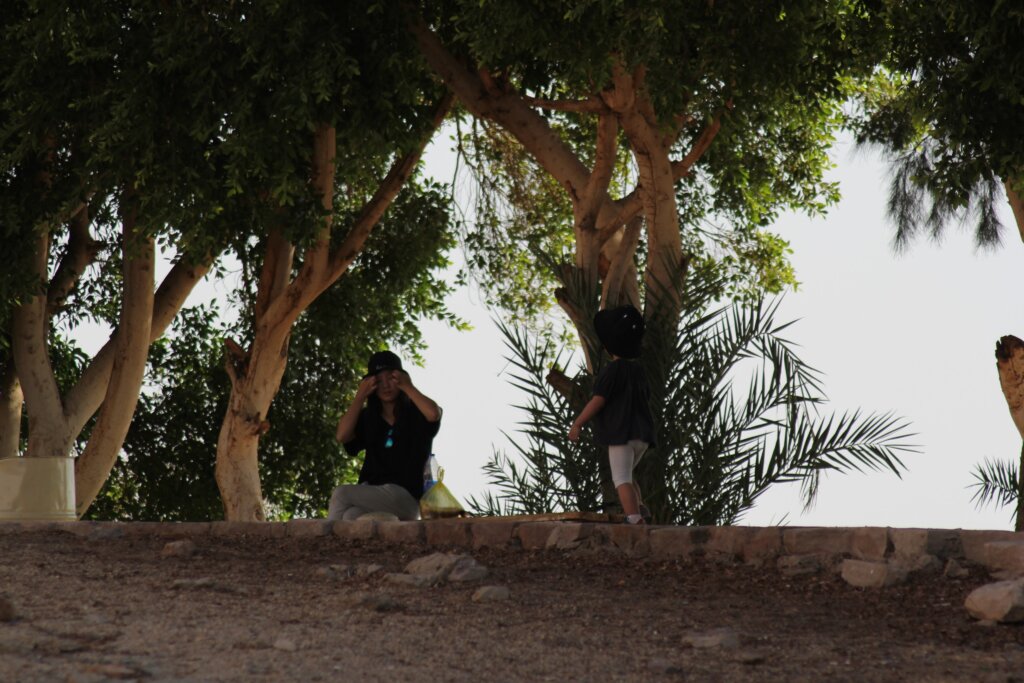
As we exited, I kept looking back at Abu Simbel. I didn’t want to leave. Sweetie was overheating from even that short walk in the sun. We sat under a rare patch of shade, sipping water and cooling off.
This place—so grand and mysterious—could have been lost forever if not for international efforts. I felt a deep appreciation for the preservation work done here. The hill we had walked over on the way in? Completely artificial. Built to house and protect this monument.
How much can we really understand about ancient Egypt? How much can we learn from a single visit? Probably not enough. But the emotion it stirs up… that’s more than enough to carry with us.
Tips for Traveling with a Baby
- Start Early, Rest Later:
Abu Simbel tours begin before sunrise. Make sure baby naps well the day before and prepare a quiet afternoon afterward. - Sun Protection is Non-Negotiable:
Bring sunscreen, a sunhat, and plenty of water. Even early in the morning, the sun is intense. - Snacks and Shade Breaks:
There are no vendors or shade inside the site. Bring your own snacks and find rest spots early. - Car Comfort is Key:
A comfy vehicle makes a 3-hour drive bearable. If booking a private car, ask about AC and seating. - Prepare for No Strollers:
The rocky terrain and sand make it hard to use strollers. Baby carriers are the way to go.
Local Travel Tips
- Private Tour = Flexibility:
We chose a private vehicle to avoid delays waiting for group tours to fill up. Pricier, but worth the freedom. - Entry Fee is Separate:
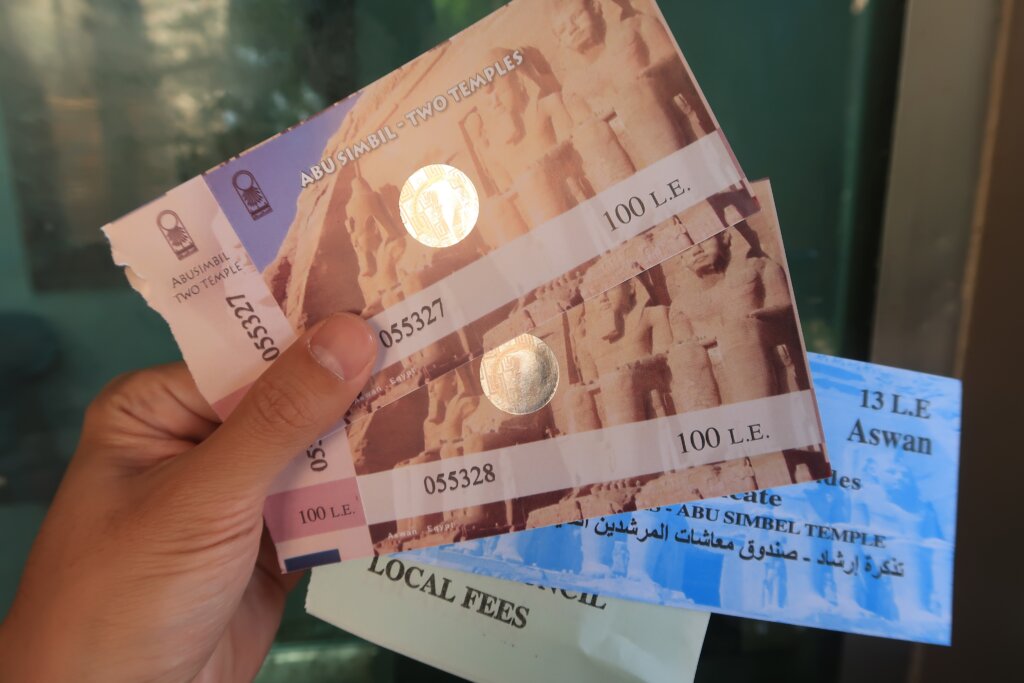
Entrance tickets to Abu Simbel cost 115 EGP per adult, even if booked through a tour company. - Tip for Temple Access:
Tipping guards might open up photo opportunities inside. It’s not “official,” but common. - Avoid Midday Heat:
Plan to visit Abu Simbel in the early morning. Afternoon temperatures are harsh, even dangerous. - Visitor Center First:
Don’t skip it. The backstory of the relocation adds depth to the entire experience.
Travel Reflections
Abu Simbel was more than a monument—it was a reminder of time, power, and devotion. Seeing it up close, learning how it was relocated, and walking through the chambers where pharaohs declared themselves gods… it humbled me.
Sweetie may not remember every detail, but I hope some of the wonder sticks with her. And for us, today was the reward after days of heat, stress, and negotiation. It was a gift.
Tomorrow, we board the Nile cruise. A slower pace awaits. But for now, this one day will stay with me a long, long time.



Leave a Reply