Visit Luxor with a baby – cool museums by day and ancient temples glowing at night. Travel tips, stroller-friendly routes, and quiet joys in Egypt.
Table of Contents
- Main Journey
- Events
- Tips for Traveling with a Baby
- Local Travel Tips
- Travel Reflections
Main Journey
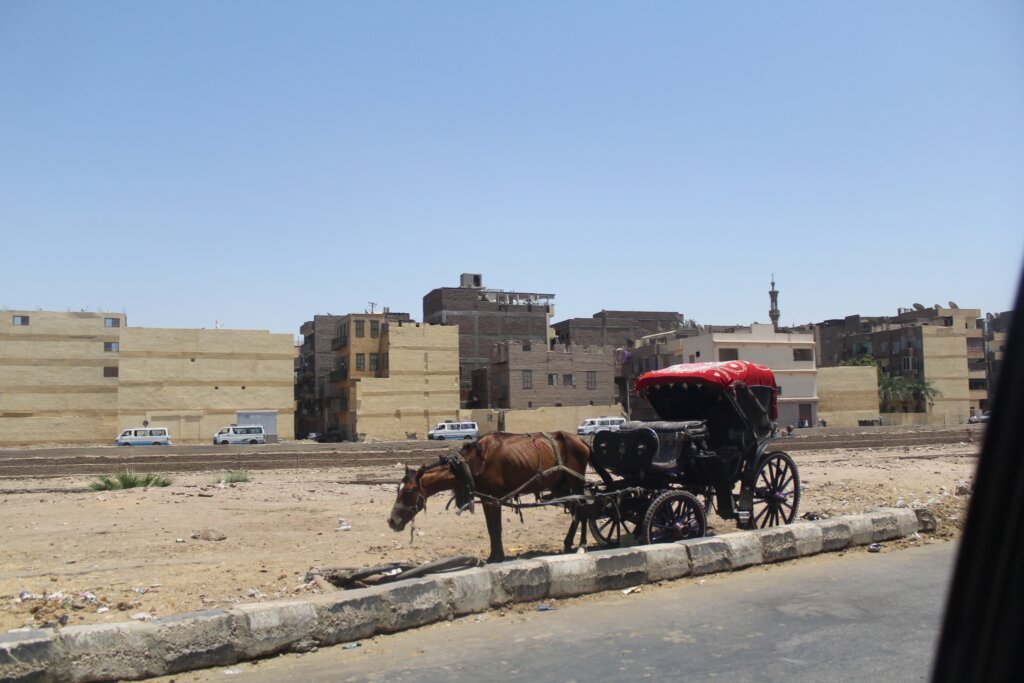
We started the day slowly. After waking up late and enjoying a relaxing breakfast at our hostel, we decided to take a horse carriage for the first time in Luxor. Our destination was the Luxor Museum, just a little outside the city center. With daytime temperatures hitting 40°C, an indoor activity sounded like the smartest move.
The horse carriage ride was short but eventful. We agreed on a price of 5 Egyptian pounds, but as we paid, the driver suddenly shouted, “Five pounds per person!” Classic tourist trick. We didn’t argue—we’d learned that sometimes, walking away is the best peacekeeping tool.
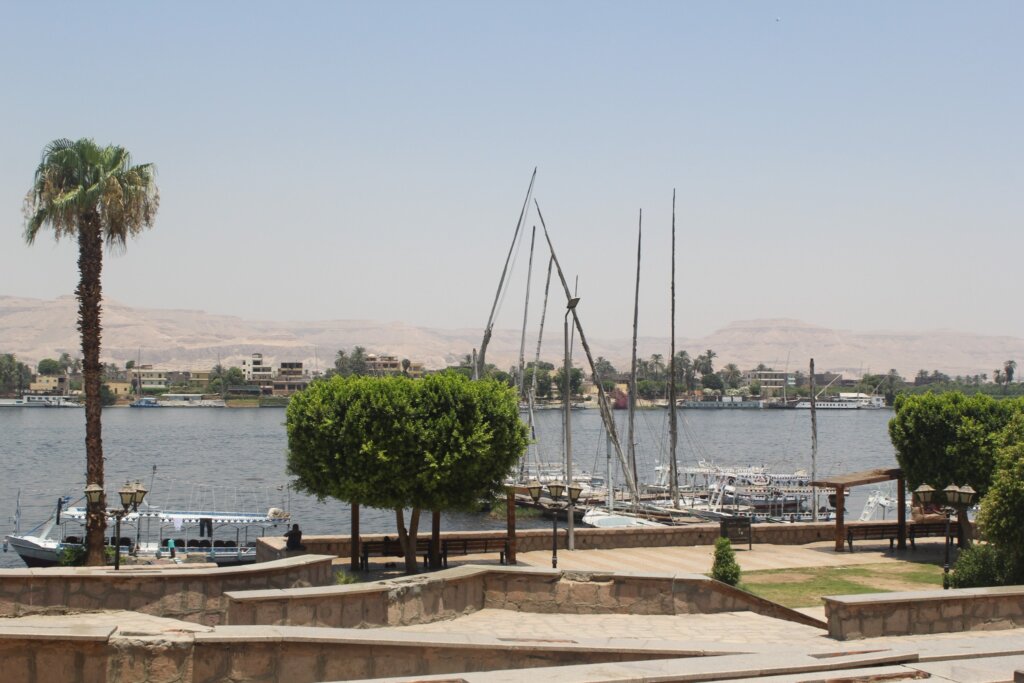
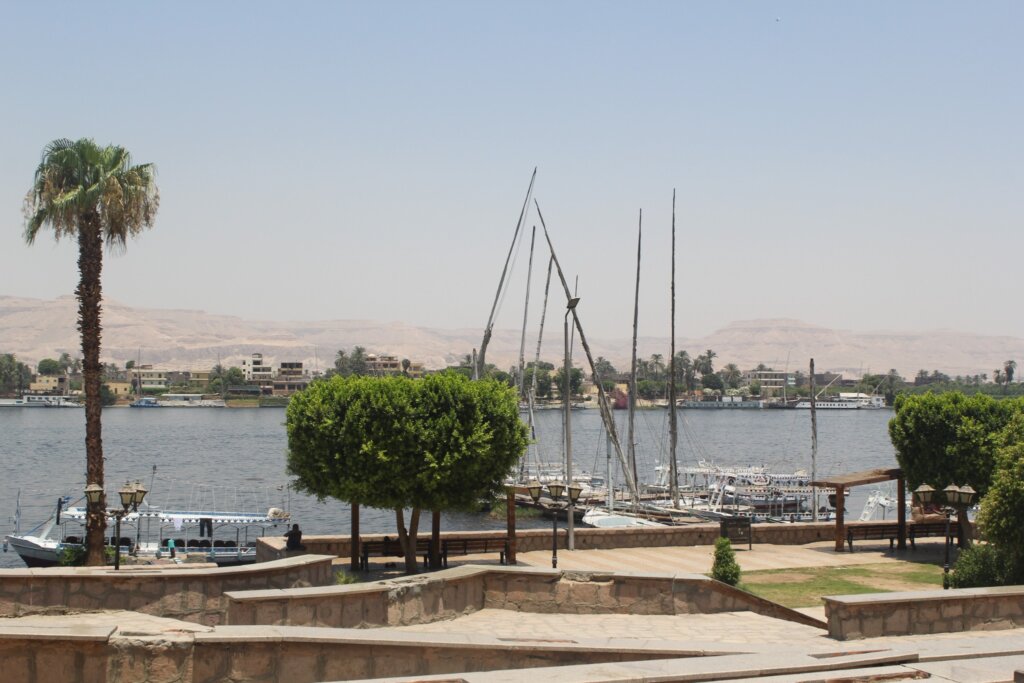
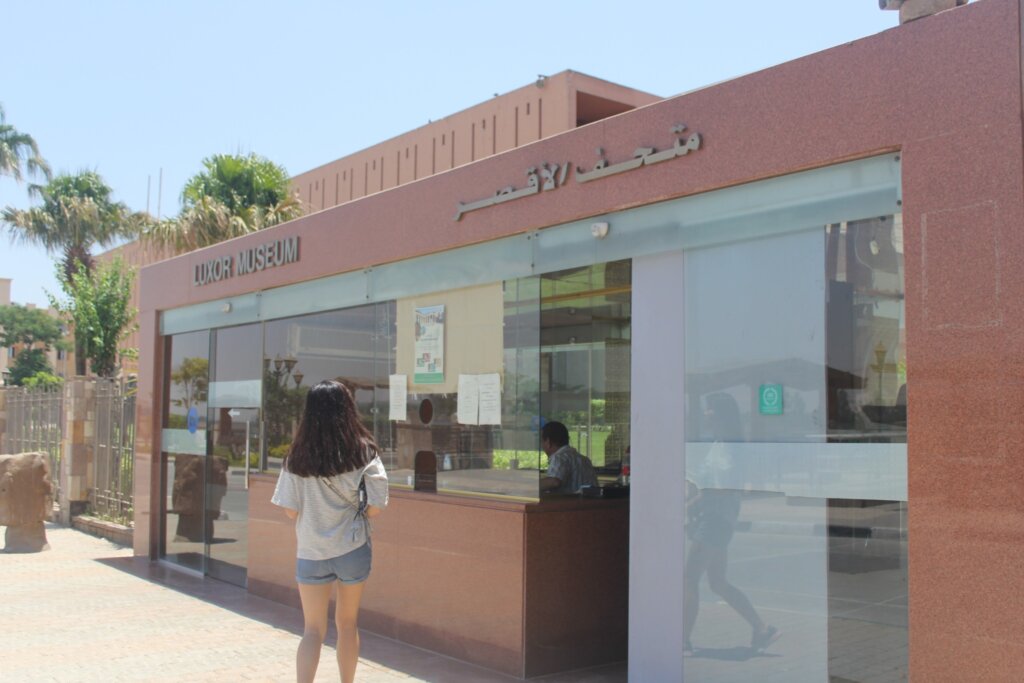
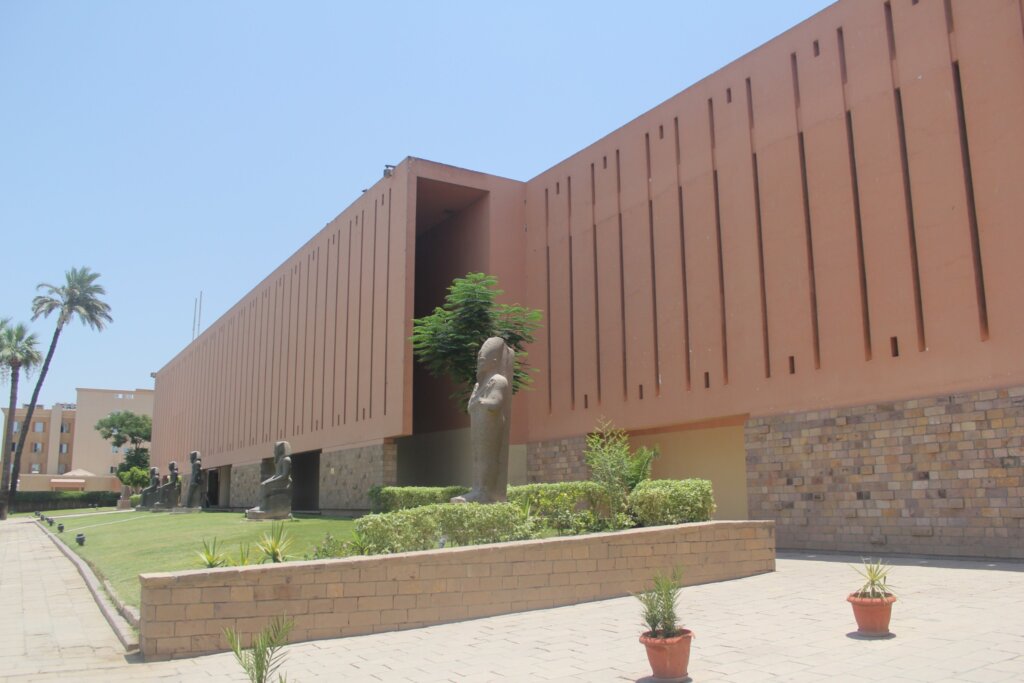
We got off by the Nile River and walked a bit to reach the museum entrance. The Luxor Museum is open in two slots: 9 AM–2 PM and 3 PM–5 PM. Adult entry costs 100 Egyptian pounds. We skipped the photography pass this time.
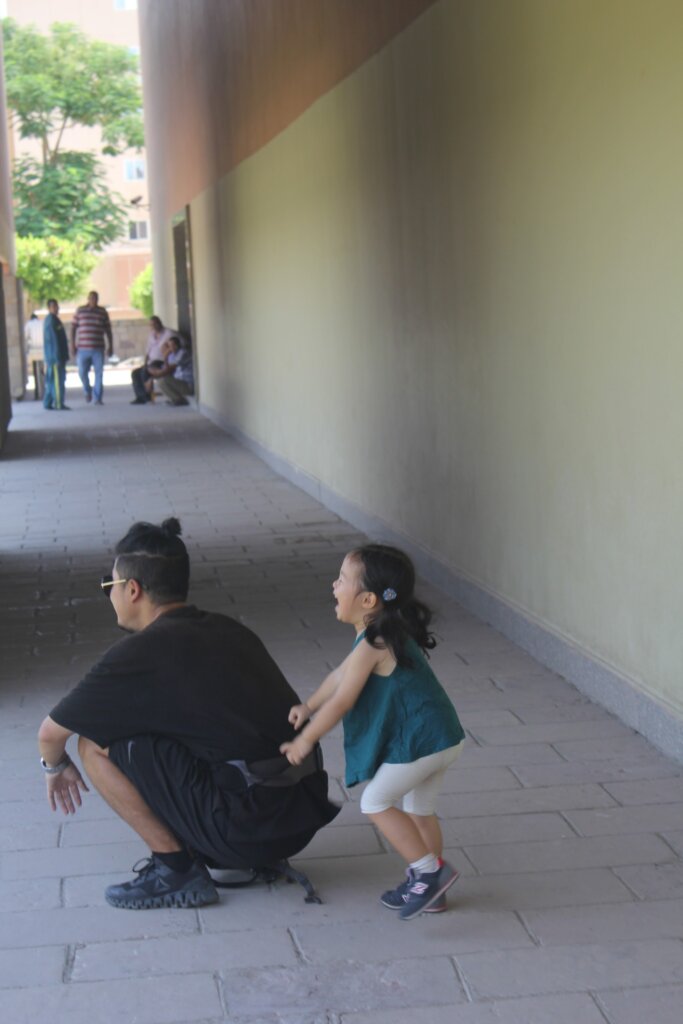
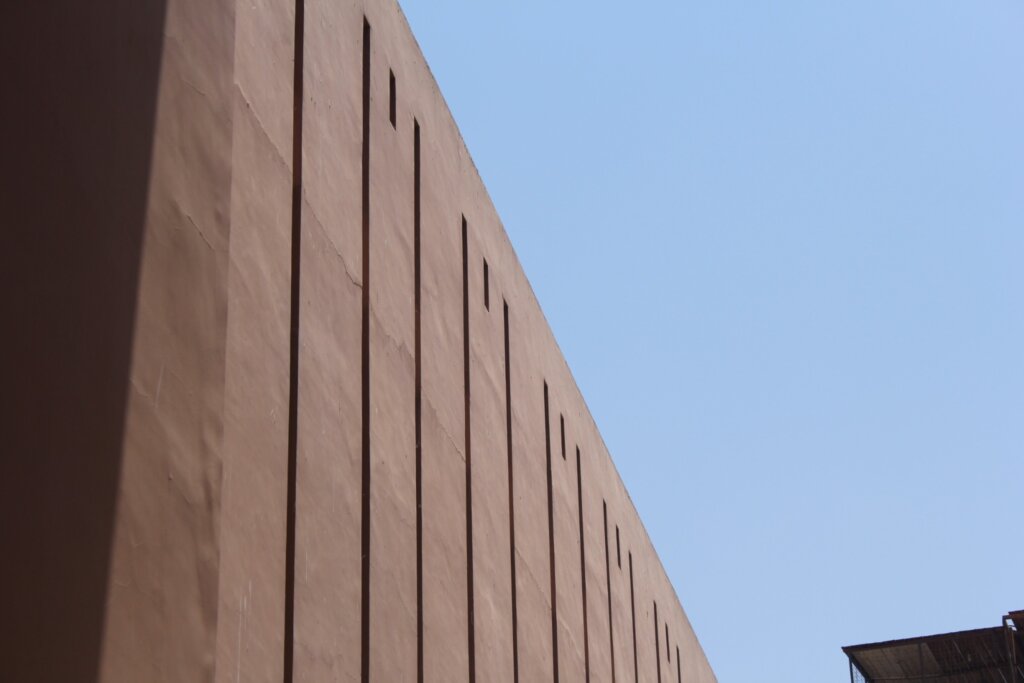
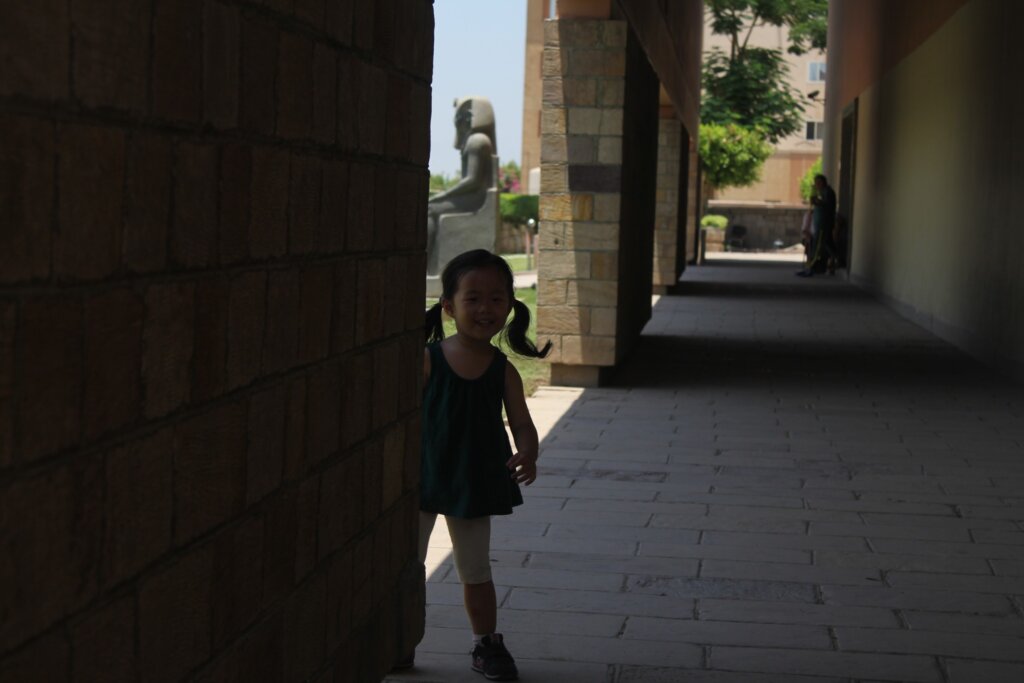
The museum is small but calm. Statues greet you from the garden, facing the Nile, and the cool shaded corridors are a relief from the sun. Sweetie was full of playful energy the moment we let her down in the breezy hallway. Choosing the museum for today felt like the right call.
Inside, the air-conditioning helped us enjoy the exhibits at our own pace. The museum houses artifacts from Thebes (modern Luxor), including two real mummies. This was our first time seeing mummies up close in Egypt.
They were preserved inside dark, glass rooms—skin darkened from tar, dried and shriveled, but somehow still human. It was eerie and fascinating. If it weren’t for the strands of hair, I might’ve thought they were wax figures.
We also learned about Anubis, the jackal-headed god of embalming. The black skin of the mummies symbolizes the tar used in preservation, and Anubis wears that symbolism in every depiction.
Despite the interesting artifacts, the museum was smaller than we expected, especially for a place like Luxor. Much of the collection centered around Amenhotep IV (Akhenaten).
Still, it gave Sweetie plenty of space to explore. At one point, I reached behind a statue to surprise her, and she ran off squealing, only to copy me moments later outside in the garden, shouting, “Who woke me up?!”
After the museum, we hopped on a mini-bus for just 1 Egyptian pound each. It dropped us near Luxor Temple, since the road between the museum and temple is one-way. That’s why we’d taken the carriage earlier!
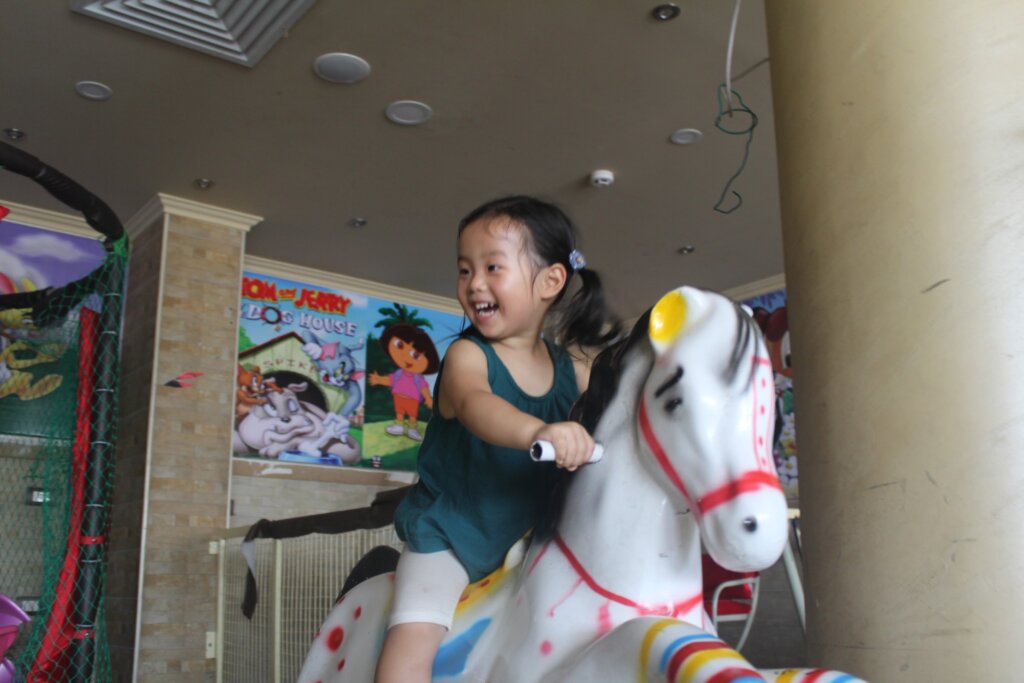
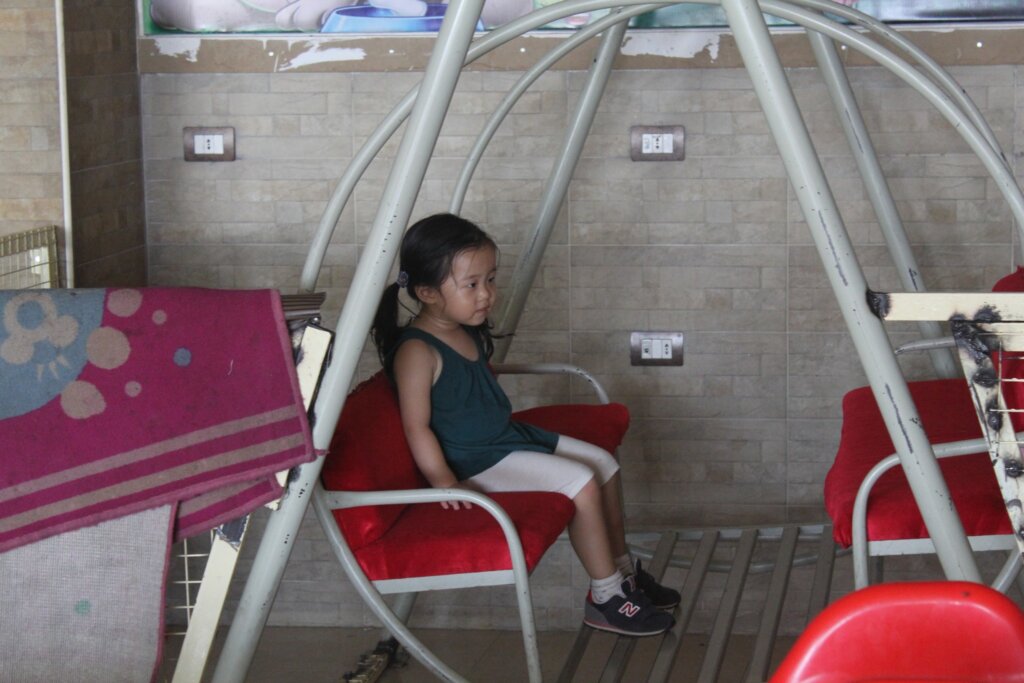
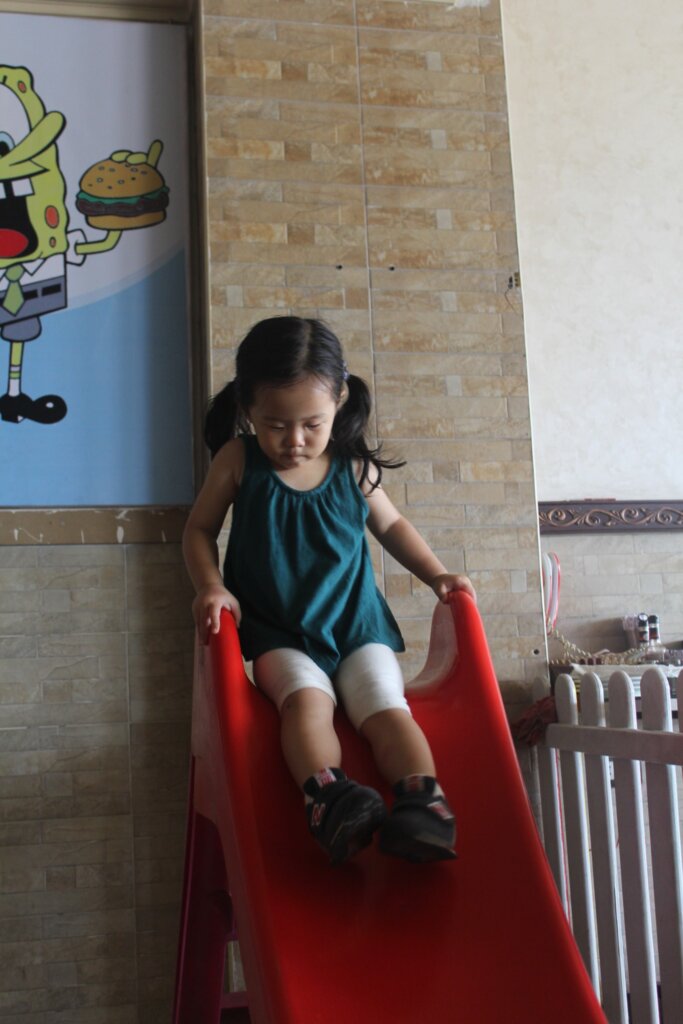
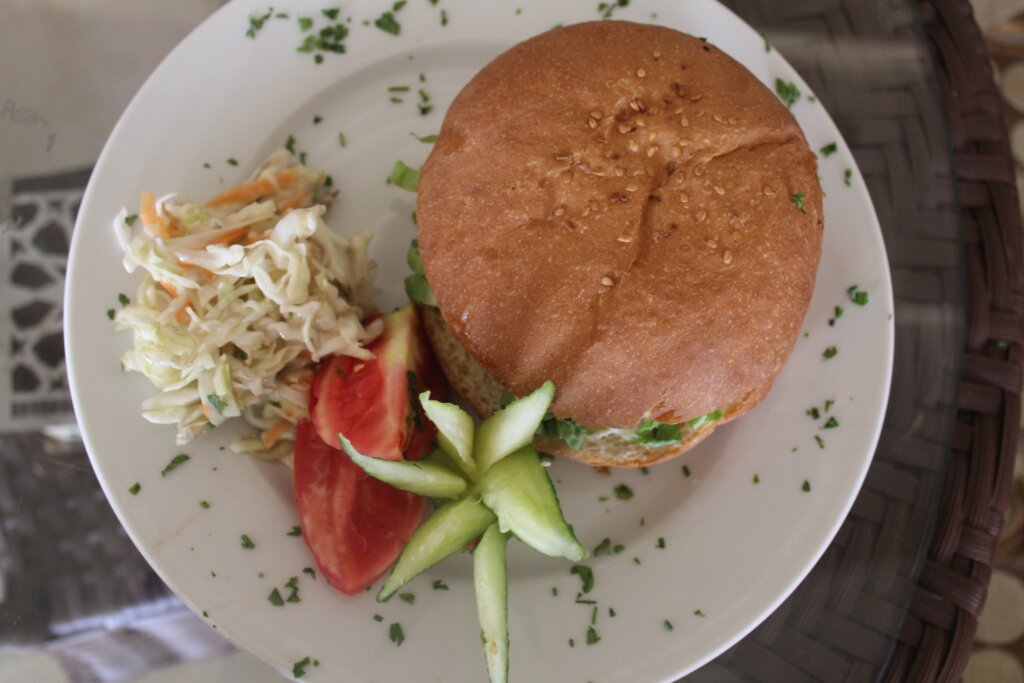
For lunch, we returned to a café we’d spotted the night before—the one with the beautiful view and a playroom on the third floor. Though the café was only operating on the second floor due to low foot traffic, the kind staff turned on both air-conditioning and fans just for Sweetie. She played to her heart’s content while we waited for food.
Events
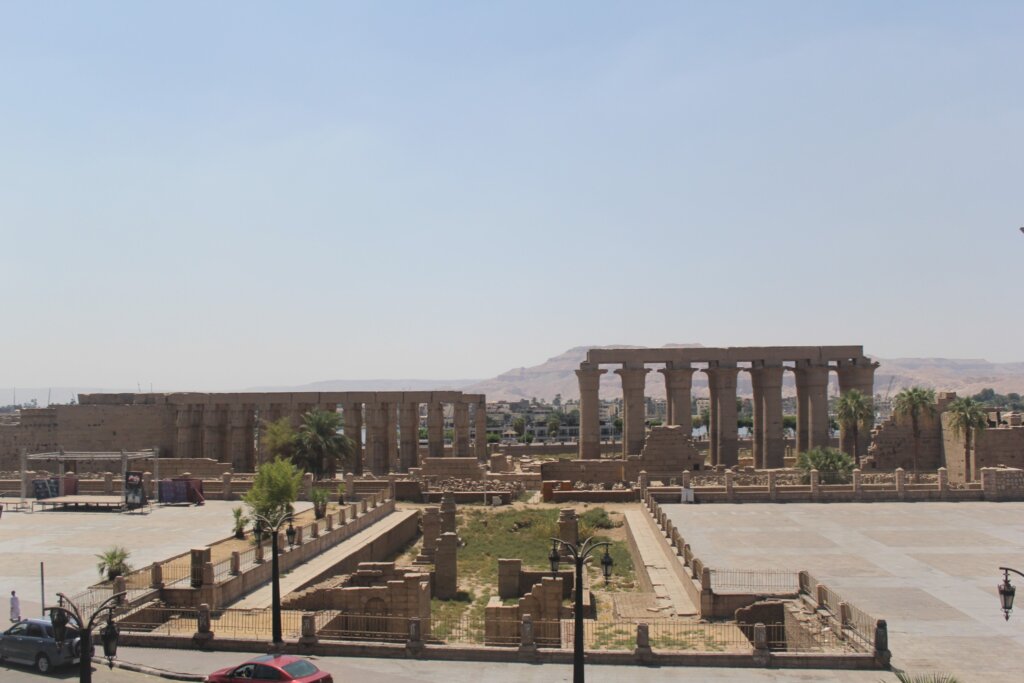
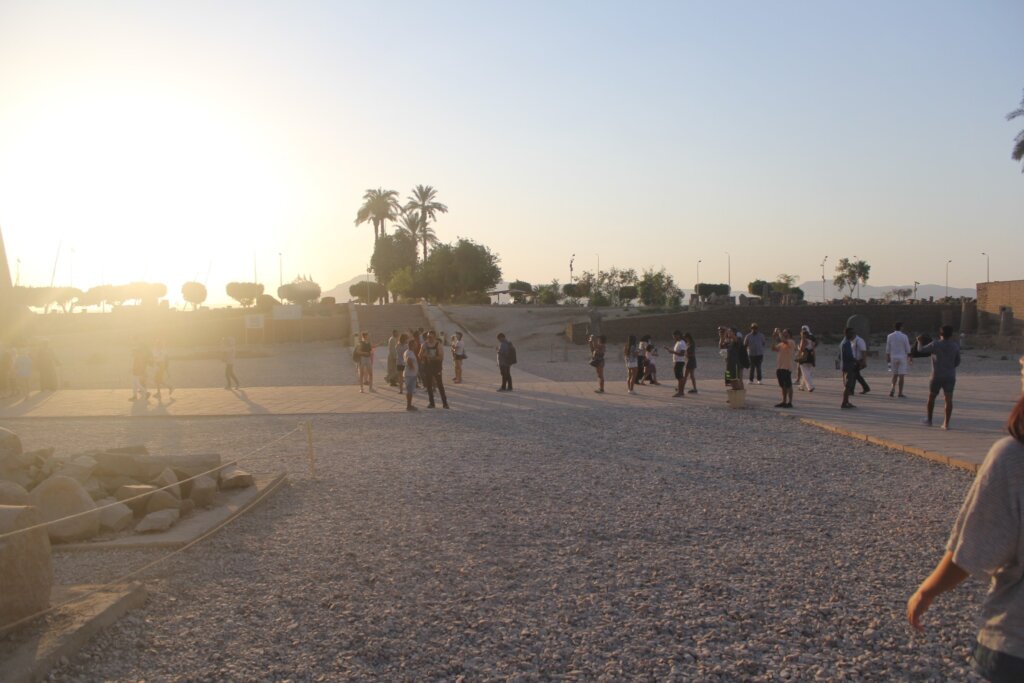
In the late afternoon, we returned to explore Luxor Temple, this time inside. Yesterday, we only saw the exterior walls at night. Today, we visited around 5:30 PM, perfectly timed to enjoy both the golden hour and the early night lighting.
We entered with a 50% discounted ticket—a nice bonus.
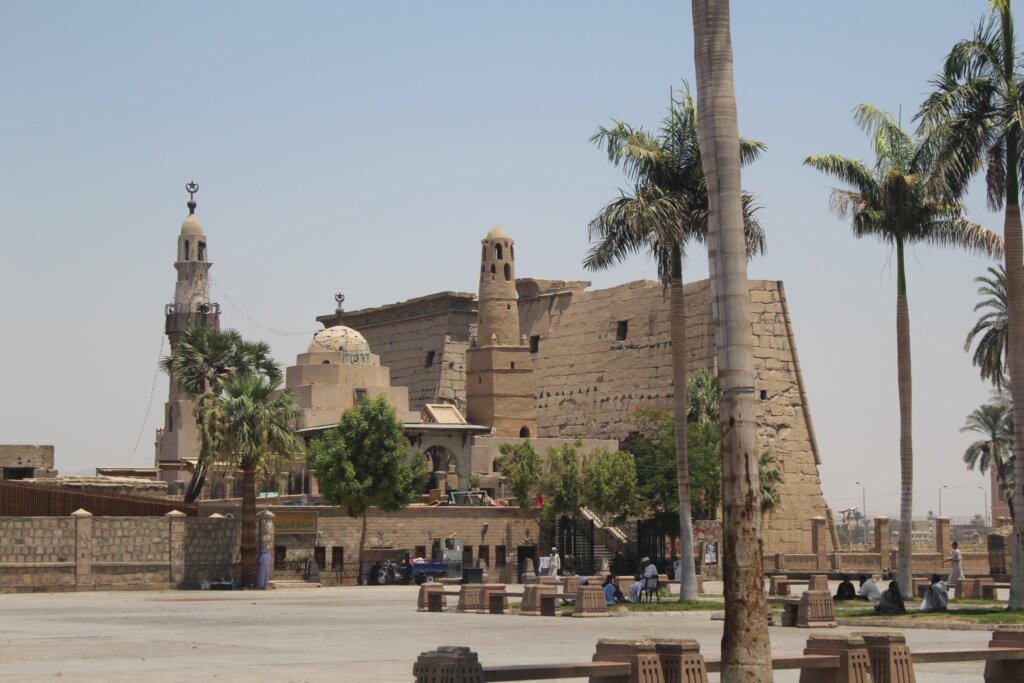
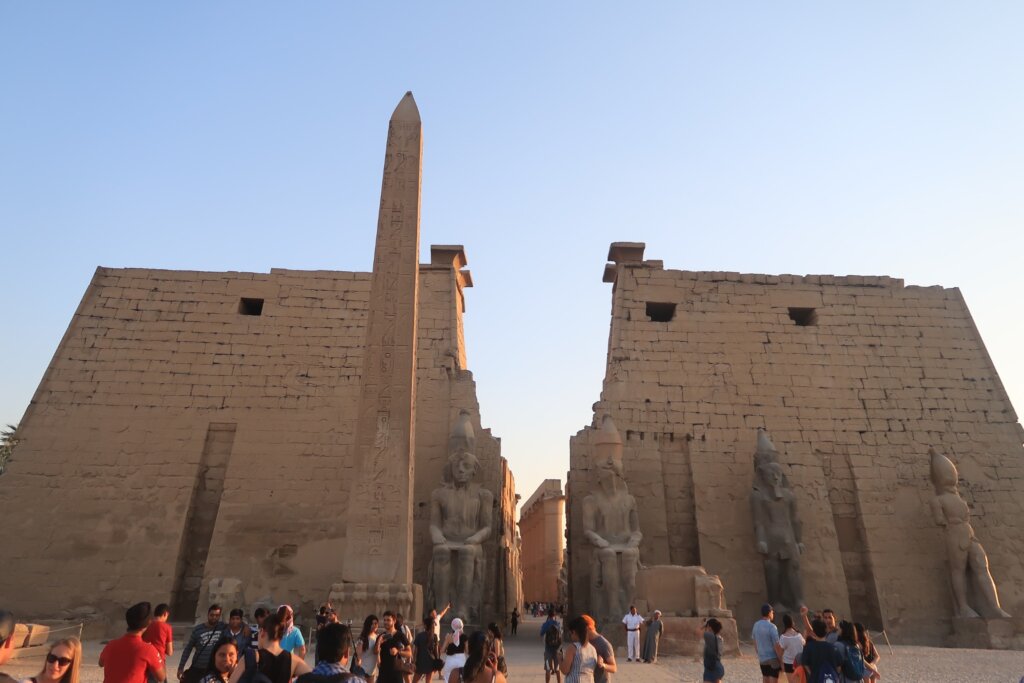
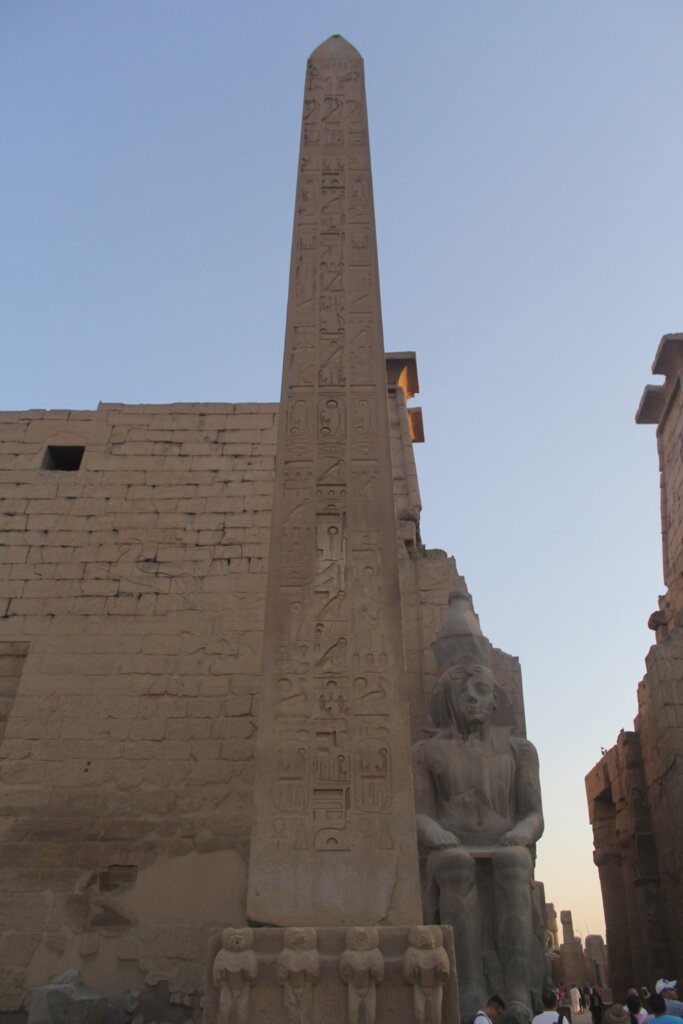
At the entrance, the pylon and the massive statues of Ramses II welcomed us. One obelisk still stands, but its twin was gifted to France in the 19th century and now sits at the Place de la Concorde in Paris. We’ll see it next month!
Inside, Sweetie mimicked Julie’s arm-raising pose in front of the pylon, like she was casting a spell over the ancient temple.
Next came Ramses II’s Court, a rectangular open space filled with his statues. Ramses II really was the superstar of ancient Egypt. From Abu Simbel to Karnak and now Luxor Temple—he was everywhere.
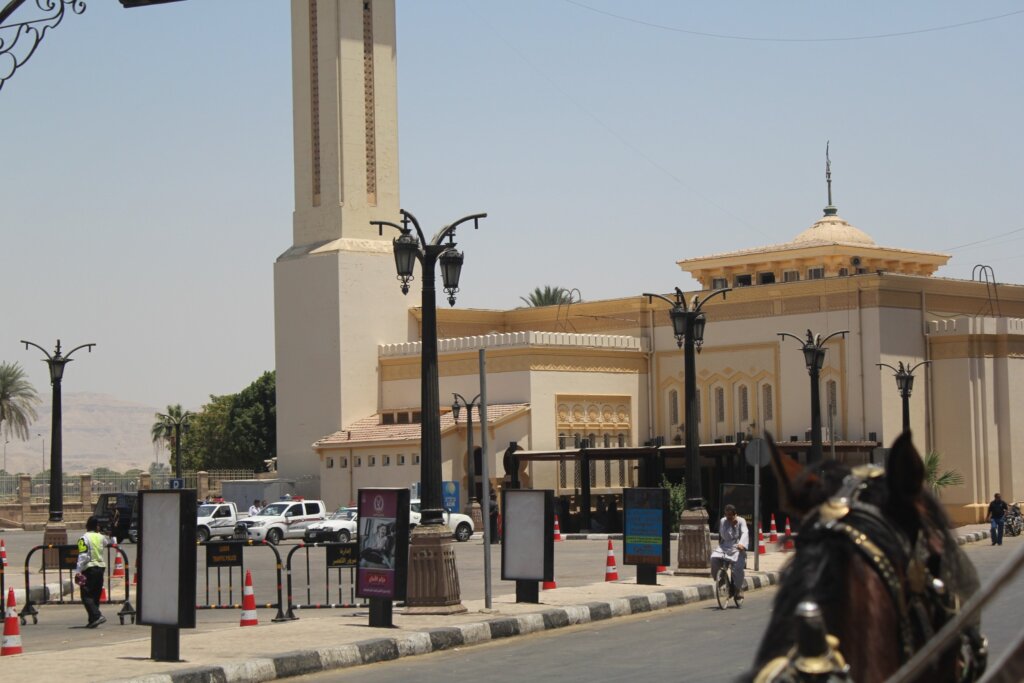
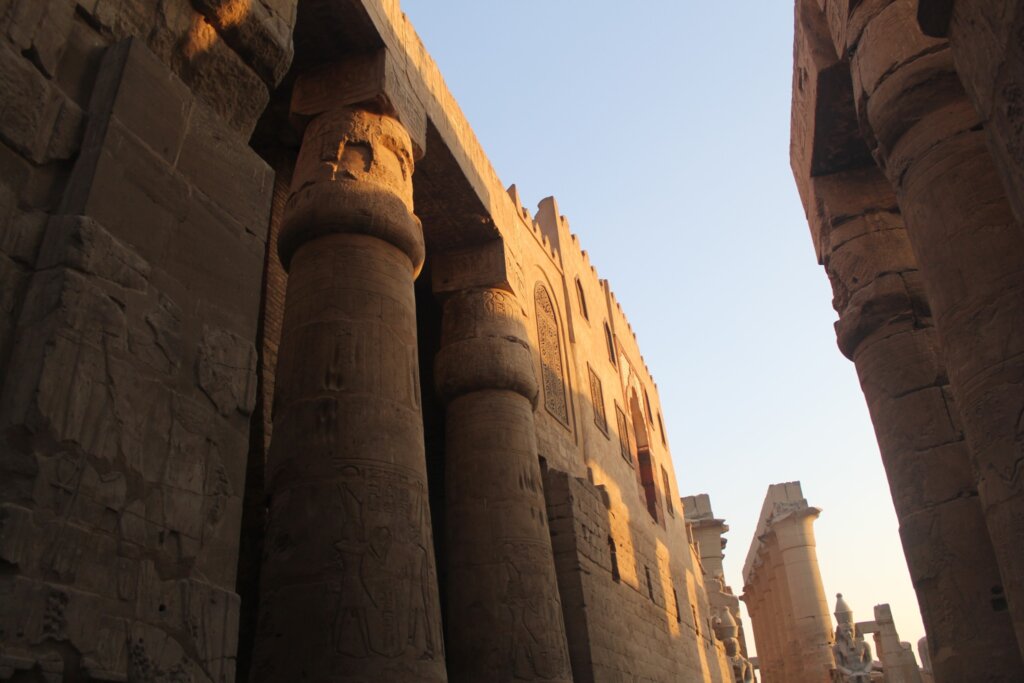
Yet, I couldn’t help but feel frustrated seeing how parts of the temple were repurposed to build a mosque still in use today. Ancient stones, repurposed walls—there’s a strange sadness to that.
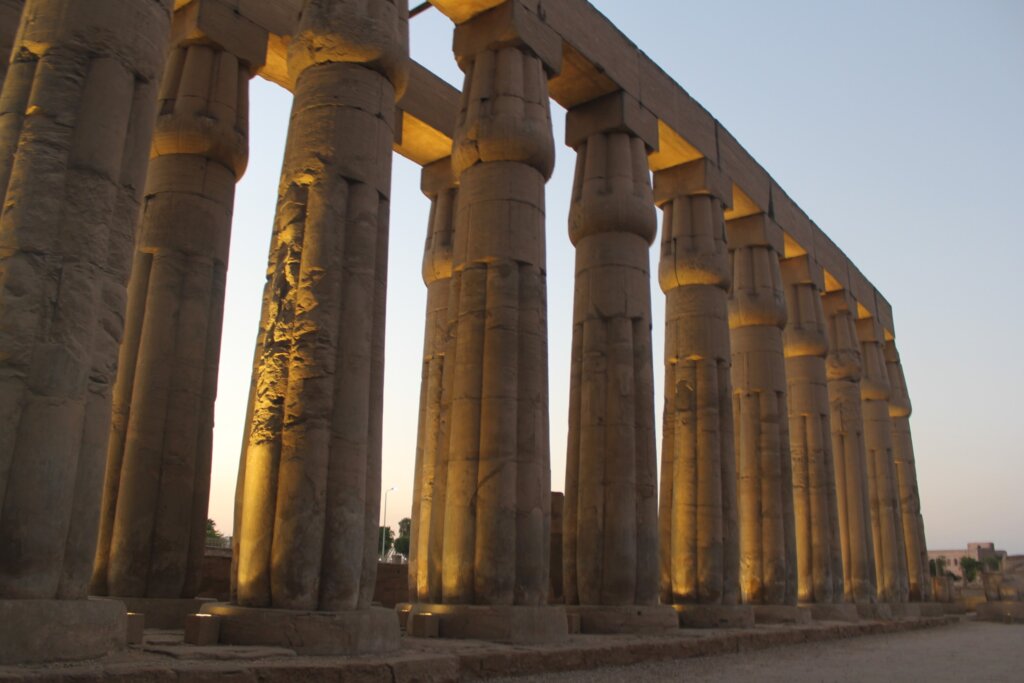
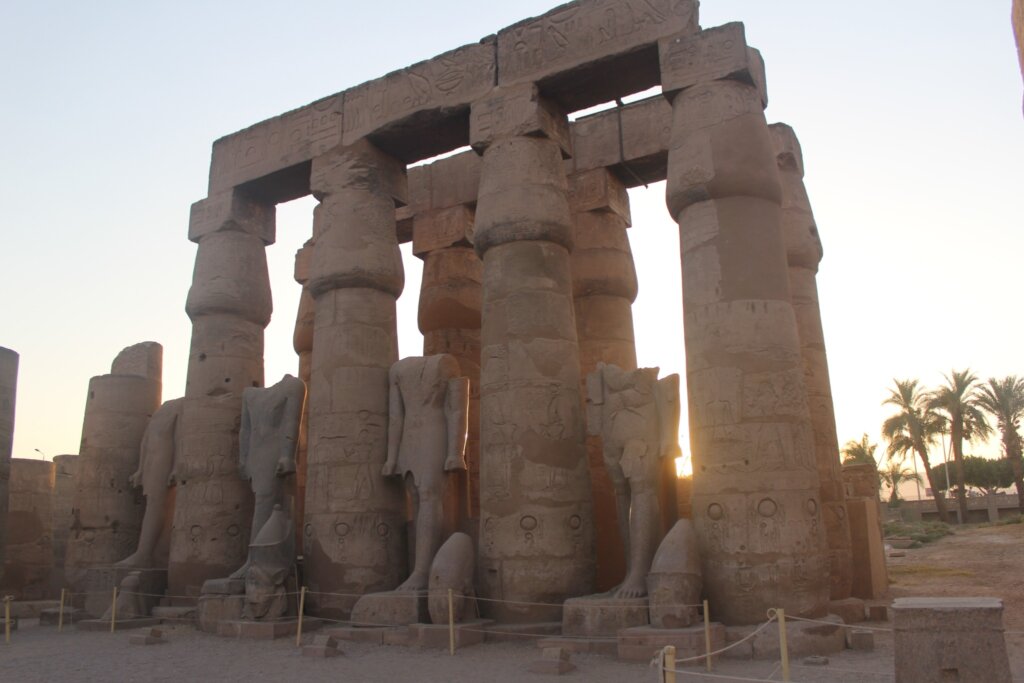
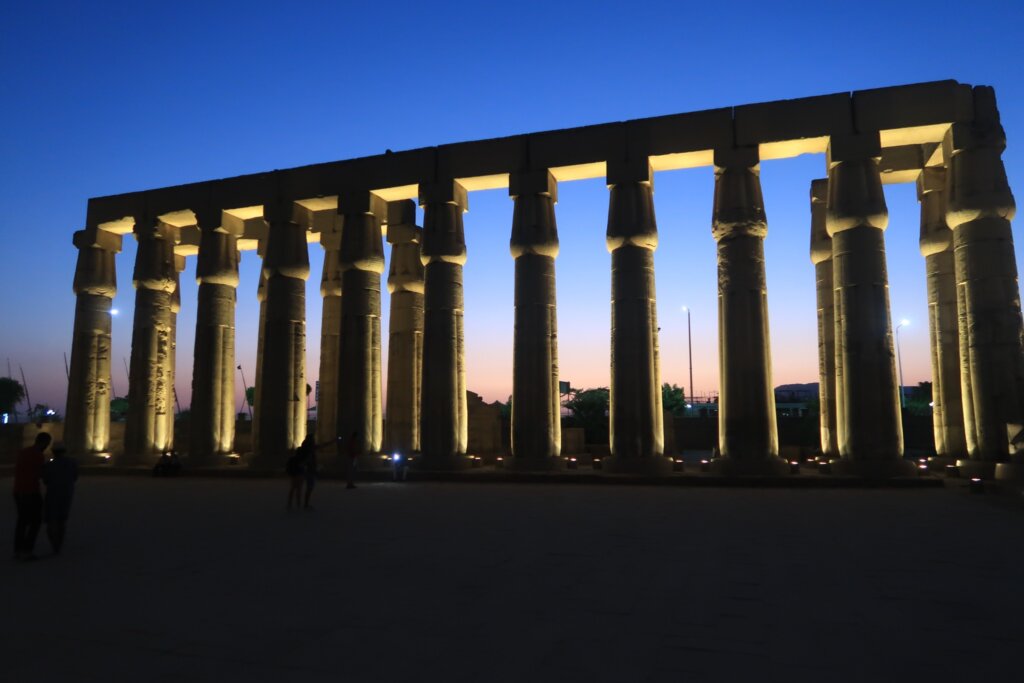
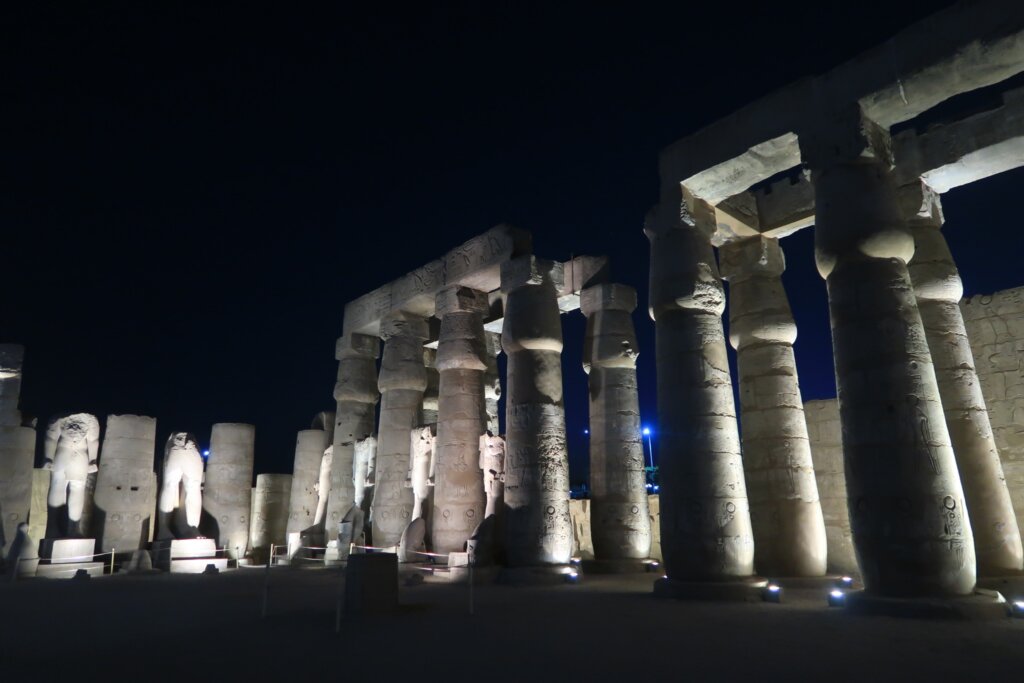
Julie and Sweetie flitted through the next area, pretending to be butterflies as they passed the colonnades into Amenhotep III’s Court. The towering double rows of columns surrounded the open court like guards of history. It was stunning.
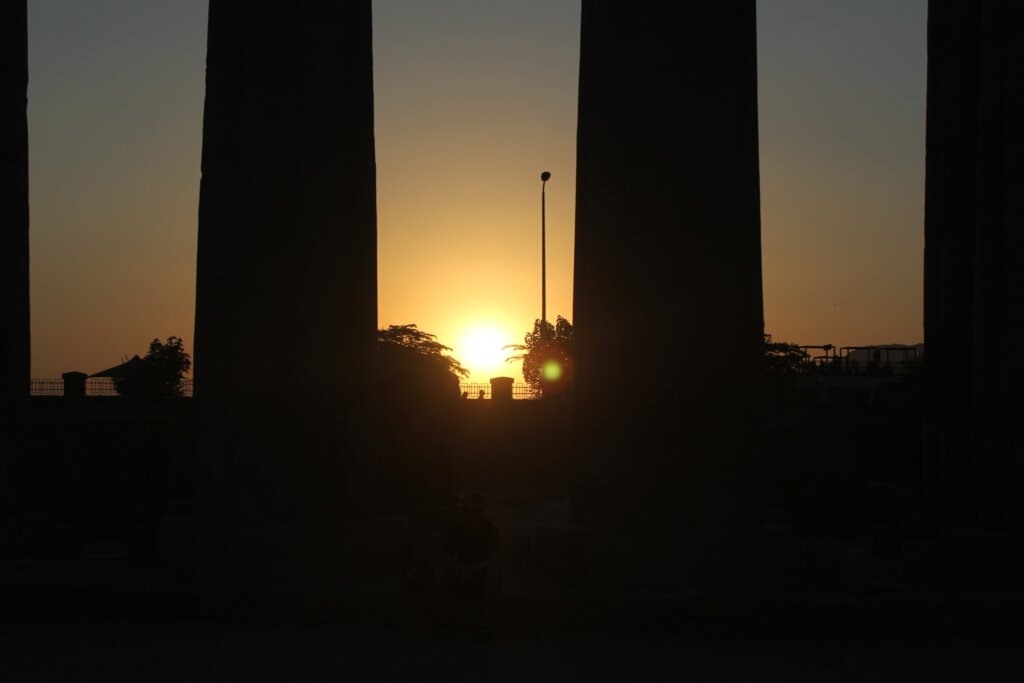
We snapped family photos before the sun disappeared, then rushed toward the back of the temple to see the Sanctuary of Amun-Ra. The sanctuary had suffered heavy damage over the years—some from churches built during Roman times, some just from time itself.
Sweetie found grapes carved into the stone. Julie found carvings of a bound ox. I… saw something that looked like pig’s feet and instantly started craving jokbal (Korean braised pig’s feet). That’s travel hunger for you!
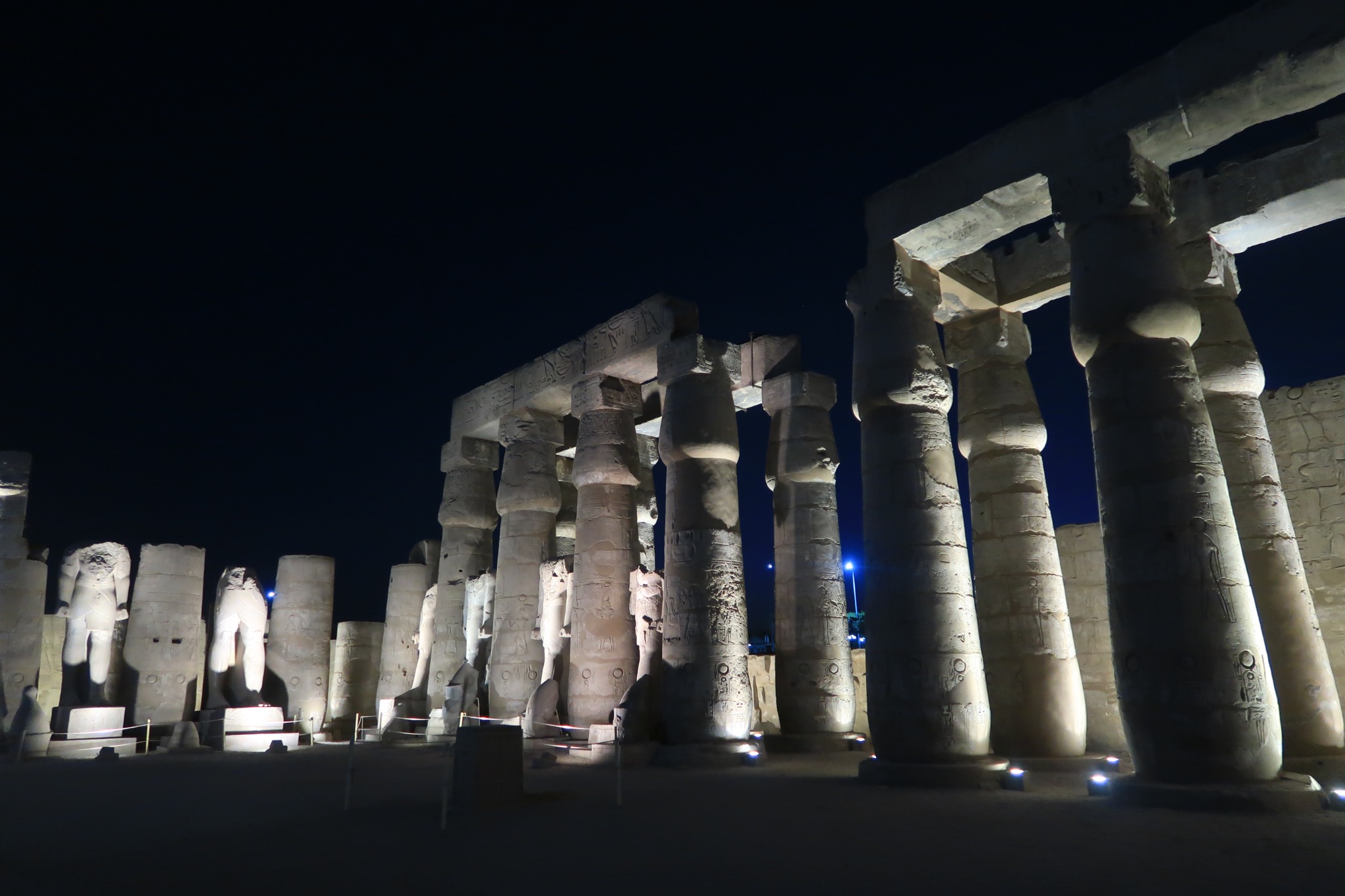
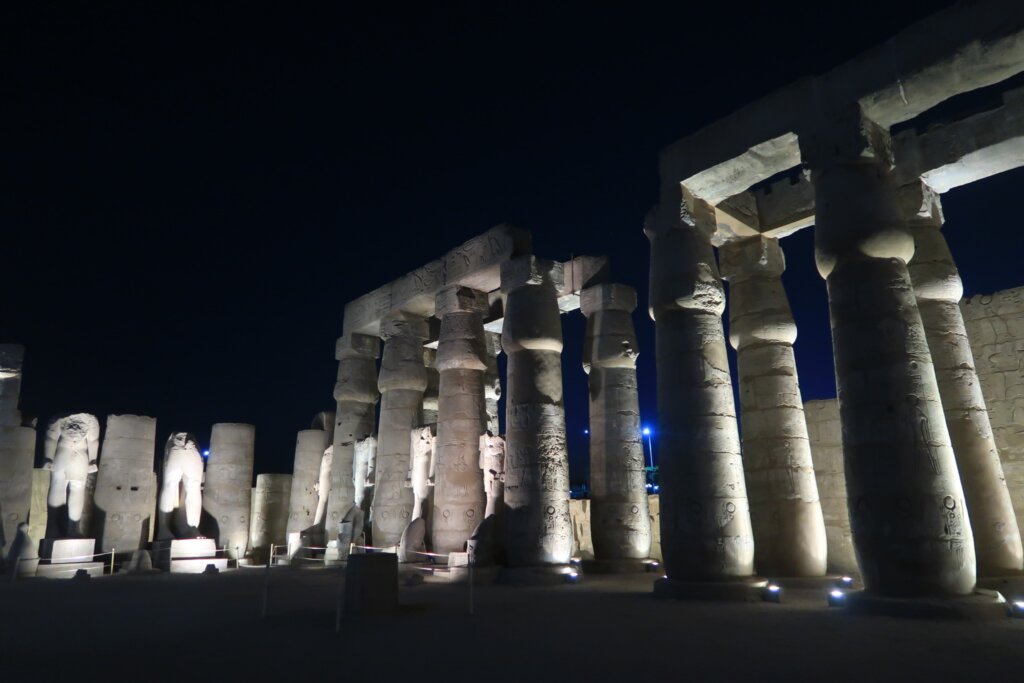
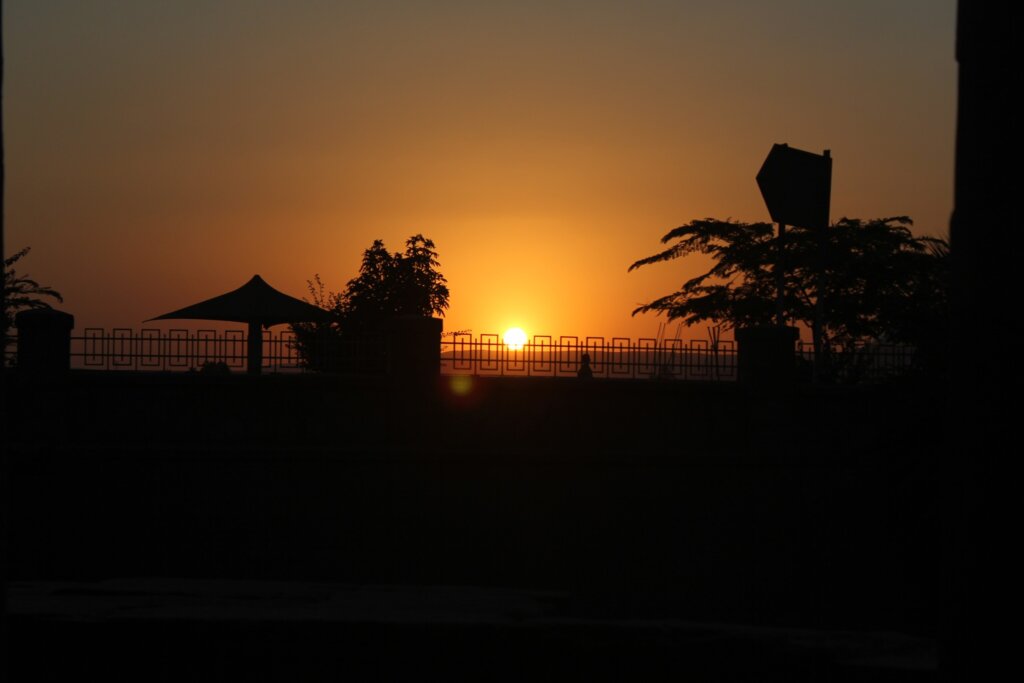
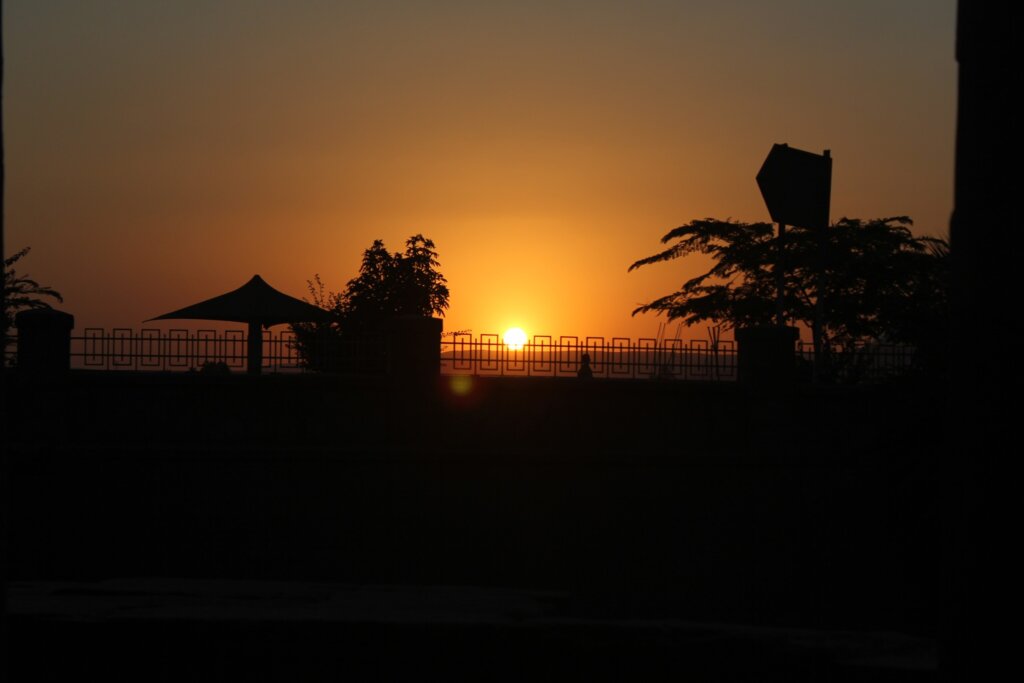
As the sun dipped below the horizon, the temple lights flickered on. The contrast of deep blue sky and warm yellow spotlights was magical. Amenhotep III’s Court looked completely transformed.
Even though Luxor Temple is considered smaller than Karnak, it has a personality of its own. The fallen heads of Ramses II’s statues stood illuminated outside the pylon, almost glowing in the night.
The processional way in front of the pylon once featured a perfect row of statues and twin obelisks. Now, only a few remain. You can still see vertical grooves where flagpoles once stood.
Further out, sphinx statues line the walkway. These ones have human heads—not the rams we saw at Karnak—likely dedicated to Ramses II. Some archaeologists say this processional road was once connected to Karnak, while others believe it was part of a separate canal route. The truth remains buried.
What we do know is that Luxor Temple sits 2 meters below modern street level, buried for centuries by Nile floods. Excavations continue, and I can only imagine what secrets still lie beneath.
Tips for Traveling with a Baby
- Visit museums during the heat: It’s the best way to escape the sun, and many are air-conditioned. Sweetie loved the cooler, open corridors.
- Don’t argue with carriage drivers: If the price changes after the ride, just move on. Not worth the stress with a baby around.
- Let babies play before meals: The café with a play area gave Sweetie a burst of joy before lunch—and made mealtime smoother.
- Time temple visits for sunset: You’ll avoid the worst heat and see the sites in both daylight and beautiful night lighting.
- Be playful: Even ancient ruins can be a playground when seen through your child’s eyes. Run, hide, pretend—it makes the visit fun for everyone.
Local Travel Tips
- Agree on carriage fare upfront: Always confirm “total price” and not “per person” before the ride.
- Mini-buses are cheap and efficient: 1 Egyptian pound gets you across town.
- Luxor Museum is small but worthwhile: Especially if you need an air-conditioned escape with historical depth.
- Luxor Temple is stunning at twilight: Plan for golden hour and stay as the lights come on—it’s a completely different experience.
- There are still hidden stories in Luxor: Excavations continue, and locals are always willing to share theories about what lies beneath.
Travel Reflections
Today was all about slowing down, staying cool, and letting Sweetie lead the way—whether running through museum halls or pointing out ancient grapes on temple walls.
Luxor Temple, in its twilight glory, was humbling. It’s not just the size of the stones or the number of statues—it’s knowing that so much of it was hidden under centuries of silt, forgotten by time, yet still here.
There’s something beautifully symbolic about that. Maybe parenting is a little like that too—layers upon layers, small discoveries, and quiet awe in between.
Every day we travel together, the world feels bigger, and so does our bond.



Leave a Reply