Explore Saqqara and the Red Pyramid with our baby as we uncover Egypt’s earliest pyramid history and travel inside ancient tombs.
Table of Contents
- Main Journey
- Events
- Tips for Traveling with a Baby
- Local Travel Tips
- Travel Reflections
Main Journey
Journey to Egypt’s Earliest Pyramid
After the breathtaking Giza pyramids, we jumped right into Part 2 of our Cairo pyramid tour. This time, we were heading deeper into Egypt’s ancient architectural evolution.
Our first stop: Saqqara, home to the world’s first pyramid — the Step Pyramid of Djoser.
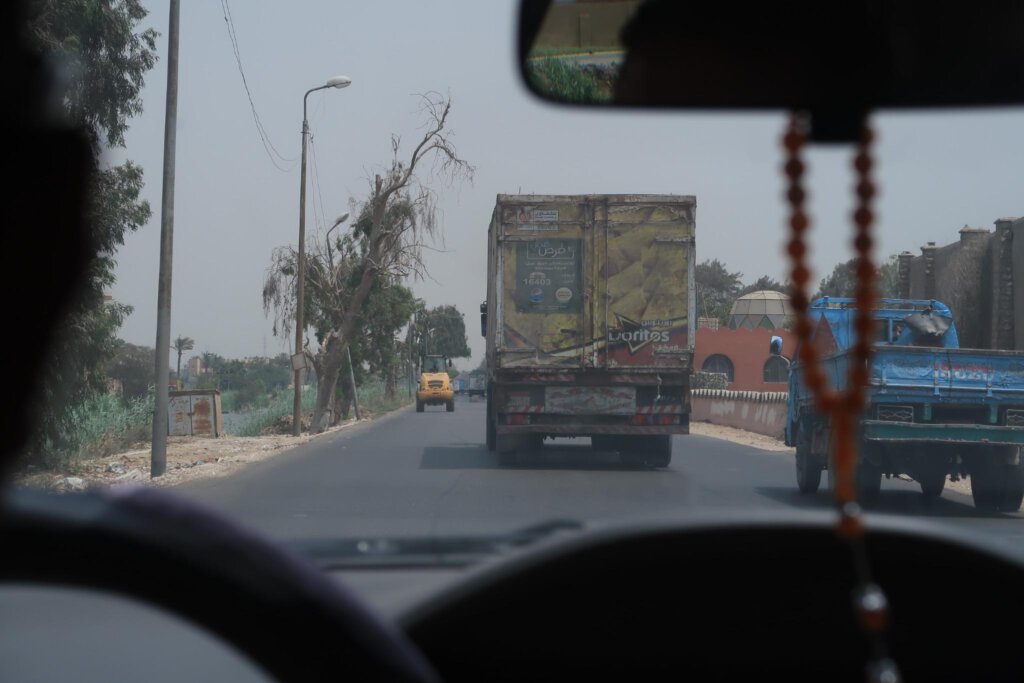
Despite the desert heat, the drive in our air-conditioned private car was comfortable. Honestly, in a place like this, that one thing made a huge difference, especially with Sweetie onboard.
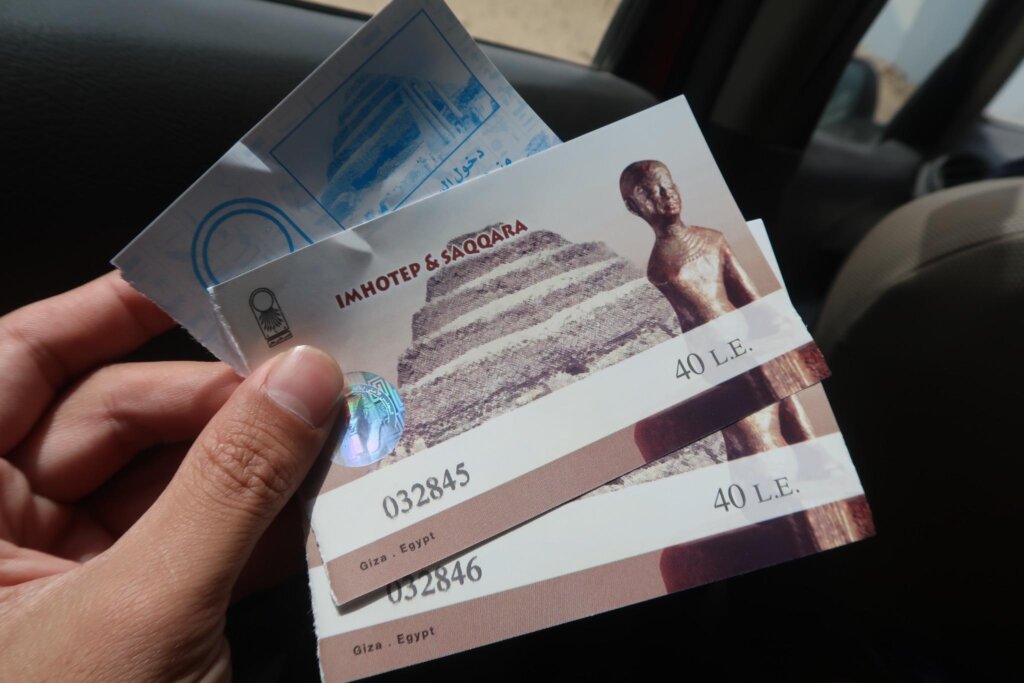
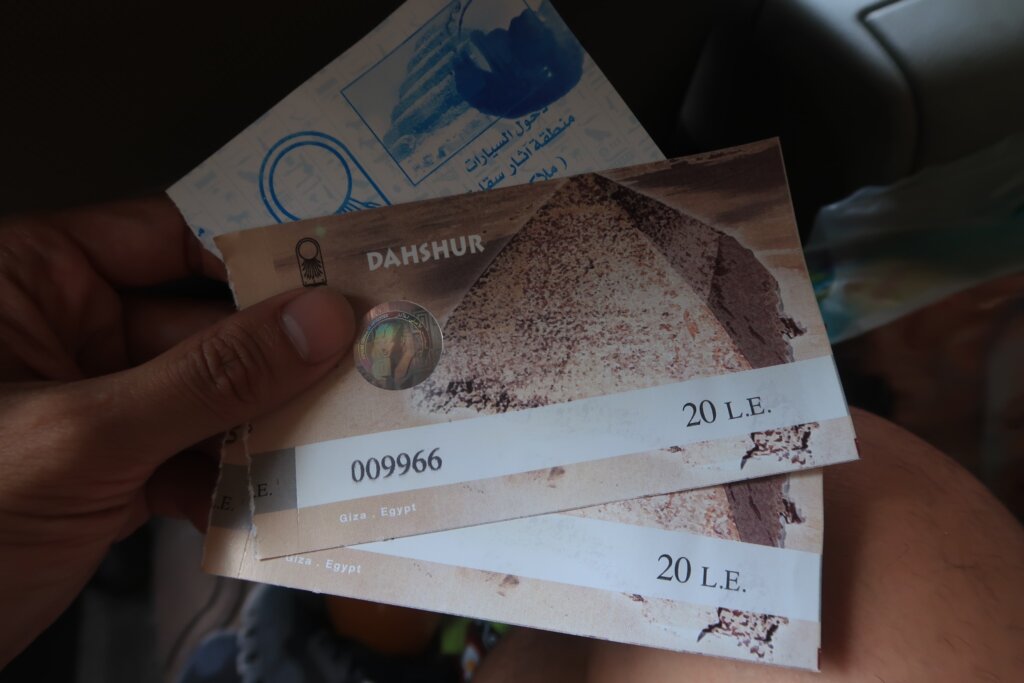
Our tickets had “Imhotep & Saqqara” printed on them — Imhotep being the mastermind architect behind this original pyramid design. (Yes, the same Imhotep from The Mummy, but clearly not the evil bald one…)
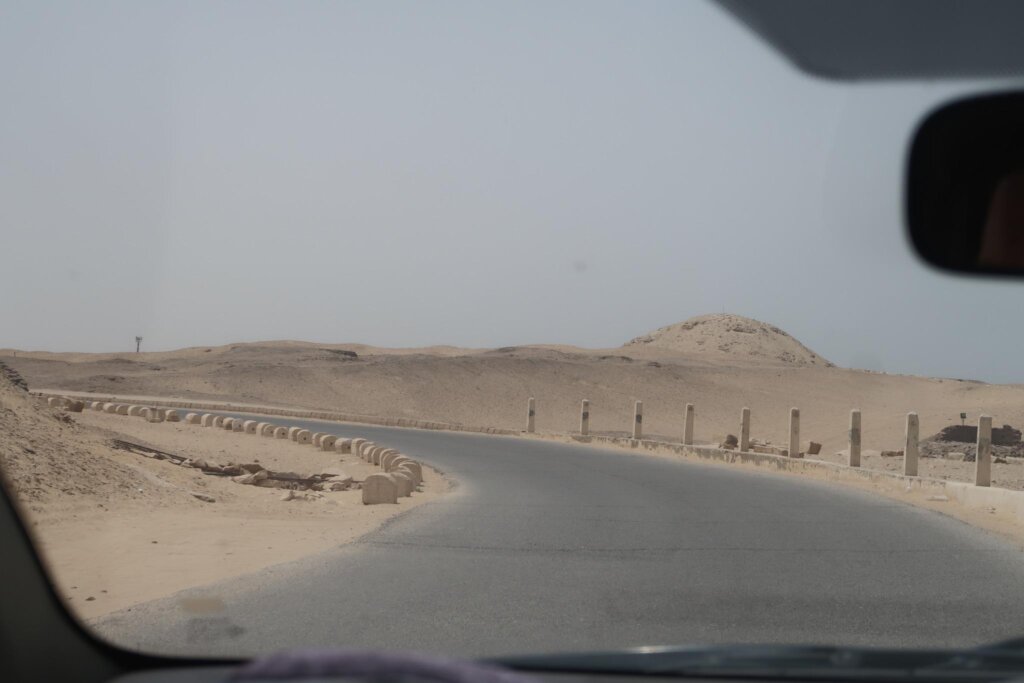
As we passed the hill, the top of the Step Pyramid peeked over the ridge. Excitement kicked in.
The World’s First Pyramid: Djoser’s Legacy
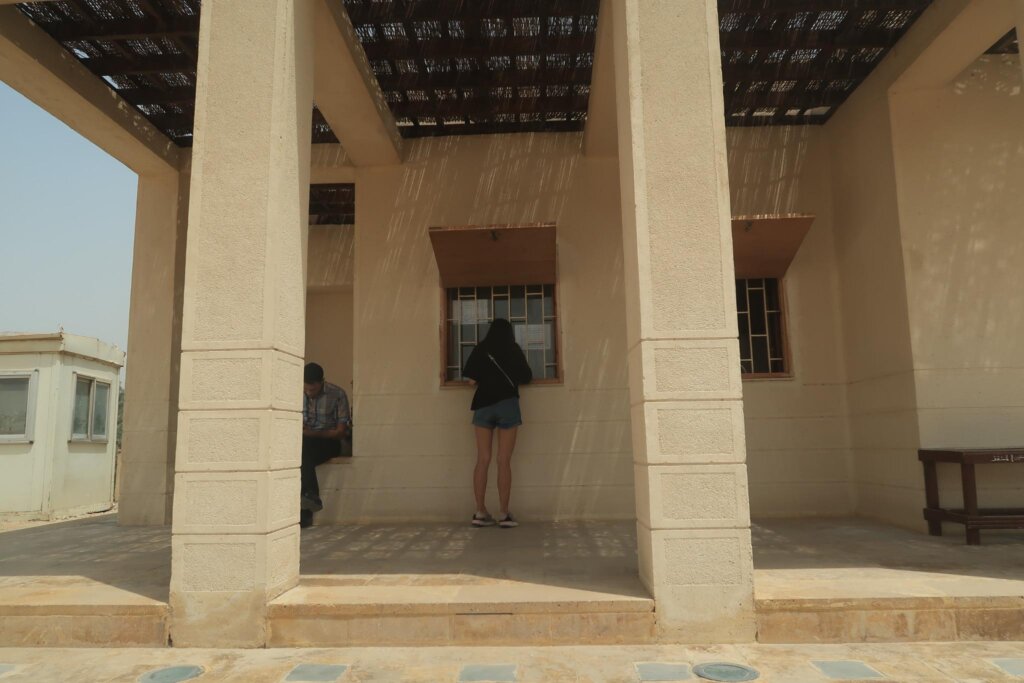
At the gate, one of the thin paper tickets turned out to be for vehicle access only — just 2 Egyptian pounds.
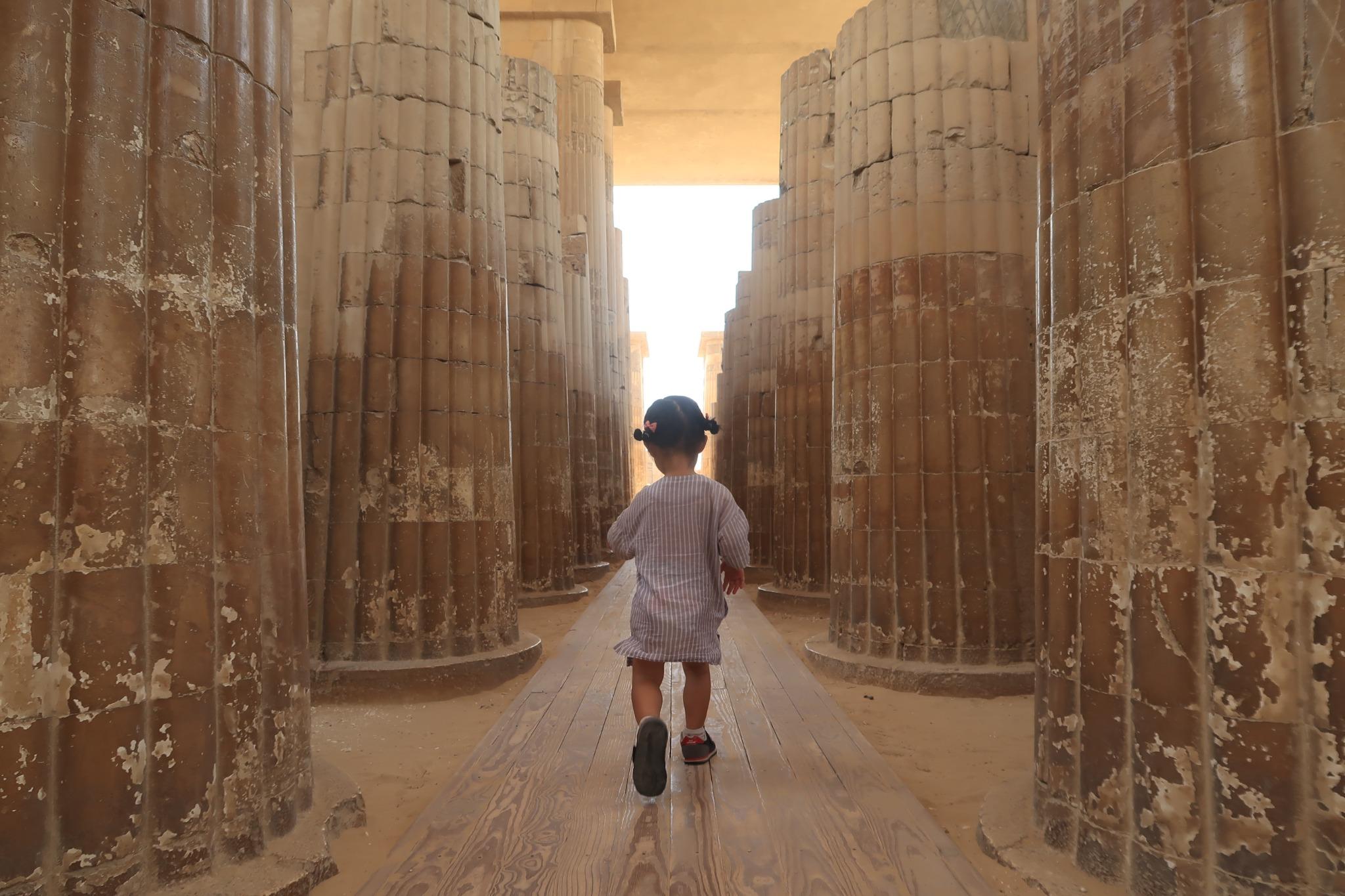
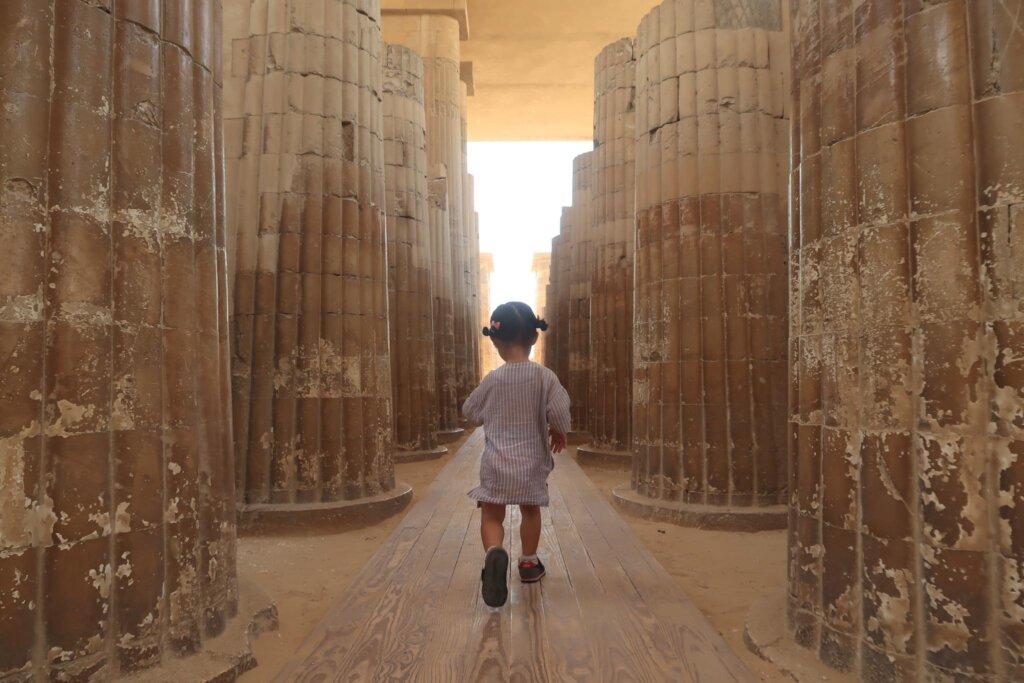
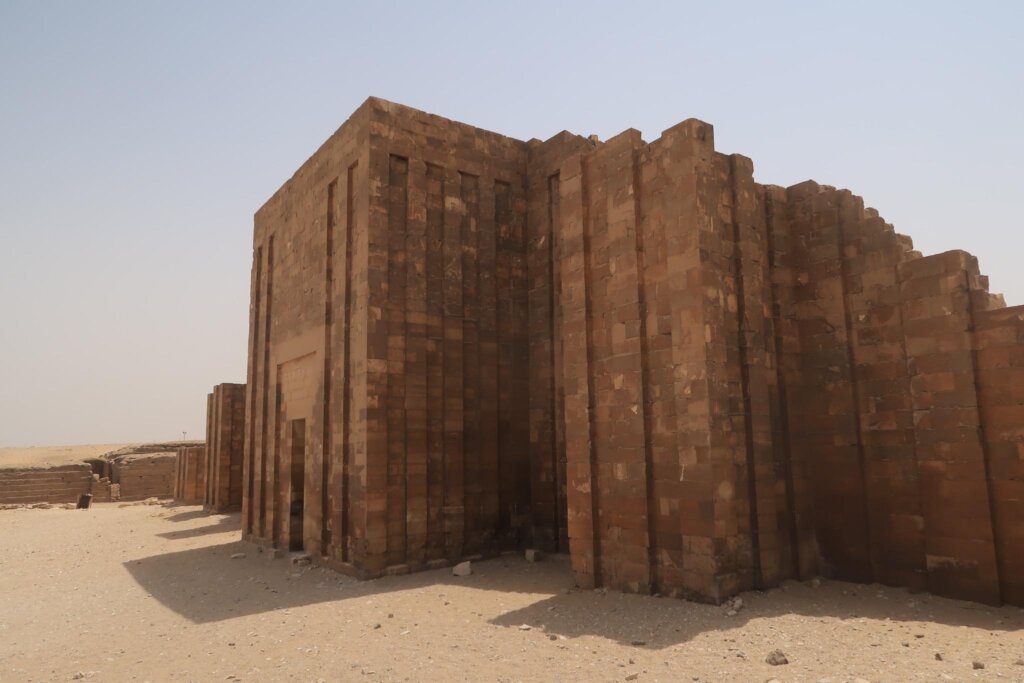
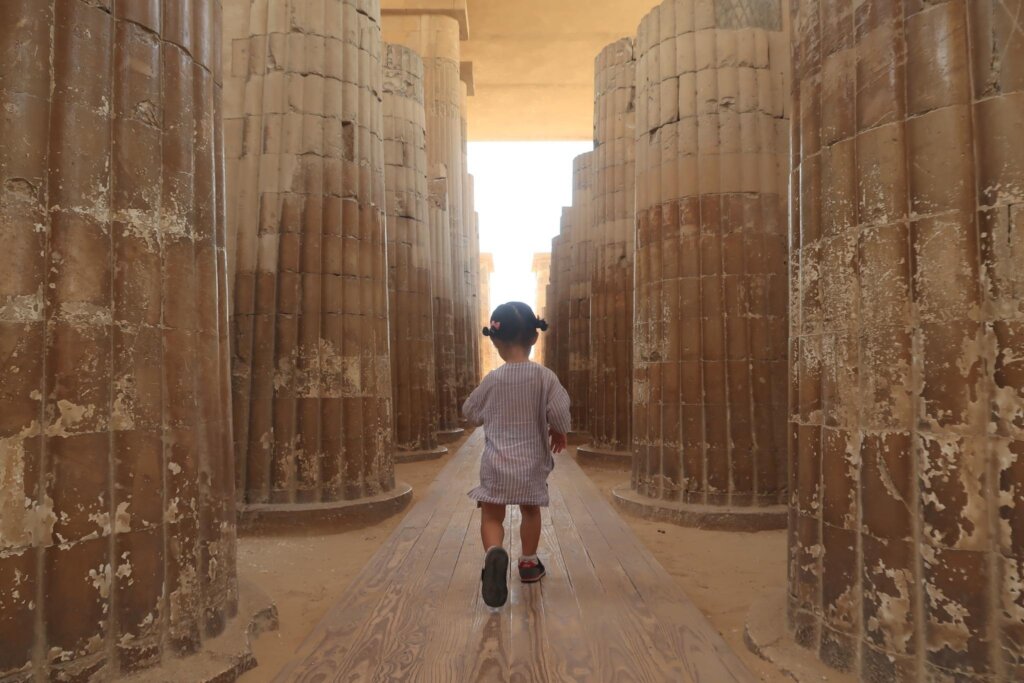
We got out near the ancient temple and walked through a colonnaded passage toward the pyramid. The limestone columns still held their edge, as if they hadn’t aged in millennia.
And just like that, Sweetie took off running between the pillars — so much energy after her solid nap at Giza!
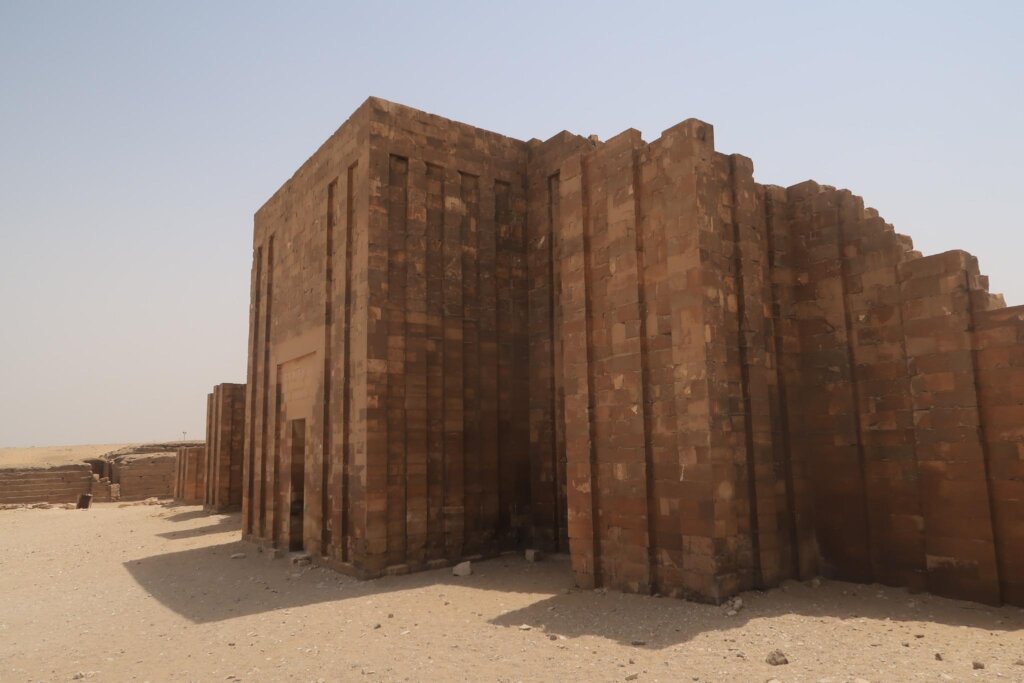
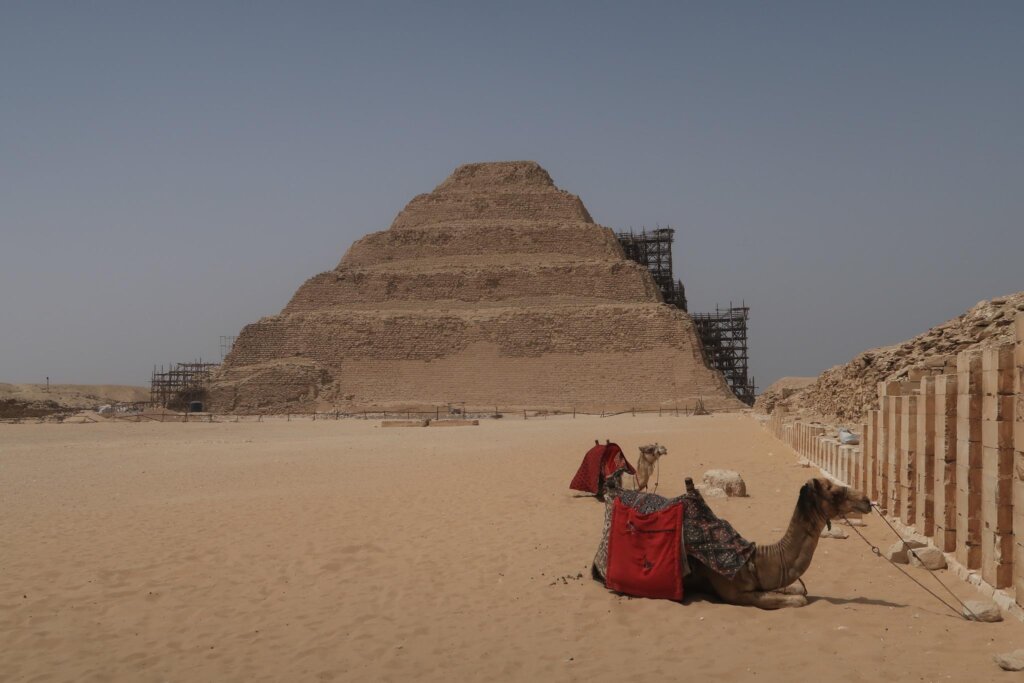
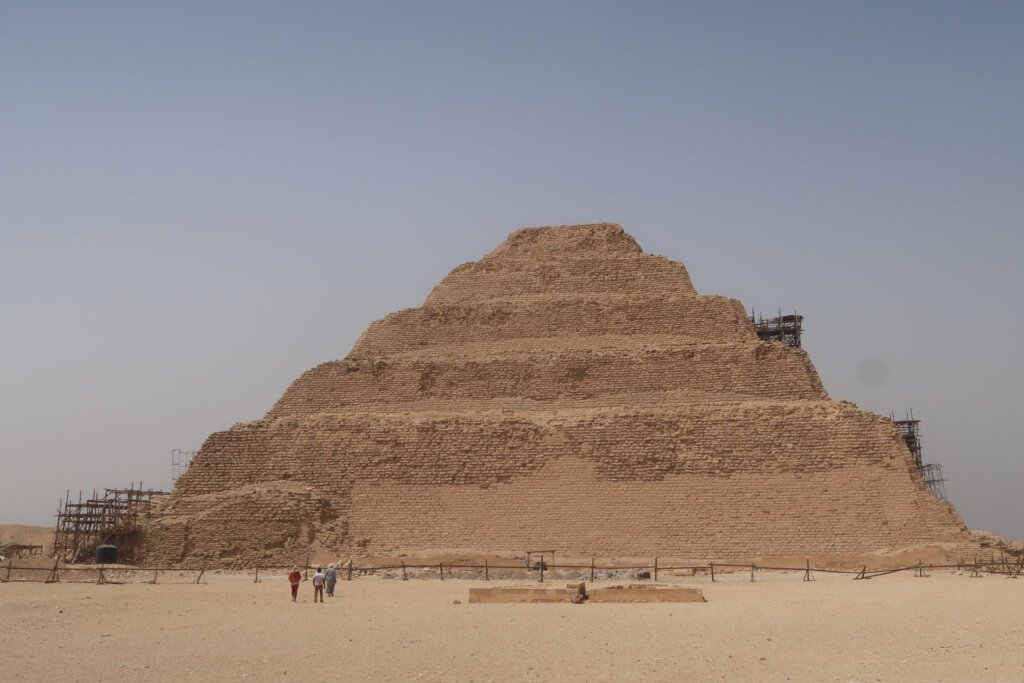
The Step Pyramid finally revealed itself, rising in distinct horizontal layers.
This was it — humanity’s first leap from mastaba tombs to monumental pyramids.
Closer up, I could see the stonework was much smaller than at Giza. Early builders used manageable blocks and stacked them layer by layer in a tapered design — strong enough to resist collapse.
Discovery Beneath the Pyramid
Beside the main structure, the remains of a crumbled temple pointed toward the underground chambers. It was here that Djoser’s enormous statue was discovered — now housed in the Cairo Museum.
Wooden scaffolding and support structures surrounded the site. The excavation clearly wasn’t over.
Nearby, we saw another curious mound: the Pyramid of Queen Titi — Djoser’s wife.
It didn’t look like much, but for a queen who wasn’t deified, even this was a grand tribute for the time.
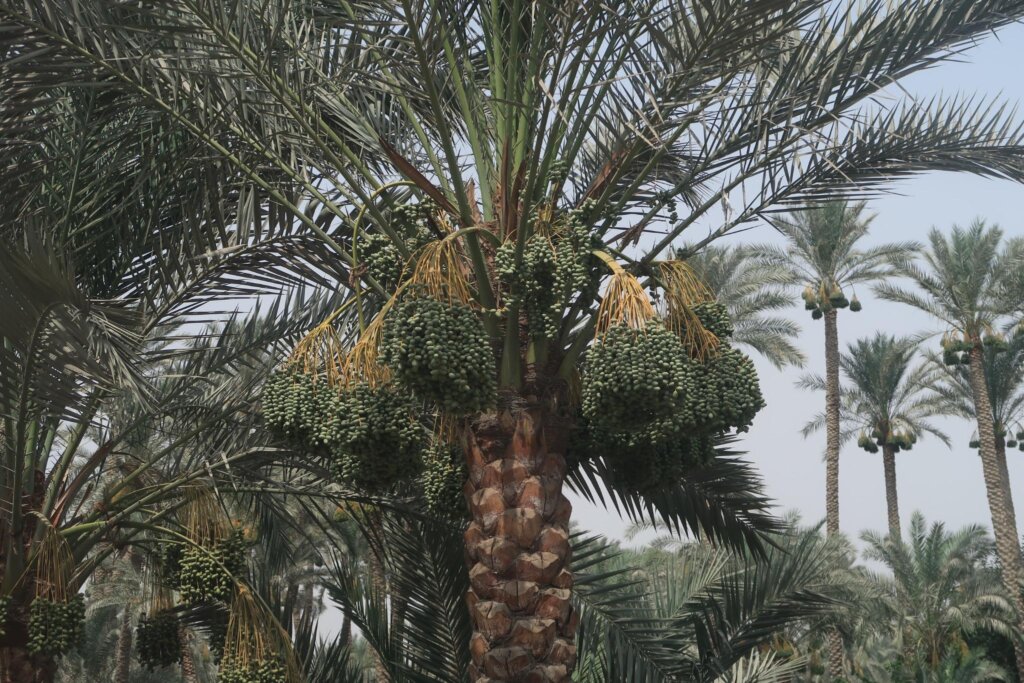
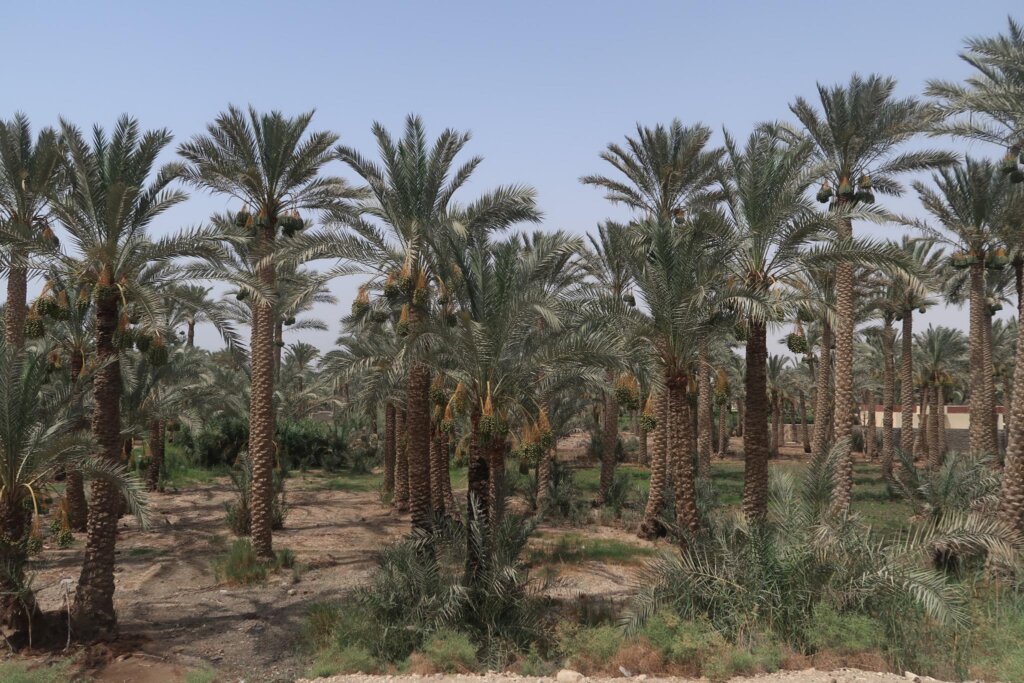
On our way out, we passed rows of date palms, and something struck me — these weren’t ordinary palm trees. Their fruit was different.
That’s when it clicked — these were date palms, the kind that produce the sweet dried dates we’d eaten in Turkey. Finally, the term “date palm” made sense.
Events
Dahshur: Bent Dreams and Red Redemption
Next, we traveled further south to Dahshur, where ancient Egypt tried again — and almost failed.
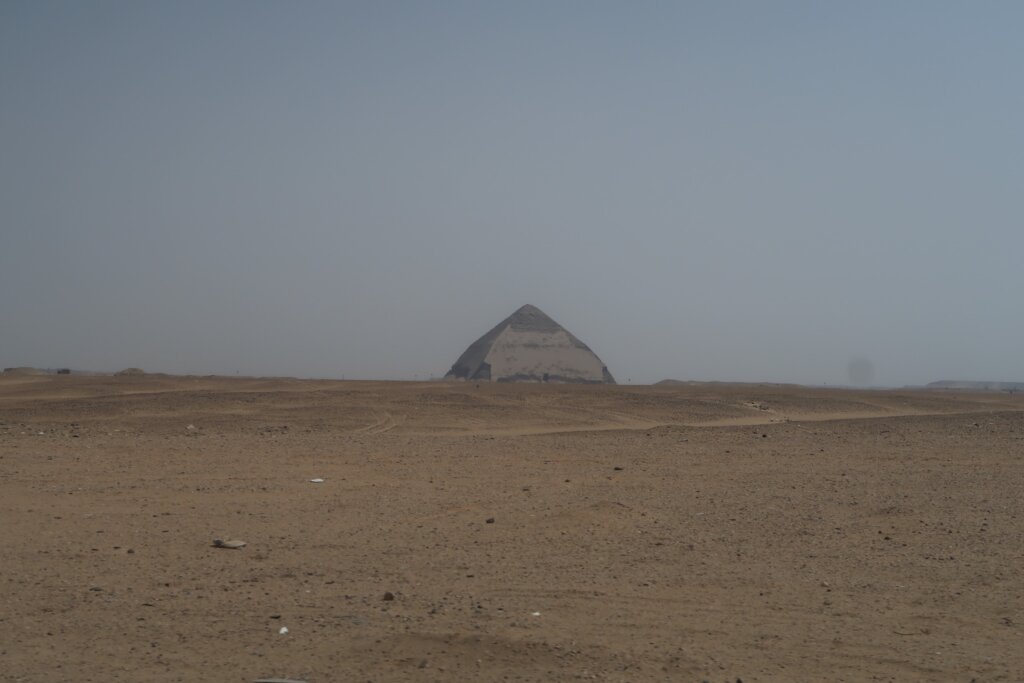
In the distance, we spotted the Bent Pyramid — a clear symbol of architectural trial and error. Its angle shifts mid-way up, giving it an unmistakable broken shape.
This was Pharaoh Sneferu’s first major attempt, and he had to reduce the angle mid-construction to prevent collapse.
That change gave us one of history’s most iconic architectural miscalculations — and maybe one of its most honest.
But Sneferu wasn’t satisfied. So, what did he do?
He built another.
The Red Pyramid: A True Masterpiece
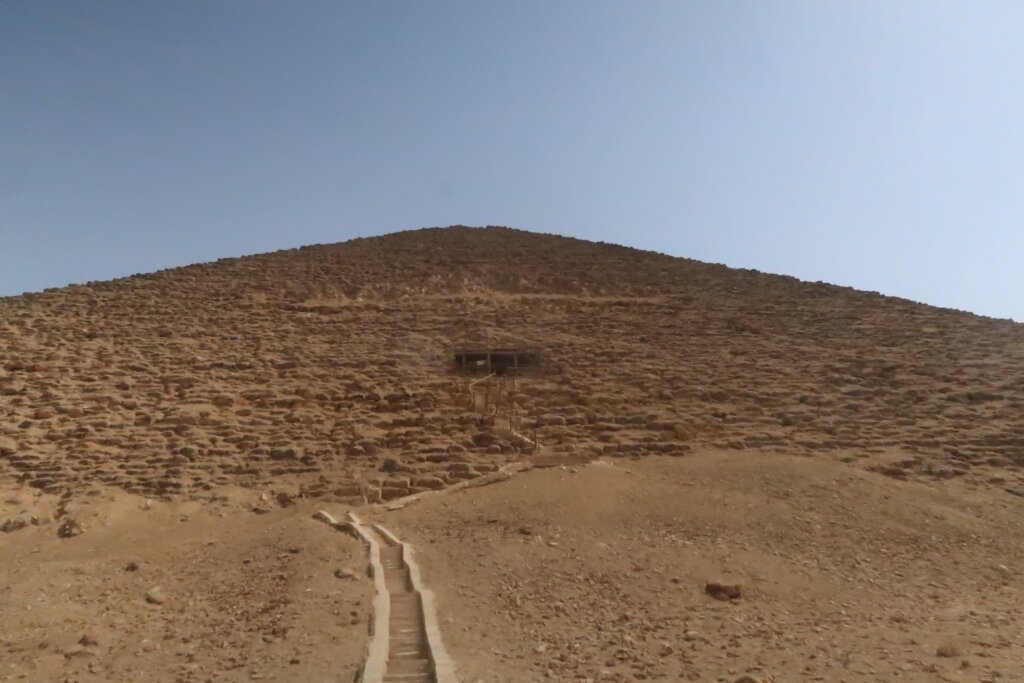
This second structure became known as the Red Pyramid, Egypt’s first smooth-sided pyramid — the true predecessor to Giza.
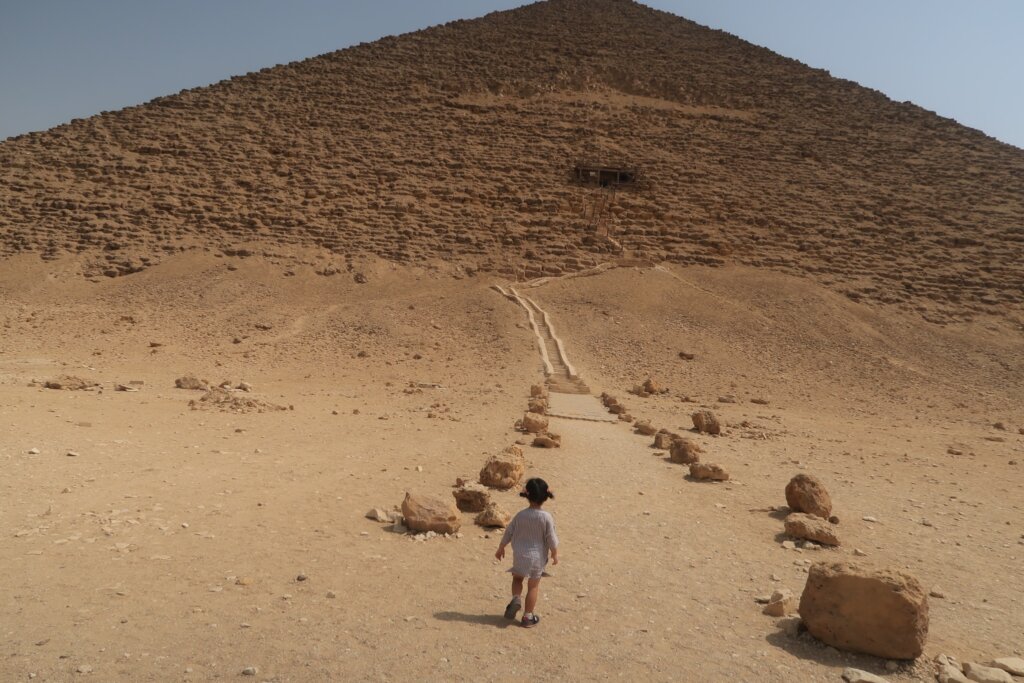
Unlike Giza, this one allowed free entry. I didn’t hesitate for a second.
Our driver tried to dissuade us — “Not worth it,” he said. But I wasn’t about to travel all the way from Korea to Egypt just to skip it.
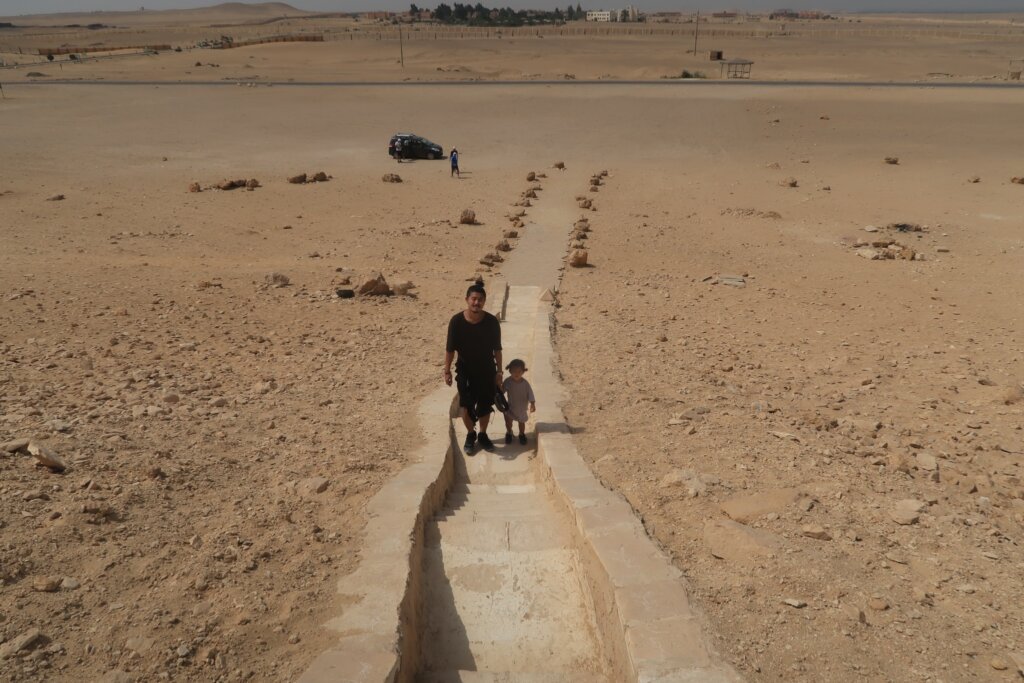
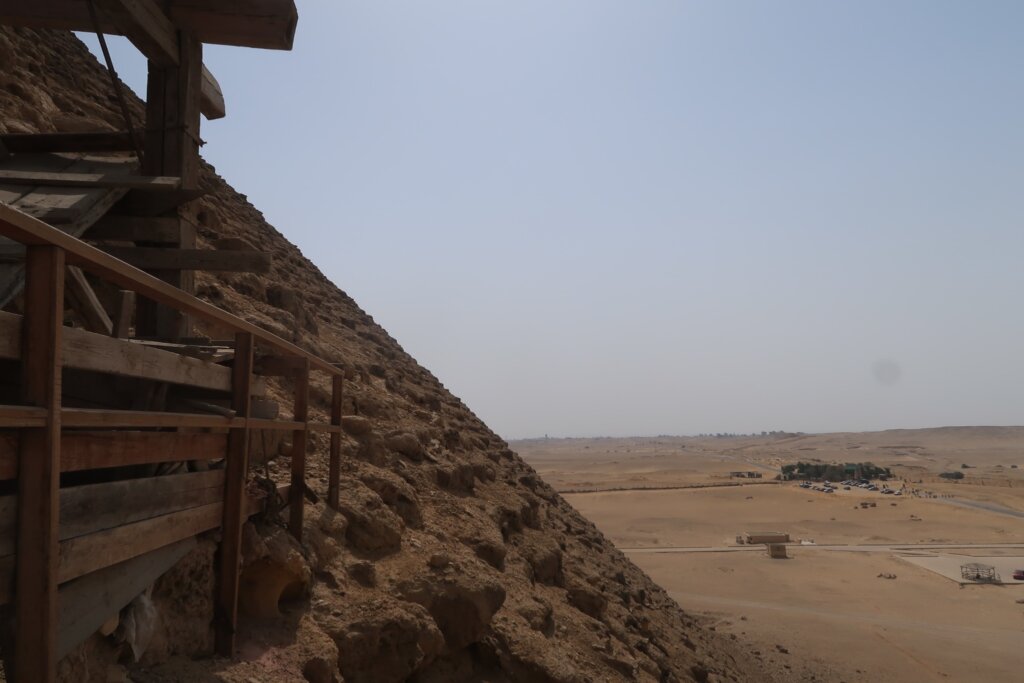
We climbed halfway up to a small entrance carved into the face of the pyramid. I still can’t believe they engineered such a clean corridor straight into its heart.
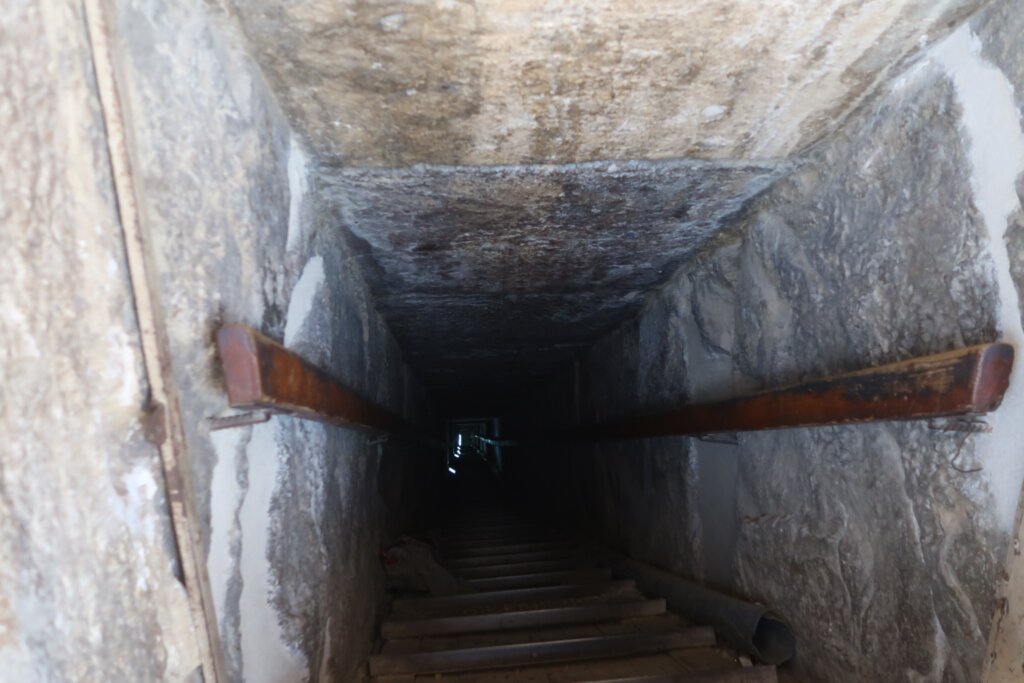
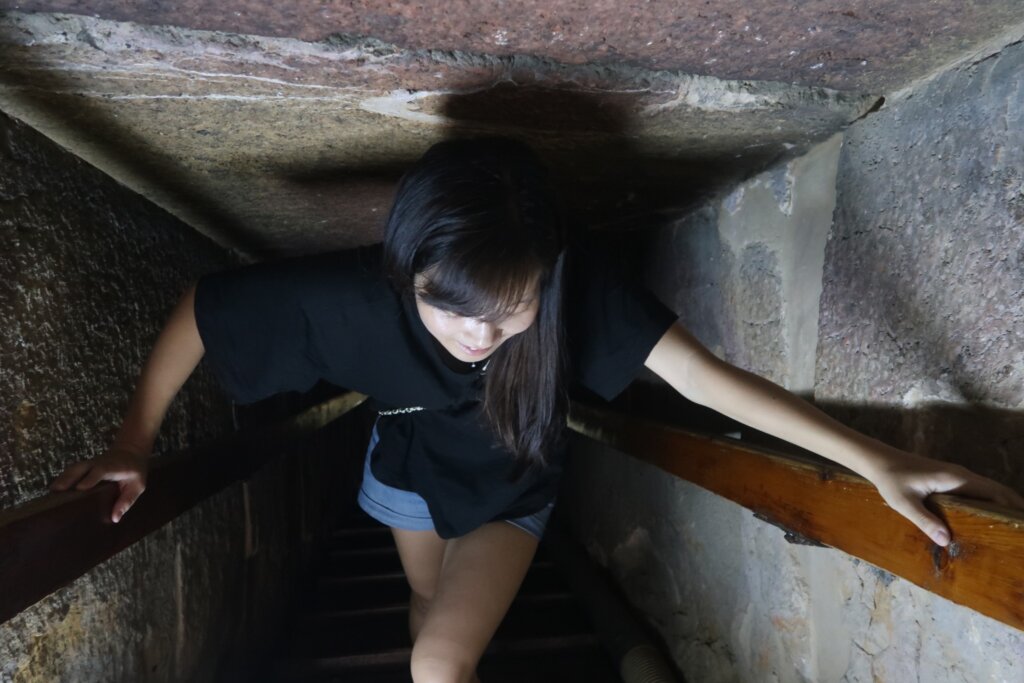
The descent was steep — a 50-meter tunnel sloping downward. Halfway through, I had to stop to wipe off sweat. Then, we finally reached the inner chamber.
Inside the Pyramid
We entered a large burial space shaped like an inverted pyramid, a smart technique to distribute the weight and prevent collapse.
The first chamber led to a second one, this time with stairs going upward — an internal maze to deter tomb raiders.
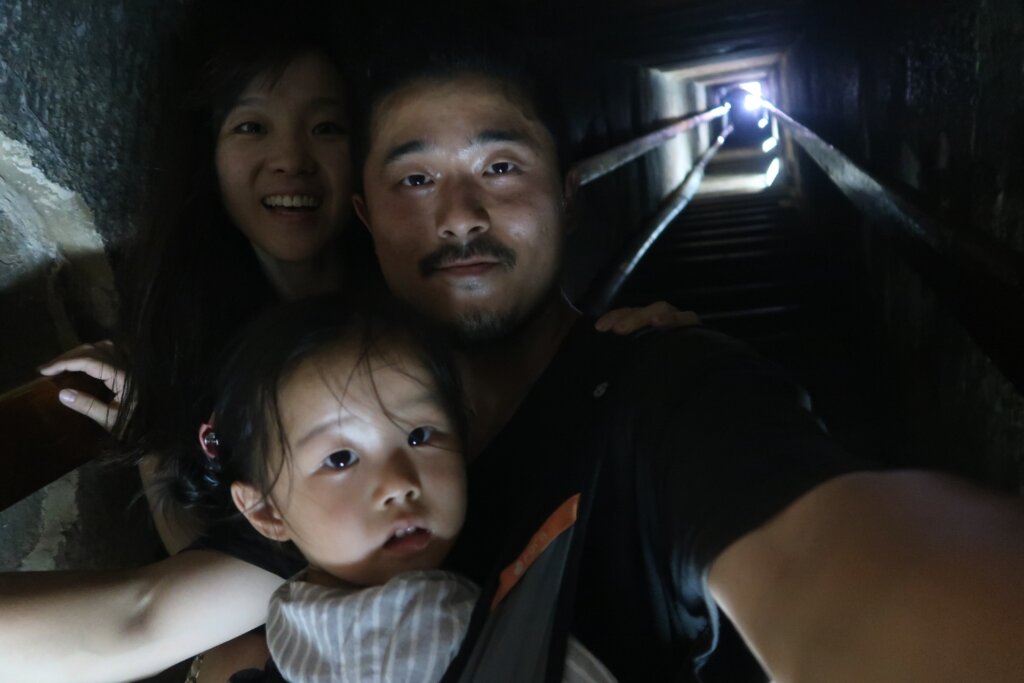
Julie and I climbed into the deepest space — the inner sanctum. Stones were scattered everywhere, as if someone had torn through the place looking for treasure.
Sweetie, on the other hand, treated it like a playground — climbing up, sliding down. It was equal parts adorable and nerve-wracking.
Climbing out was no easy feat. Julie’s back was nearly bent in half as we crawled back through the tunnel.
When we finally stepped into daylight again, it felt like we’d come back from another world.
Honestly, going inside made it all feel real. It wasn’t just about seeing pyramids anymore. It was about being in one.
Local Travel Tips
Saqqara Requires Patience and Curiosity
Keyword: Saqqara pyramid travel
Unlike Giza, Saqqara is more spread out and feels like an active archaeological zone. Give yourself time to wander and absorb the layers of history.
Red Pyramid Is Worth the Climb
Keyword: Red Pyramid entry
If you’re physically up for it, going inside the Red Pyramid is an unforgettable experience. Bring water and be ready to sweat.
Don’t Skip the Date Palms
Keyword: Date palm Egypt
They’re everywhere near Saqqara, and their fruit is a local staple. It’s a small but beautiful connection to the land.
Tips for Traveling with a Baby
Choose Air-Conditioned Private Transport
Keyword: Baby travel Egypt
A must in the desert heat. Sweetie stayed cool and calm even during the longer drives.
Let Naps Lead the Way
Keyword: Travel with napping baby
Sweetie’s energy completely changed after her nap. We saved the physically demanding stops for after she recharged.
Pyramids = Baby Playgrounds
Keyword: Exploring pyramids with baby
To a toddler, tunnels and tombs are just another adventure. Let them move freely when safe — it keeps the whole family engaged.
Travel Reflections
1. Trial and Error Builds Empires
Watching Egypt’s architectural journey — from stepped layers to bent mishaps to smooth perfection — made me appreciate their determination and vision.
2. Going Inside Changed Everything
I never expected the internal experience to be so emotional. Seeing the effort, the engineering, the spatial design up close was unforgettable.
3. Ramses II Still Casts a Shadow
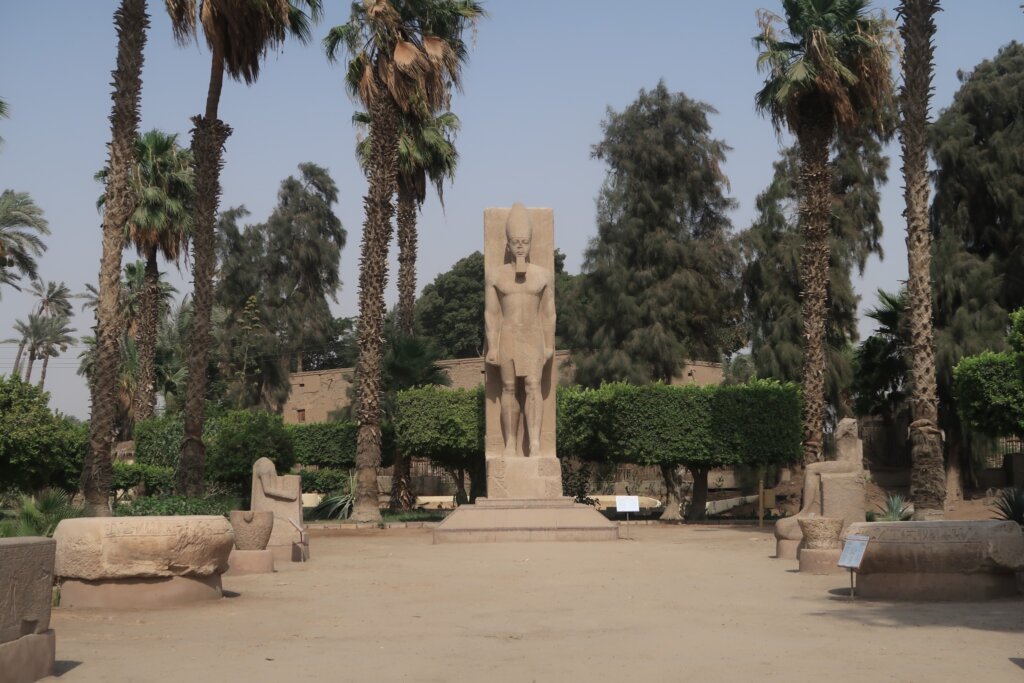
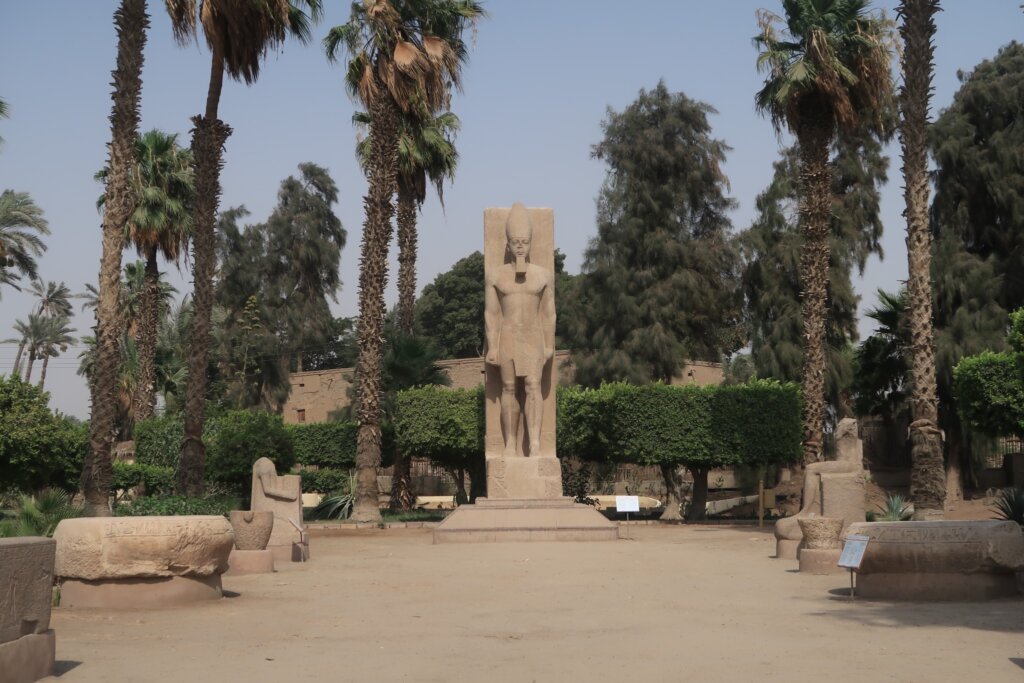
At Memphis, the massive fallen statue of Ramses II brought our journey full circle — from Abu Simbel to Karnak to here. His legacy is stitched across Egypt.



Leave a Reply