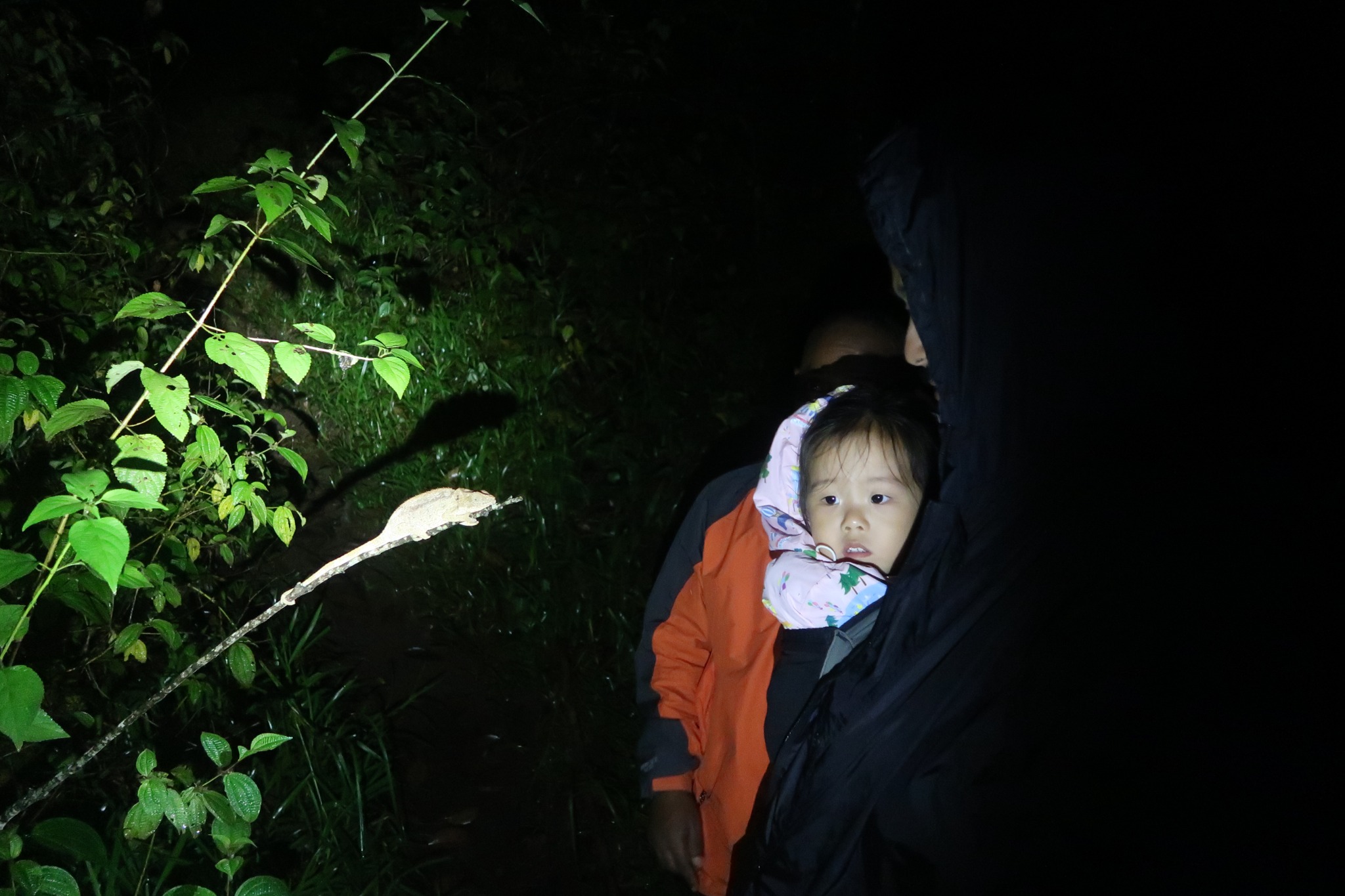
Madagascar’s Andasibe Night Walking Tour, where you can spot wild chameleons, mouse lemurs, and nocturnal insects in their natural habitat.
Table of Contents
- Main Journey
- Events
- Tips for Traveling with a Baby
- Local Travel Tips
- Travel Reflections
Main Journey
After an exciting day at Vakona Forest meeting lemurs, we returned to our lodge around 5 PM.
Our final adventure for the day was the Andasibe Night Walking Tour at 6:15 PM. Since the tour would last about an hour, we decided to have dinner afterward and instead grabbed a light snack beforehand.
It was finally time to eat the giant grapefruit we had bought earlier!
A Quick Snack Before the Tour
The Swiss Army knife we brought from Korea came in handy once again. As soon as we sliced the grapefruit in half, we were amazed by its huge, firm segments. It tasted just like the grapefruit back home—sweet and tangy, with juicy, plump pulp.
Sweetie, who loves fruit, eagerly sat next to me, grabbing each piece I handed her.
For the next hour, we had our own little grapefruit party, savoring every bite before heading out for the night tour.
At exactly 6:15 PM, we met our guide, Christian, who was already waiting for us. We hopped into the car and drove toward our destination.
Arriving at the Night Walking Tour
To our surprise, the tour location was along the same road we had taken earlier to reach Vakona Forest.
This road runs through the heart of Andasibe’s forested area, leading to both Andasibe National Park and V.O.I Forest, which we had planned to visit the next day.
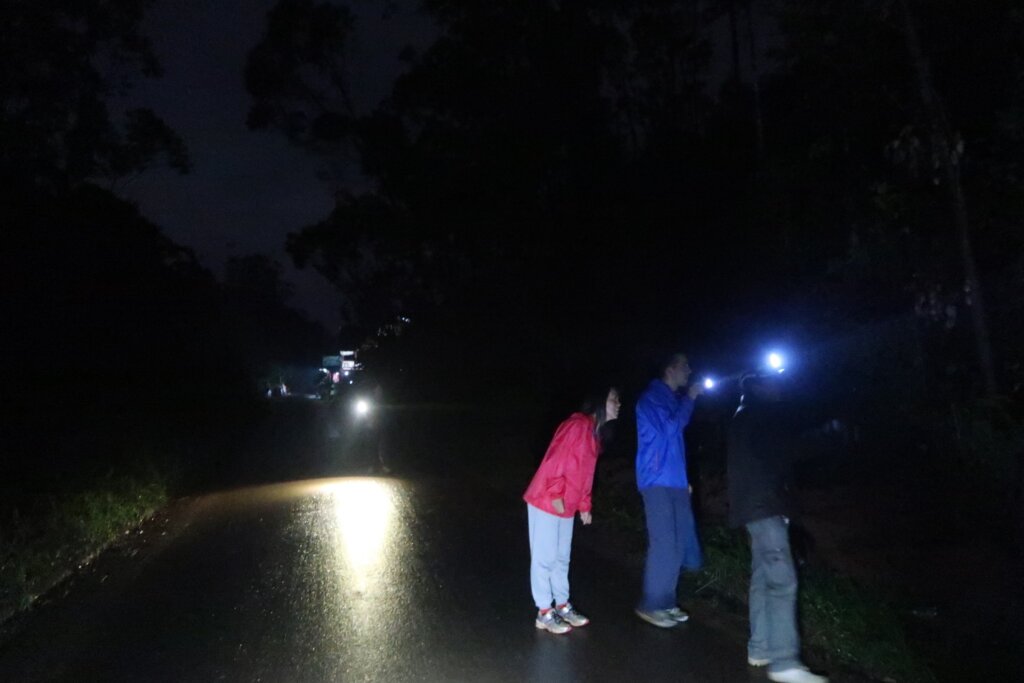
The entire tour would involve walking along this dark road, searching for nocturnal animals in the surrounding forest.
Grandpa Digi dropped us off at the starting point, and Christian handed us flashlights.
With no streetlights around, we were about to step into complete darkness—ready to experience the wild side of Andasibe.
Events
Walking into the Dark
As we began our walk, we noticed that we weren’t alone—many other travelers were also doing night tours.
Some groups, like ours, were small and private, while others, especially those with Western tourists, had a single guide leading 20–30 people at once.
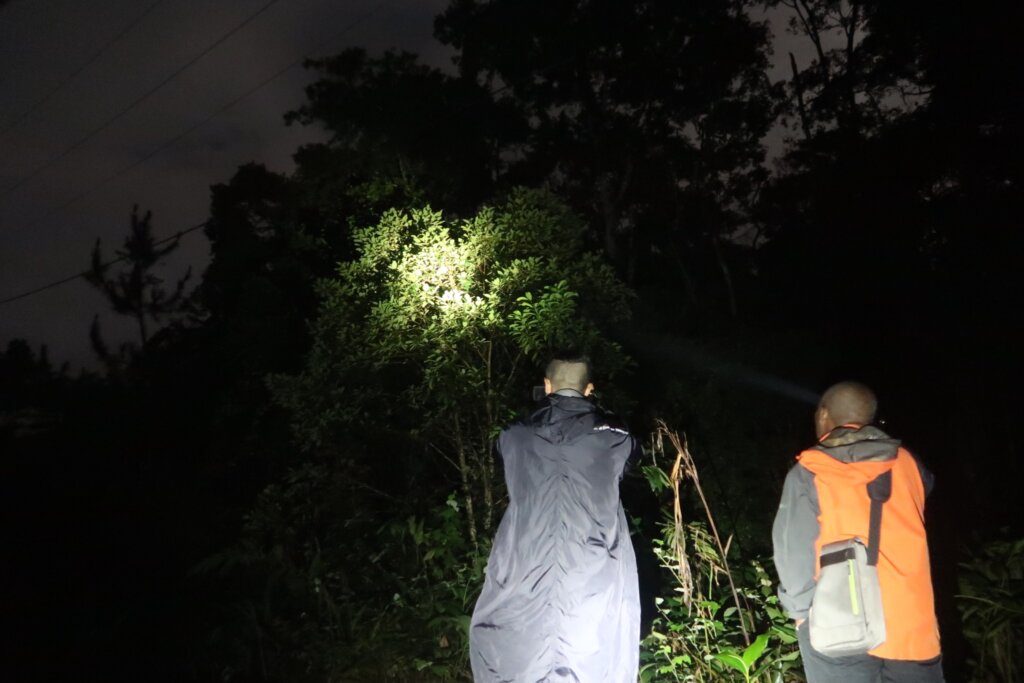
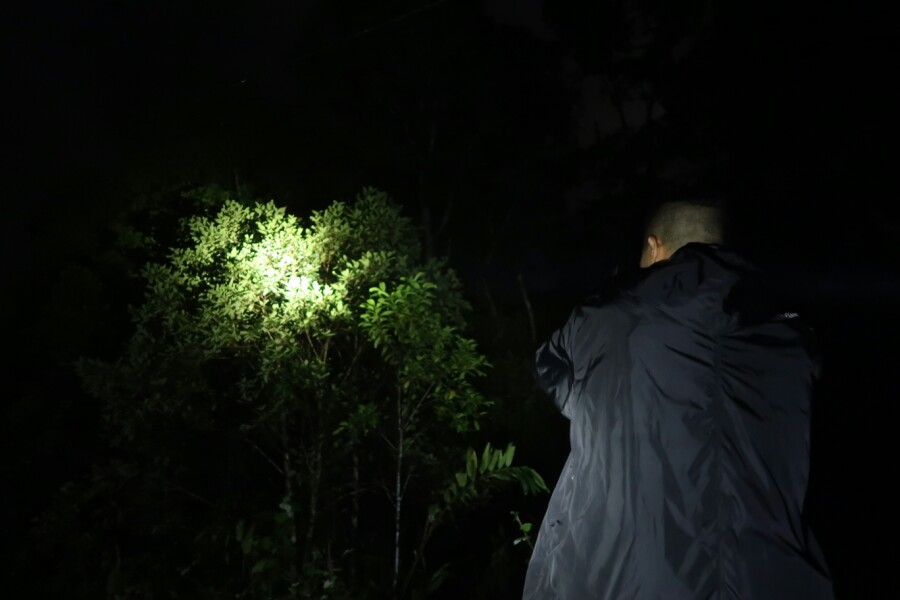
Christian walked ahead, sweeping his bright flashlight across the trees at an impressive speed.
Julie and I exchanged glances.
“How is he supposed to find anything moving that fast?”
Just as we were starting to doubt his skills, he suddenly stopped and called us over.
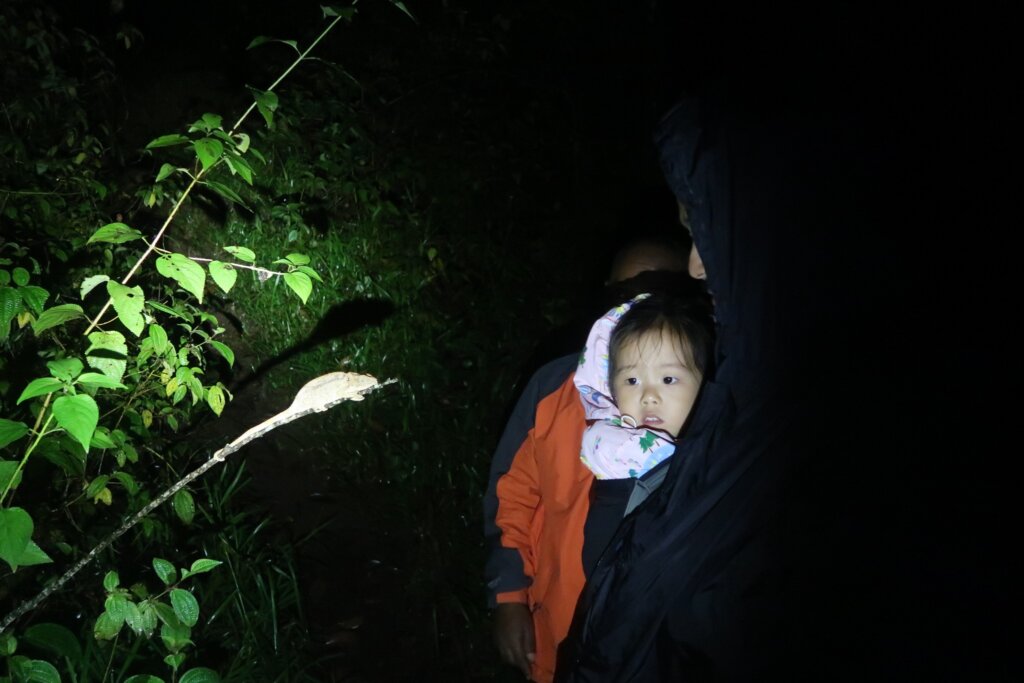
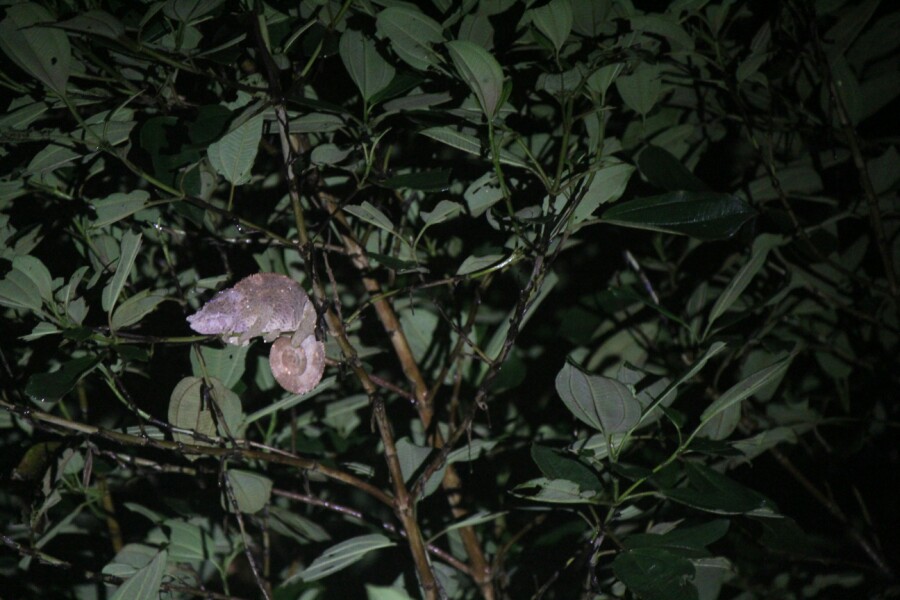
“There’s a chameleon here.”
We stared into the darkness, trying to spot it, even though he was pointing right at it with his flashlight.
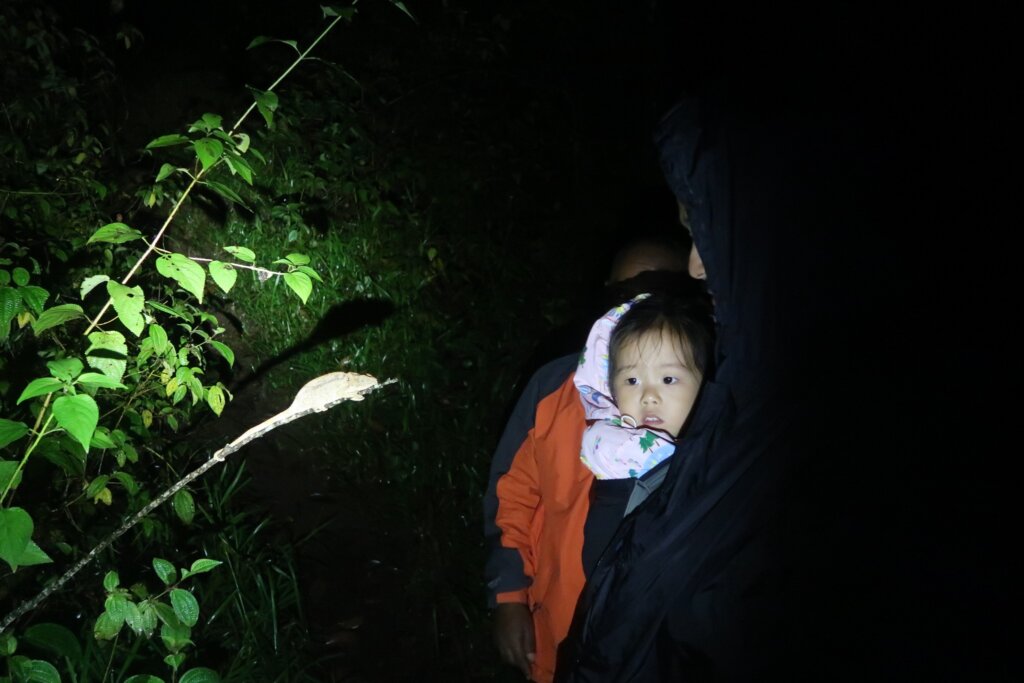
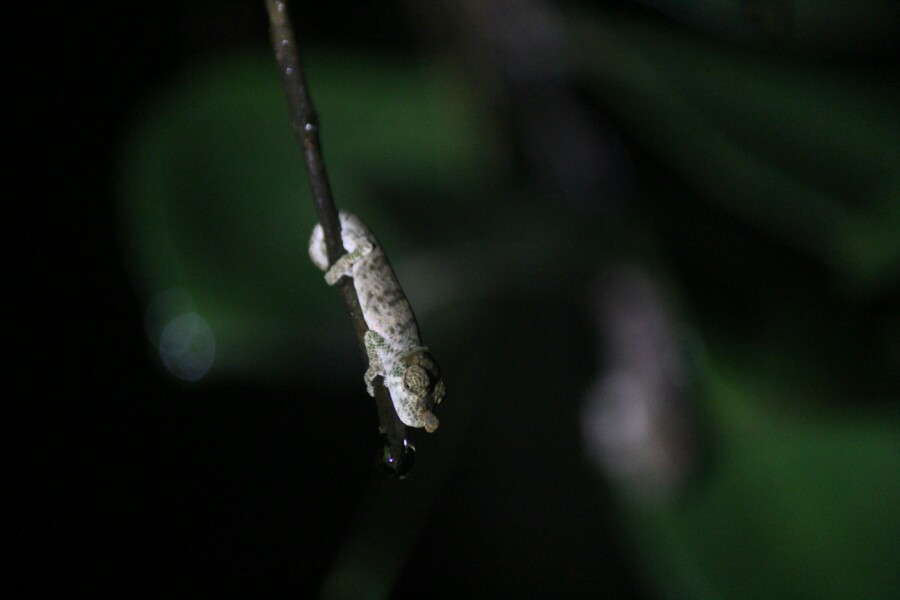
It took us a while, but finally, we saw it—a small chameleon blending perfectly with the leaves.
Julie and I looked at each other in disbelief.
“How on earth did he see that?”
Sweetie, who had already encountered many lizards in Southeast Asia and Africa, was fascinated. She kept asking questions and didn’t like it when I accidentally blocked her view while taking photos.
“Daddy, I can’t see! Move!”
Oops. Sorry, Sweetie.
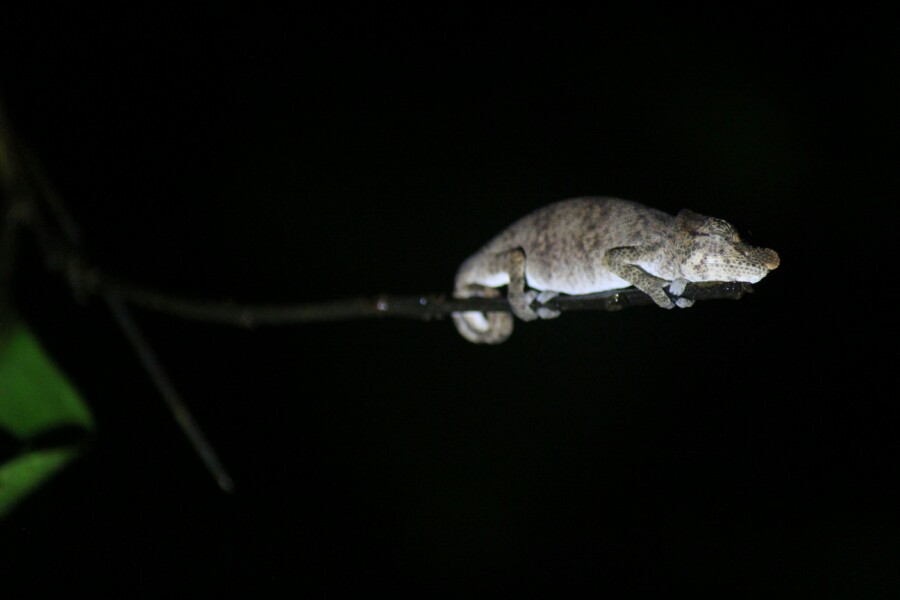
As we continued walking, Christian kept finding more and more chameleons.
Chameleons Everywhere
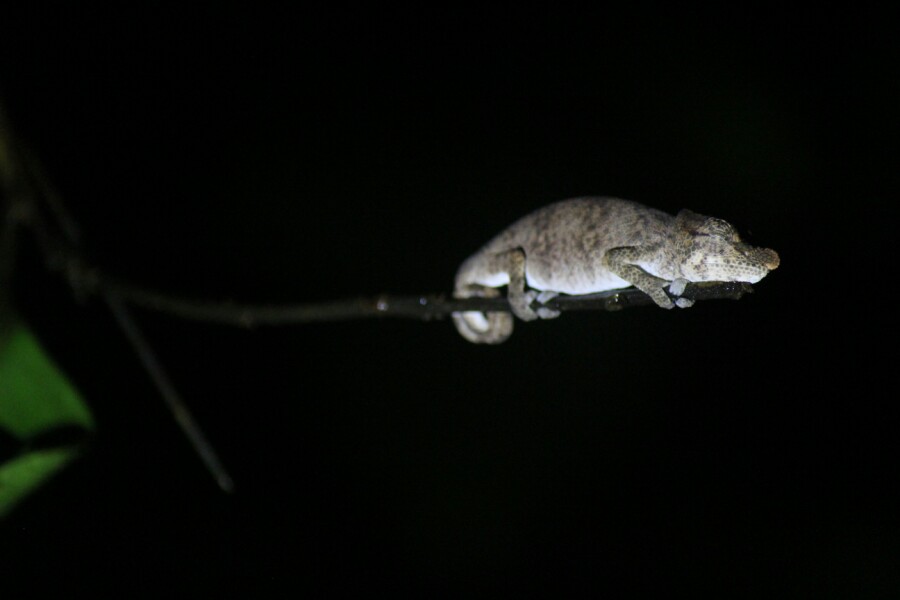
We saw chameleons of all sizes:
- A large, mature chameleon
- A teenage chameleon
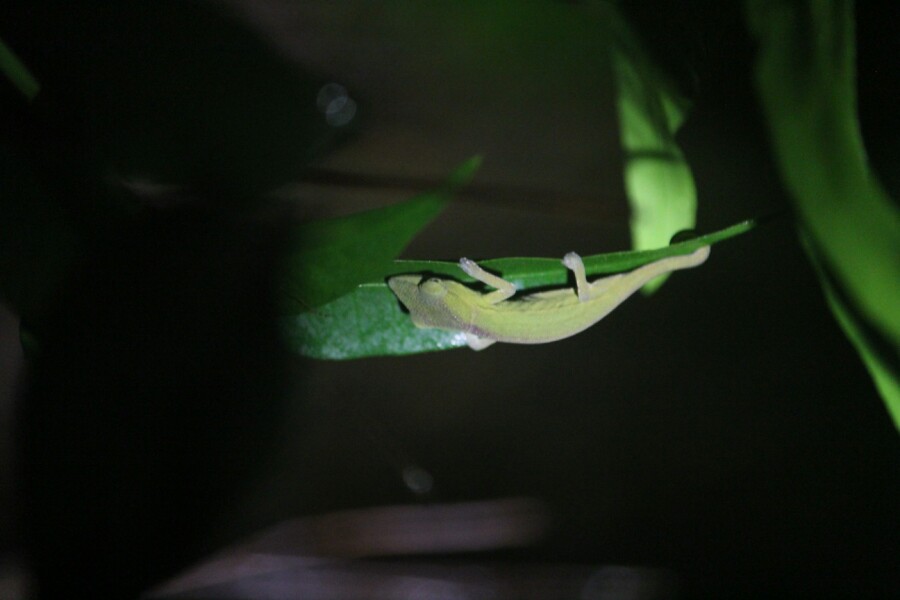
- A tiny baby chameleon, no bigger than my pinky finger
Though they looked big in photos, the smaller ones were incredibly tiny in real life.
Christian’s ability to spot them so quickly was beyond impressive. We couldn’t help but admire the years of experience and effort that must have gone into developing his sharp eyes.
Initially, we had doubted his skills because he was a private guide rather than part of a national park tour. But after seeing him in action, we felt guilty for even questioning him.
This tour wasn’t just about walking through the forest—it was about trusting the guide’s expertise.
Sweetie Falls Asleep
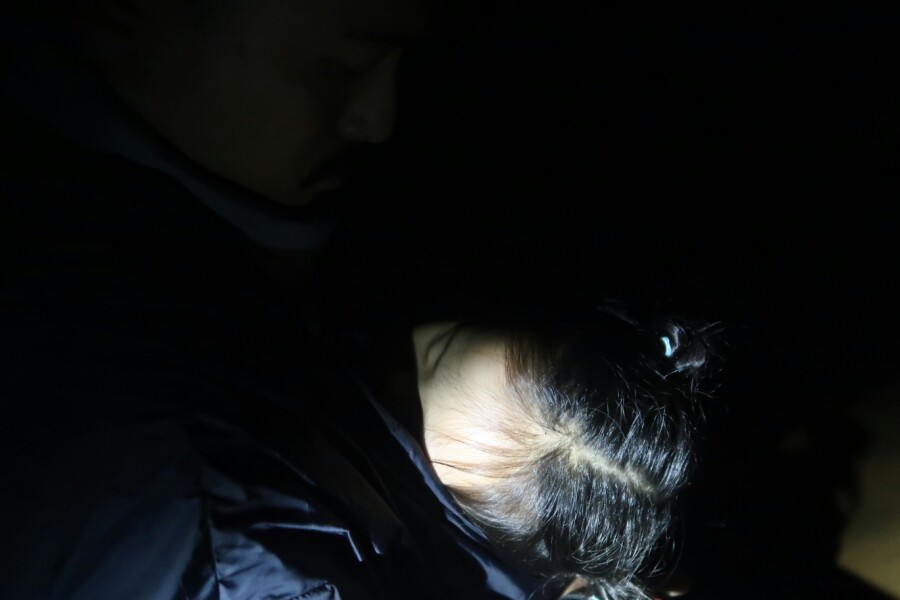
While Julie and I were completely absorbed in spotting chameleons, Sweetie fell asleep in my arms.
The night air was cool and comfortable, and my embrace must have felt warm and safe.
Meanwhile, Christian’s flashlight suddenly shone up into the trees.
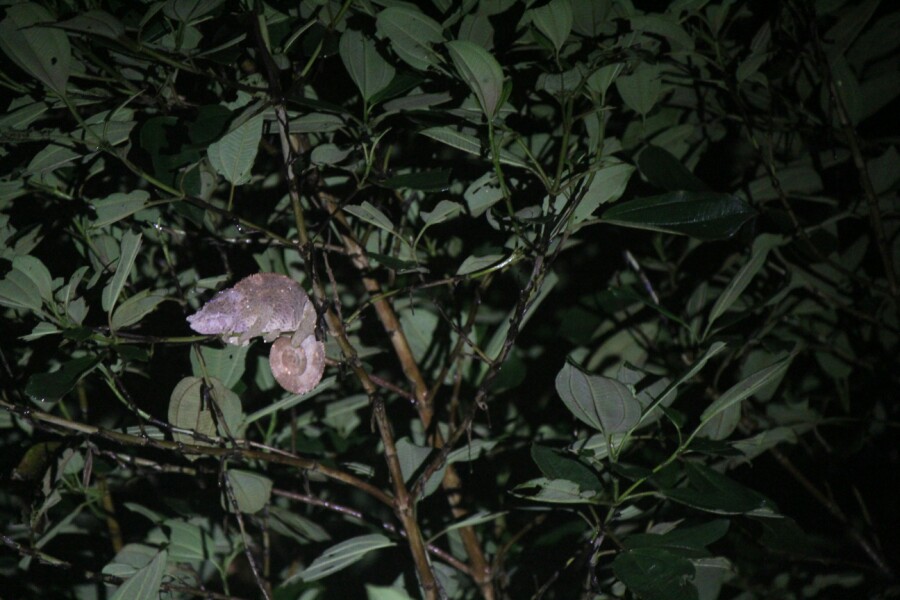
“There’s a big chameleon up there.”
We looked closely and spotted a large chameleon curled around a branch.
When Christian asked if Korea had chameleons, I told him they were only found in zoos.
“If you ever see one in Korea, it must have come from Madagascar,” he said confidently.
I made a mental note to check that when we got back home.
Searching for Mouse Lemurs
Having seen plenty of chameleons, Christian now focused on finding a mouse lemur—the smallest type of lemur, known for its big round eyes and incredible speed.
He shined his flashlight through the trees, and suddenly, we saw two glowing eyes reflecting the light.
“There it is!”
The tiny lemur hopped between branches so quickly that it was nearly impossible to follow with our eyes, let alone take a photo.
Despite trying to chase them with our cameras, they disappeared into the forest before we could capture a single shot.
We had seen them with our own eyes, but that was all we had—just a fleeting moment to remember.
Insects and Other Nocturnal Creatures
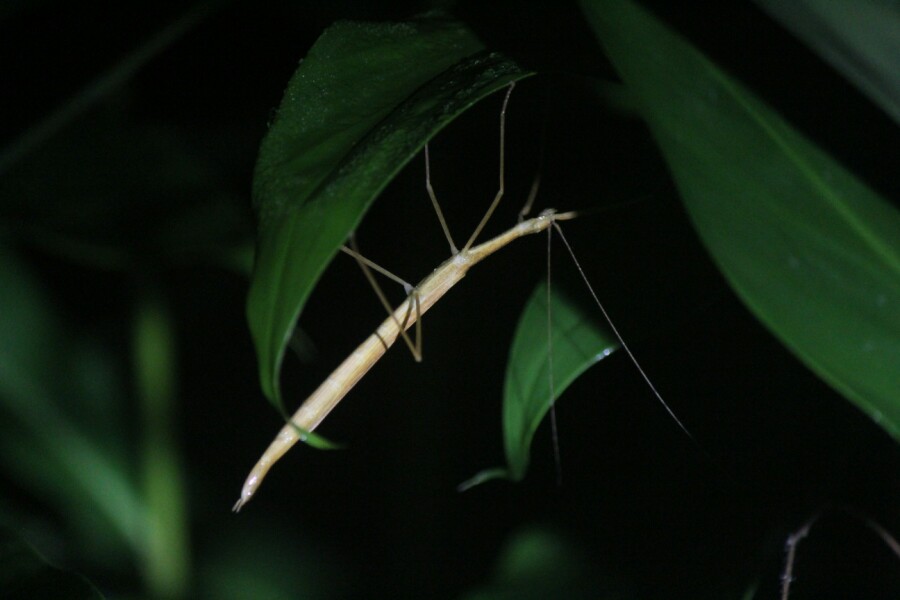
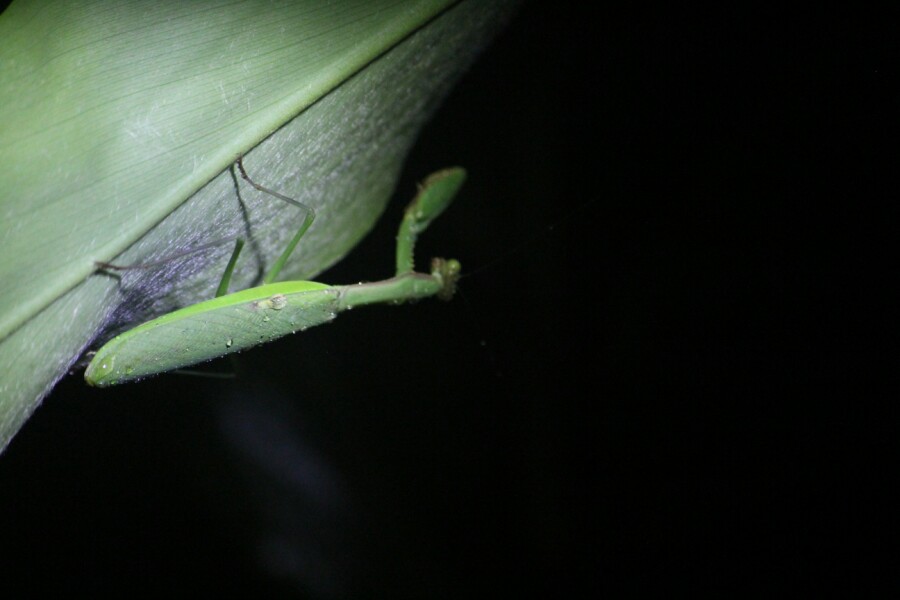
The night tour wasn’t just about animals—we also spotted insects hiding under leaves, including:
- A praying mantis
- A stick insect
- More tiny chameleons
Every creature was so well camouflaged that we wouldn’t have noticed them without Christian pointing them out.
As the tour continued, we also saw two chameleons huddled together—likely a parent and baby.
No matter how many times we saw them, they never stopped being fascinating and adorable.
Tips for Traveling with a Baby
- Bring a flashlight – Guides provide them, but having an extra one for your child makes the experience more fun.
- Dress warmly – The forest gets chilly at night, so bring a light jacket for your baby.
- Don’t expect photos – Many nocturnal animals move too fast to capture, so focus on enjoying the moment.
- Let them rest – If your baby gets tired, carrying them in a baby carrier is a good option.
- Trust the guide – Finding animals in the dark is a skill, and a good guide makes all the difference.
Local Travel Tips
- Best Time for a Night Tour
- Tours start after sunset (around 6 PM) and last about an hour.
- The experience depends heavily on the guide’s ability to spot wildlife.
- Where to Stay
- Vakona Lodge – Great for those visiting Vakona Forest
- Andasibe Hotel – A comfortable option closer to the national park
- Essential Gear
- A flashlight for extra visibility
- Long sleeves to protect against mosquitoes
- Sturdy shoes for walking along forest paths
Travel Reflections
The Night Walking Tour was completely different from our daytime experience at Vakona Forest.
During the day, we saw tame lemurs in a controlled environment. But at night, we ventured into the wilderness, spotting wild chameleons, tiny lemurs, and hidden insects in their natural habitat.
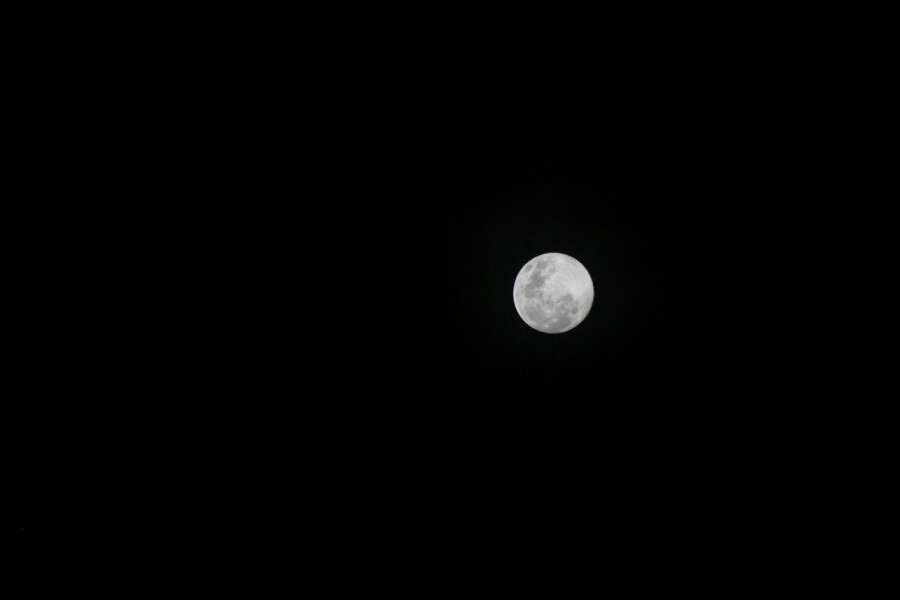
Walking under the bright full moon, surrounded by the sounds of the forest, every step felt like an adventure.
If you ever visit Andasibe, don’t miss the Night Walking Tour—it’s an experience like no other.



Leave a Reply